Showing posts with label Adaptation Palpitations. Show all posts

Tuesday, 12 April 2016

Hollywood Babble On & On #1262: Quo Vadis American Crime Story?


Glad to back my loyal readers. I hope you're still out there.


*crickets*

Sorry it's been soooooo long since I last posted. Things have been busy lately. One the up side, I signed a contract with a publisher in Los Angeles for a mystery novel, and my work as chief caregiver for my parents has been taking up most of my time lately since my mother's knee surgery.

Anyway, enough about me, let's talk about movies and TV.

If you've been missing American Crime Story: The People vs OJ Simpson, you've been missing a treat. It's been wildly entertaining, and stacked with tons of Emmy worthy performances from the entire cast. I haven't seen a single false note in the acting, and more than a few moments of pure performance bliss.

(The scene where David Schwimmer as Robert Kardashian lectures his kids on the emptiness of fame without virtue is pure brilliance. I had to rewind to revel in its satiric glory)

But what to do with Season 2?

Well, it seems that the show's driving force Ryan Murphy wants to take the show in a different direction in Season 2. He wants to take it from covering a true crime story with the sort of intense detail that only a TV series can do, and do a fictional story about people living in New Orleans in the aftermath of Hurricane Katrina. So basically a variation of David Simon's Tremé from HBO, which came and went with some good reviews, but not much in the line of impact.

This seems to be in keeping with Murphy's modus operandi to create a show, deliver really high quality in the first season, then begin whittling away everything people liked about the show in subsequent seasons to diminishing returns in audience satisfaction and ratings. I witnessed this with Murphy's biggest mainstream hit Glee, where my twitter feed went from fans raving about the show, to fans complaining about the show, to fans ignoring the show. The same has happened with his other anthology series American Horror Story, which got raves at the beginning and then faded into a mess of loose narrative strings and steadily declining viewership.

I don't know what happened in the case of Horror Story, but it seems that Crime Story is the victim of a fundamental misunderstanding of the show's success. The people behind the show seem to think that the show's success hinges on issues of race in America.

Like in the real case of O.J. Simpson, race is more of a distraction and an excuse for some decisions than the real heart of the issue. The success of American Crime Story is that they're telling a true story where literally everyone knows the ending so well that it's compelling to watch.

I think there's a market for more true crime, and that Murphy and ACS are fools to just give it up when they've already set themselves up as the gold standard.

Let's look at some cases they could adapt that would be better ideas:

Harry Thaw & Stanford White.  In the 1900s White was a brilliant architect, top dog of New York high society, and an unrepentant lecher. Harry Thaw was the son of nouveau riche industrialists who had the paranoid belief that White had blackballed him from high society, this obsession grew even stronger when he married model and dancer Evelyn Nesbit. Nesbit had been White's mistress when she was a teenager, and may have even been raped by White. This put the already mentally unstable and violently abusive Thaw over the edge and he murdered White in the middle of a nightclub in front of a hundred people.

The trial and its aftermath pretty much birthed the tabloid and scandal culture we have today, and is loaded with so many myths, deceptions, and half-truths it could make compelling viewing. 

Stephanie St. Clair: The Queen of Harlem. This is the story of a woman who came to control the "numbers racket" in Harlem. While Queen she held off the mobsters like the psychopathic Dutch Schultz and became a thorn in the side of corrupt and racist policemen by using her resources to promote civil rights and political reform.

And if business and activism wasn't enough trouble for her, she ended up in a disastrous marriage to a  political activist turned cult leader with messianic and hitlerian tendencies that ended with a gunshot.

The fact that she survived and thrived in these conditions would make a fascinating television show.

You could even cast Travolta as Dutch Schultz, Sterling K. Brown as her right hand Bumpy Johnson, and Courtney B. Vance as St. Clair's charismatic but erratic cult-leader husband Sufi Abdul Hamid who was dubbed the "Black Hitler" by the press.

The Murder of William Desmond Taylor. I wrote a review of the riveting book Tinseltown and I said then that it would make a great series, and I still do.

Anyway, these stories are true and I think they'd really rope in the viewers far better than just another social realist drama about how life is hard in New Orleans.

Monday, 30 November 2015

BOOK REPORT: TINSELTOWN

TINSELTOWN: MURDER, MORPHINE, & MADNESS AT THE DAWN OF HOLLYWOOD by William J. Mann, Harper Books, $16.99 US / $21 CAN


I don't normally do book reviews since I mostly write about the movie business, but there are these things called books, and some of them are about the movie business.
One such book is Tinseltown by William J. Mann which won the Edgar Award for Best True Crime book of 2014. It's a book that shows how intertwined the worlds of celebrity, business, and scandal really were, and how it goes all the way back to the very beginnings of the modern film industry that we know today.
Now the main crux of the book is a story of murder and scandal, but it goes quite a bit deeper than that, and presents a wider picture of a fledgling industry under siege. The best way to blurb it is to tell you a little bit about the main characters.
WILLIAM DESMOND TAYLOR: He was one of the most commercially successful and prestigious film directors for the Famous Players-Lasky Company (later Paramount Pictures). He was a man with a reputation for being a man of excellent character and probity, but he had secrets that he desperately wanted kept, and it's his unsolved murder in 1922 that forms the central crux of the book.
MABEL NORMAND: Was Taylor's best friend and confidante. She was also one of the biggest comedy stars in Hollywood, and was desperately trying to put a past of bad relationships and cocaine abuse behind her. However, the trial of her former co-star Fatty Arbuckle on bogus rape and murder charges, and the murder of her best friend threatened to destroy her career and her life.
MARY MILES MINTER: A Famous Players child star growing up into an ingenue desperately trying to get out from under the control of her domineering mother Charlotte Shelby. She's romantically obsessed with Taylor, to the point of practically stalking a man she could never have.
MARGARET "GIBBY" GIBSON: A former co-star of Taylor's from his acting days who came close to big-time Hollywood stardom, only to have her shot ruined by her fondness for scuzzy men and easy money. She will do anything to get another shot at stardom, and isn't one to let the law or morality get in her way.
ADOLPH ZUKOR: Started life as a penniless orphan from Hungary, and rose to become the head of Famous Players-Lasky, which at the time was the biggest, most prestigious, and most powerful movie producer-distributor-exhibitor in America, and by extension the world. He's also a man under siege, who is desperate to hold onto the company and life he literally built from nothing.
WILL H. HAYS: A former postmaster-general and campaign manager for the Harding administration. He's hired to lead the organization that will become the modern MPAA, and his mission is to save Hollywood from threats both within and without, and boy-oh-boy were there threats.
A series of scandals had rocked Hollywood, involving sex, drug addiction, and even death. This sparked a movement to regulate, censor, or even shut down Hollywood that became downright hysterical when Fatty Arbuckle was unjustly tried for a murder that never happened. It got even worse when Taylor was gunned down in his apartment and the police investigation, hindered by interference by both the studio, and the press who had just realized that Hollywood scandal sold newspapers like nothing before. That takes the book on three tracks. There's the investigation into the murder itself, the effects it was having on three women in Taylor's life Mabel, Mary & Margaret, and the effect on the industry as a whole, as witnessed by Will Hays and Adolph Zukor.
One thing I found surprising was the amount of sympathy I felt, not only for the women caught up in the murder and scandal hysteria, but for Hays and Zukor.
Like many I viewed Hays as a censorious prig, and Zukor as a ruthless cold-fish only out for himself, but this book showed me that I was wrong. (Yes, that happens rarely) You see Hays was deep down a true believer in free speech and free markets. He thought that movies should be free to show whatever they wanted, because the audience was free to not pay money to see something they didn't like. However he was all too often forced into playing the censor by outside forces.
Those same forces also drove Zukor to do many of the seemingly ruthless and heartless things. Yes, he's shown doing many things driven by ego, but most of the stuff he does is driven by inadequacy and a fear that he might lose everything he's struggled build.
Zukor's fears were not unfounded. We may look at the threats by the morality campaigners to have the government seize the entire movie industry, and move it to Washington where it would operate under the supervision of the US congress as ridiculous, but you have to remember that it was these exact same campaigners that got the Prohibition of alcohol written into the American constitution. Alcohol had been a part of the culture for millennia before the country had even been founded, and the movie industry had only been around a little more than twenty years at this point. When you look at it from that point of view those threats don't seem all that ridiculous.
But back to the book.
Mann does an excellent job presenting a very careful analysis of the crime, the evidence, and things that the investigators didn't see, and presents a pretty compelling theory as to what might have really happened.
He also presents where our modern obsessions with celebrity, scandal, and power begin, and is written with a fast paced style that manages to elegantly capture the complexities of this time and place
Now the story naturally has cinematic qualities. It has murder, sex, scandal, and the sort of big business shenanigans that audiences eat up these days. But it wouldn't work as a movie.
For this to be properly adapted, it has to be done as a TV series. While a relatively slim volume at a little over 400 pages, the story is just too damn big and broad to do justice to with a 2-3 hour feature film, or even a two or three episode miniseries. You could two  seasons of 10-13 one-hour episodes each, with season one dealing with events leading up to Taylor's murder, and season 2 with the investigation & aftermath, and then you might get the story right.
But back to the book.

I would suggest picking this up if you're into movies, murder, and history. William J. Mann manages to capture not just the story, but the era, and presents it with great energy and style.

Tuesday, 14 April 2015

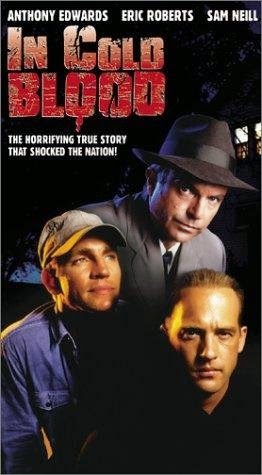
Hollywood Babble On & On #1226: In Cold Blood…Again?


This news has inspired one question:

WHY?

In case you spent the last 60 years in a cave I'll do some explaining.

In 1959 two recent parolees Dick Hickock and Perry Smith slaughtered four members of the Clutter family in rural Kansas because they heard a nonsensical rumour that the family had a mythical stash of money in their house.

Truman Capote, already a successful author, and his childhood friend turned personal secretary Harper Lee, travelled to Kansas to write about the case, and Capote got to know the killers very well as they waited for their execution in 1966.

The book was a monster best-seller and opened the door to a flood of "True Crime" books that sell well even to this day. Ironically it was the last substantial work Capote ever wrote, producing only short pieces, one unfinished novel, while transforming himself from an author who became a celebrity into a celebrity who was once an author.

Despite some disputes over its accuracy In Cold Blood became his most famous and enduring work.

Which brings us back to the question: Why do it again?

The first adaptation was in 1967 and is considered a classic due to the powerful performances and Conrad Hall's vivid black and white cinematography.

Then it was done again in 1996 as a TV miniseries.

Then two other movies, Capote and Infamous, were made and released almost on top of each other and they were about Truman Capote's writing of the book.

So, it's not exactly as if the story's never been told on screen.

In fact, it's been told FOUR TIMES.

Even by remake-crazy Hollywood standards that's a little extreme. Even reboot nutty superhero movies they at least try to change things up with different villains and situations.

This is not that kind of story.

It's a story that's been told, repeatedly, and often pretty well, so why try again?

Thursday, 4 December 2014

Hollywood Babble On & On #1201: Villains, Super-villains, and Superstars

Lots of big villain news this week, so let's jump in headfirst…

BOND 24 HAS A TITLE & A VILLAIN

Here's a video revealing the title for the next Bond movie…


The film will be shot in London, Rome, Mexico City, Tangier, Erfoud and the Austrian Alps, but that's not the big news.

The big news is confirmation that 2 time Oscar winning German character actor Christoph Waltz will be playing "Franz Oberhauser," who turns out to be notorious Bond baddie Ernst Stavro Blofeld.

You may recall that the Bond franchise had to give up using Blofeld because of a legal fight with the mysterious Kevin McClory that had been recently settled.


Personally, I hope they follow the great story arc the Bond/Blofeld relationship followed in the Bond novels. Starting out as a standard hero vs villain and becoming more violent and way more personal as it goes along, leaving both men physical and emotional wrecks. Only a handful of actors can pull off Blofeld, and Waltz is on the top of the list.

SUICIDE SQUAD IS GO!

DC/Warner Brothers have announced the cast list for the Suicide Squad movie, and it only took them five years to pull it together. If you live in a cave and don't know who the Suicide Squad is, I'll give you a rough summary.

In the DC Comics Universe the Suicide Squad or Task Force X is where the government drafts super villains for certain death missions where at least one of them will not survive, in exchange for time off their sentences.

So, it's The Dirty Dozen in tights.

The cast is:

Tom Hardy as Rick Flagg the non-villain military man who leads the team.

Will Smith as Deadshot, a master sniper/assassin who has taken on Batman, the Green Arrow, and other DC heroes.

Jared Leto as The Joker.

Margot Robbie as Harley Quinn, Joker's former psychiatrist turned psychotic lover and partner in crime.

Cara Delevigne as The Enchantress, an artist turned sorceress who started out as a hero, but either a lust for power, or a split personality caused her turn to villainy.

Jai Courtney as Captain Boomerang, a Flash rogue and boomerang tossing hitman.

And they're looking for a middle-aged African-American woman to play Amanda Waller, the bureaucrat who sends the team on their missions. One rumour said Oprah was taking the part, but I doubt she'd want to play a character whose callousness creeps out even professional killers.

Now I have an iffy feeling about this cast or the movie making it all the way to the premier in the originally intended form.

That iffiness lies with Will Smith.

Remember Smith passed on Django Unchained because he didn't want to be upstaged by Christoph Waltz.

I don't see him willingly be upstaged by the heroics of Flagg, or the psychotic scene-stealing of Joker and Harley, unless…he's pulling a Janet Leigh.

That means he's signed on to get killed off and shock the audience into realizing that this franchise is unlike the others, and will kill off major characters with the mad glee of The Walking Dead.

But that's a slim chance for someone who passed on a hit movie with some of the best people in the business to make After Earth.

Then again, maybe he's learned his lesson and realized that in order to stay a viable movie star he'll have to learn to share the spotlight without having to upstage everyone.

We'll have to see where this ends up.

__________________________


Thursday, 20 November 2014

Hollywood Babble On & On #1197: Big Brother Is Watching You

Paul Greengrass, best known for shaking the camera a lot in the Bourne movies, has been tapped to adapt George Orwell's classic novel 1984 for Sony Pictures to be produced by Scott Rudin.


In case you've lived in a cave Orwell's 1984 is the story of Winston Smith. Smith lives in Oceania, a state in perpetual war and under the regime of IngSoc, or English Socialism, led by the enigmatic Big Brother.

Surveillance is everywhere, with devices called "telescreens" monitoring your every move while bombarding you with propaganda about loving Big Brother, hating Emmanuel Goldstein, who both might not exist, and if you stray from the ruling party's line, whichever that might be, you will be taken to Room 101 by the Thought Police, and "corrected" until you loved Big Brother.


Smith works for the Ministry of Truth and it's his job to rewrite old newspaper articles so any future history will reflect the party line. He's chafing under the repressive regime that dictates his every thought and action and rebels, by falling in love with a girl named Julia.

The book had been adapted several times, but only two films were ever released to theatres. The one people remember was the fairly faithful adaption directed by Michael Radford with John Hurt as Smith, that was released, fittingly in 1984. Artists Shephard Fairey tried to make his own version in 2012, but the project fizzled out in development.

When I heard Greengrass was directing, the first thing I thought of was of Big Brother complaining that all the telescreens were shaking in all directions. But my misgivings go deeper than that.

1984 is a book that is still relevant even 30 years after it's science fiction date, but it's very easy to misinterpret.

Orwell was a socialist, which means that he desired a system where everyone was equal in all things,   and worked solely for the betterment of mankind instead of personal greed.

However, Orwell was also an intellectually honest realist, he could see what was being done in the name of socialism all over the world. Pogroms, purges, massacres, and the casual mutilation of truth, which Orwell viewed as sacred, to fit the whims and factional schemes of the rulers. Orwell recognized that the fundamental flaw in any political system was that no matter what, ruthless people would constantly try to wrest control, and many times succeed. If ultimate and even intimate power was to be had, then the most ruthless people would claw their way to the top. That's why a die-hard socialist was able to write two of the most critical novels about socialism, 1984 and Animal Farm. 

Which brings us to heart of the problem.

Hollywood's idea of a political scientist and philosopher is Russell Brand.

When it comes to political/economic/social issues, Hollywood is a blend of ignorance, hypocrisy, political correctness, and self righteousness. They seem to believe that saying the correct things counts more than doing the right things. In Hollywood it's perfectly okay to have a personal carbon footprint equal to a mid-sized European country, or a business operation as ethnically & gender diverse as a KKK meeting, as long as you give money to the correct causes, campaign for the correct politicians, and get your picture taken at the correct protests and fundraisers.

In Hollywood, it's all about image, and nothing to do with substance or accomplishment.

Which is why I'm pretty damn sure that Hollywood will butcher any adaptation of 1984. They'll probably turn Oceania in Oceania Inc., Big Brother into a CEO, and drain any true relevance from the work, because they lack the intellectual depth and honesty to admit that a non-capitalist system can possibly be evil and oppressive.

That and the camera will jerk around so much it'll make me motion sick.

So just let it rest Hollywood.

Tuesday, 11 November 2014

Hollywood Babble On & On #1193: Foundation Lives Again?

Sometimes a Hollywood project has what just might be a Hollywood ending.


Naturally there was much wailing, gnashing of teeth, and rending of garments as the imaginations of science fiction fans were assailed with images of Will Smith as Hari Seldon, a laser-blaster in each hand, blasting robots and aliens while screaming "Ah hell naw!" as a CGI tidal wave of lava topped with surfing Nazis sweeps over the White House.

However, a ray of hope has just broken through the clouds of despair.


I like Nolan, especially with his work on the series Person of Interest, which tells a massive, multilayered, and complex saga of paranoia, artificial intelligence, redemption, revenge, power, and the relationship between governments, bureaucracies, and the citizens they are supposed to serve, all while in the guise of an action packed vigilante crime procedural.

If anyone can do Foundation justice, I think Jonathan Nolan can.

However, I do have one source of trepidation.

It's going to be an HBO show.

Now you're probably wondering why I would be concerned since HBO has put out so many great shows, but I do have a valid point, just give me a second.

If you're not familiar with Asimov's magnum opus the Foundation series begins in the far future. A mighty Galactic Empire rules what appears to be an eternally stable society.

However, not everyone sees it that way.

Scientist Hari Seldon has developed a new field he calls "psychohistory" which calculates the movements of vast societies. His calculations predict that the Galactic Empire is on the way out, and that an age of chaos and darkness that could last millennia is on its way.

Hoping to mitigate the damage done to humanity Seldon starts The Foundation. The Foundation is a community of scientists, artists, and other experts on the remote planet of Terminus, and its their job, and the job of their descendants to rebuild a new society from the ashes of the Empire.

Now the book series has an episodic structure that actually suits a series adaptation very well. However, the cast changes radically changes from episode to episode since there are literally centuries separating some of them, which might hinder the audience getting attached to any specific characters for very long.

But those are just structural and narrative challenges that I'm pretty sure Nolan & Co. can handle. What I worry about is HBO and its philosophy.

Since HBO is a pay cable channel, it is not restrained by the rules about sex and violence that regulate what goes on broadcast and some levels of basic cable.

That's a double edged sword.

Because there are times when HBO gets hung up on putting things in shows just because they can, without asking whether or not they should.

The Foundation saga features a cast mostly of scientists, and intellectuals, with the occasional soldier and space traveller. It also contains almost no sex, which HBO is going to see as a problem. I can see the story conference going like this:
NOLAN: Now this is the scene where Hari Seldon explains how and when the Galactic Empire will start to collapse.
HBO EXEC: It's brilliant but we need Seldon to be having sex with a woman while two hot lesbians scissor each other in the background during this scene.
NOLAN: It takes place in a University lecture hall? 
HBO EXEC: Change that to a brothel. Also, we need this Mule guy to rape some people. Gotta have more rapes. Plus we need the characters to say the word "Fuck" at least twenty times per episode.
NOLAN: Why? 
HBO EXEC: Because we can, that means we have to.
Can you see why I'm worried. It may work on some shows, but in the age of easy access adult content via the internet, it's literally unnecessary to sell a show. Especially one with a large built in audience who might be creeped out by seeing a "sexed up" Foundation saga.

So let's hope that HBO knows when to hold'em and knows when to fold'em.

Friday, 29 August 2014

Hollywood Babble On & On #1174: Original Origins


Hollywood loves superhero movies, they make a lot of money.


Hollywood loves reboots, rehashes, and remakes, because they make executives feel safe.

Combine the two, and the Hollywood studios think that they've got a license to print money.

One problem, it's driving fans nuts, because not only are we seeing origin stories, we're seeing the same origin stories over and over again.

Here's a good example...


When Sam Raimi's Spider-Man franchise sputtered out in the overwrought and overcrowded Spider-Man 3, Sony, desperate to keep the franchise in the hands and not back with Marvel/Disney had two options. They could have "James Bonded" it, and just changed the actors and filmmakers and had Spider-Man go off on a new more or less stand-alone adventure, or they could reboot it, with a retelling of the origin story.


They decided to go for the reboot.


Why?

The real reason is that the people running the studio think that simply continuing a successful franchise isn't enough, you have to go and redo a specific story that they know for a fact has succeeded in the past.

However, that's not what they told the public and the filmmakers.

Those people were told that the reboot was necessary to bring about a new creative vision that will take the characters and the franchise in new directions.

But did it?

In the retelling they just seemed to take the elements from the first Sam Raimi film and just shuffled them around like a deck of cards with a few tweaks to create the illusion of depth. They added a storyline about a conspiracy about Peter Parker's dead parents, had Norman and Harry Osborne switch places in the whole Green Goblin storyline, and piled money on the whole thing with two hands.

It seemed to work. The two Amazing Spider-Man films made a lot of money at the global box-office. But there's a catch.

So much was spent on those movies that Sony's margins on them were either paper-thin, or nonexistent. This means they've delayed the third film, and are, no doubt, thinking about rebooting the whole damn origin story all over again.

There's also reports that Fox's reboot of The Fantastic 4 will feature a retelling of their origin story, which was done in the first Fantastic 4 movie.

Oy.

So let's take a moment to consider when and why you should tell a superhero's origin story.

1. IF THE AUDIENCE DOESN'T KNOW IT ALREADY.

Iron Man needed to have his origin story told, because the general audience really didn't know where he came from and why he does what he does. Simple.

However, if his story was fully part of modern folklore and can be recited by a child in a country that doesn't even have comics, then you probably don't need to do it.

But what about Batman Begins?

Batman Begins was technically a reboot of Batman's… beginnings, but unlike Amazing Spider-Man it actually served two purposes.

First, it corrected the error of Tim Burton's Batman that made a pre-Joker Joker the killer of the elder Waynes instead of common street punk Joe Chill. By denying Bruce Wayne vengeance against the person directly responsible for the deaths of his parents, it forces him to act out against crime in general.

Second, it filled in the mechanics of how a young boy survived a terrible trauma to become the ruthless butt-kicking cape-wearing maniac we all know and love today.

2. IF THE ORIGIN CAN'T BE TOLD IN A TWEET.

Let's face it, you can sum up the origins of a lot of superheroes fairly quickly. Superman: Alien gets powers from our sun, Spider-Man: Gets bit by a radioactive spider, loses his beloved uncle. Etc…

So if you can get away with just saying "This happened and that's why they're like this" and just get going with the adventuring. 

3. IF IT HAS SPECIFIC RELATIONSHIP TO THE CHARACTER BEYOND JUST GIVING THEM POWERS.

Right now Marvel is casting their Doctor Strange, and it would probably be a good idea to include his origin story in the film. He's not that well known, and his becoming the Sorcerer Supreme plays a major role in his character's story arc. He starts off as an arrogant neurosurgeon, confident he has mastery over life and death, has an accident, can't do surgery anymore, and his desperate search for a cure leads him into a hidden world of mystery and magic.

That's a pretty involved story, and pretty important to the character. So it can be forgiven for telling his origin story, as long as they only do it ONCE.

Anyway, that's what I think, let me know what you think in the comments.

Wednesday, 13 August 2014

Hollywood Babble On & On #1170: Can Hollywood Execute The Executioner?

Screenwriter Shane Salerno has inked a deal with the estate of writer Don Pendleton and publisher Gold Eagle Books, itself an imprint of Harlequin Books, to attempt to bring the character of Mack Bolan, The Executioner, to the big screen, marking the latest in 40 years of trying.


In case you might not have spent anytime perusing the bookshelf at a convenience store or bus station in the 1970s to the 1990s I'll give you the low-down.


Mack Bolan was created by Don Pendleton in the late 1960s for a market that's pretty much forgotten now, paperback novels for men. They started as the simple story of a Vietnam veteran becoming a vigilante when his family falls victim to Mafia exploitation. At first he's just using heavy calibre weapons to kill gangsters and hippies, but then he ends up working for a covert agency taking on foreign spies and international terrorists. He's even been cited as an inspiration for Marvel Comics character The Punisher.

Over the decades dozens of authors have written literally hundreds of Mack Bolan adventures and his name was put on a short lived action/mystery mag, and since the beginning people have been trying to get a movie made. Steve McQueen, Vin Diesel and everyone in between have tried, and usually never get past the development stage.

Salerno is hoping to get a script together, get a star attached to the script, and then get someone to produce the film.

It's an unconventional way to get a movie made, and I wish him luck, but there's a big roadblock that I don't think even the Executioner can blow up.

It's called the "R-Rating."

I'm no expert, having never read a Mack Bolan book, but I do believe that they're known for their over-the-top high calibre sex and violence.

Hollywood has proven to be increasingly reluctant to pull the trigger on an R-Rated action movie that above a certain budget. That's because R-Rated movies have recently hit a wall when it comes to what they can pull in at the box office. Media outlets get iffy about when and where advertisements for R-Rated movies can go, and who can see them.

Since Hollywood can't seem to make a romantic comedy for less than $80 million these days, an over-the-top action/crime thriller made by Hollywood could easily top $100 million budget-wise, and about the same for marketing. That's a lot of money for a movie and the studio will want to hedge its bets by removing what made the franchise's name, making it PG-13 at least so they can sell it to brain-dead teens who have probably never even heard of the Executioner book franchise.

So this project is a high risk venture, no matter how you slice it. Make it like the books, run the risk of diminishing the box office, make it PG-13 and it becomes just another action movie completely indistinguishable from the other action movies.