Showing posts with label Those Whacky Weinsteins. Show all posts

Monday, 20 July 2015

Hollywood Babble On & On #1241: Got A Billion Dollars?

The investor cluster that owns the once powerful and feared Miramax Films is considering putting it up on the auction block, and they're asking for…
ONE BILLION DOLLARS!

Now I only have one reaction to that price…

HAHAHAHAHAHAHAHAHAHAHAHAHAHAHAHAHAHAHAHAHAHA!!!

Okay, that's a little mean, I guess a more accurate reaction would be:
But seriously folks, let's take a look at what the company has to offer which is mostly the film library of 700 titles.

Libraries have value, because movies don't really make serious money until they are licensed to what are called the ancillary markets after their theatrical release. That means home video, television, and online streaming services.

A lot of money can be made this way, and the bigger the film library, the more money you can make. In fact, a lot of studios view the box office earnings as just gravy, and that the real money is in those ancillary markets.

However, there's a catch.

Several catches to be exact.

700 movies may sound big, but in the grand scheme of things it's actually not that big, especially when compared to the majors. The major studios literally have thousands upon thousands of titles in their libraries and regularly churn out new material by the pound.

Miramax has been more of less moribund for years, only sporadically putting out a handful of new films under the current ownership.

That's not good.

Because having seven hundred films is fine and all, but any film library, even if every film is as evergreen in popularity as Casablanca, your company is going to reach a point when the outlets you're selling to will say: "What else you got?"

And that's if every film in your library is as perpetually popular as Casablanca, and Miramax's stable is pretty light on films like that.

A lot of that has to do with how the company was run under the Weinstein Brothers. Under their reign Miramax had two business models; one was to acquire independent films for a theatrical release, and the other was to acquire independent films for the sole reason of keeping other distributors from getting them.

That means that for every movie Miramax released during that era, there were several that haven't been seen by a living soul since their Sundance Festival debut in the 1990s. This practice brought the company to the brink of collapse before being bought up by Disney, and it's what made Disney force out the Weinsteins a few years later.

Even if all of the films in question are brilliant, it's next to impossible to sell, for a decent price, rights to a flick that no one can remember, and many of films in the Miramax library are not brilliant at all.

That means that out of the 700 films in the library, maybe about 200, at most, are sellable.

That ain't healthy.

"But what about remakes?" you ask, waving your hand and hooting like Horshak. "Couldn't you remake Miramax movies into big blockbusters?"

Well, you could do remakes of some of the films in the library. But remaking the Oscar winners would offend fans, and remaking the unknowns would just befuddle people. You might as well just make an original film from a script no one has heard of because at least then you could avoid being entangled with…
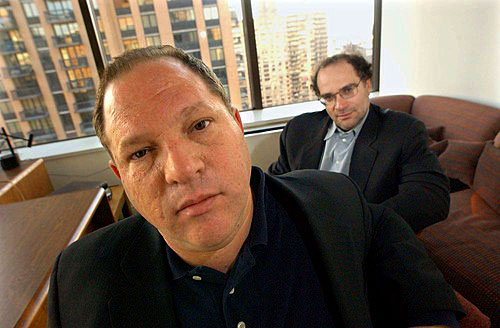
The Weinstein Brothers.

You see, as both the producers and studio bosses of those pictures they made sure that if anyone wanted to do a remake, reboot, re-imagining or sequel would have to involve them.

The problem is that if you're 90% of people who have done business with them in the past, you are far less likely to want to do business with them again.

So, is the business really worth $1 billion?

I'm not even sure it was worth the $600 million the investors gave to Disney back in 2010.

Anyway, that's what I think.

Tuesday, 26 May 2015

Hollywood Babble On & On #1236: Random Drippings From The Brain Pan...

ITV PASSES ON TWC TV:

British TV giant ITV has passed on buying the TV arm of The Weinstein Company, which could have meant hundreds of millions of dollars for the Weinsteins which would have been a nice cushion for their feast/famine business model.

Now some are wondering why ITV is walking away from the deal.

I think I know why ITV backed out, but I'm wondering why it hasn't ended in a lawsuit, which is usually how deals with TWC usually end.

Then again, the day is young, legal papers could still be filed.

Anyway, back to why ITV pulled out. I think they looked at TWC, looked at their history, and looked at how they had to trade over 200 films from their library to avoid bankruptcy a few years ago and said: "Maybe this is not for us."

Remember, television is all about making shows and airing them when you promise to air them. It's all about regularity, predictability, and reliability.

TWC's business model seems based almost entirely on Harvey Weinstein's whimsy, especially when it comes to things that should be simple, rational, business decisions. Whimsy can get expensive.

Then there's trust.

TWC's flagship TV project is Project Runway, a fashion themed reality show. It's run for 13 seasons, they license foreign versions all over the world, and it's a solid ratings earner for the Lifetime Channel.

Now it wasn't always on Lifetime, in fact, for the first five seasons it was on NBC-Universal's Bravo Channel. It was during negotiations for Season 6 that Harvey Weinstein literally buried NBC-Universal boss Jeff Zucker under a ton of aggrandizing horse-shit about how their deal was as good as done because they were the truest friends.

Meanwhile, Weinstein had already inked the deal to sell the show to Lifetime.

Ouch. 

So now you can probably understand why ITV chose to avoid getting into bed with TWC.

TOMORROWLAND TANKS?

Disney's theme park ride turned sci-fi-fantasia film  Tomorrowland is underwhelming at the box office, hitting number one during a shockingly sluggish Memorial Day weekend.

I had a feeling this would happen the moment I saw George Clooney at the centre of the ad campaign.

Hollywood's grim determination to make him a star even though he's dropping more bombs than Curtis LeMay is starting to look both sad and ridiculous.

Clooney's only truly successful film in the last decade was Gravity, and that was essentially Sandra Bullock's movie, he had a glorified cameo, and he didn't feature in any of the ads.

HERE WE GO AGAIN

It's becoming a trend when a celebrity dies that their family start hurling accusations and counter-accusations and everything goes straight to hell. Casey Kasem seems to be the most famous and drawn out case.


I fear it's going to spread, like a virus, and will happen every damn time someone famous dies.

Tuesday, 12 May 2015

Hollywood Babble On & On #1232: We Gotta Question!

Reader Nate Winchester sent me an e-mail asking me this question about the Weinstein Company's most notorious business practice:
Forget how they get other people to go along, why do they keep doing this???  


HOW does a company survive a repeated business plan of "I'll cut off my nose to spite my face." 

Satan just has to be involved.
Now the link is for this video from Good Bad Flicks investigating the cult film All The Boys Love Mandy Lane.

Here is the video, but be warned, he gets into spoilers after he talks about the film's troubled history.

If you're too lazy to watch the video, or want to avoid spoilers, I will give you the gist of what happened to the film, and then we'll try to figure out why it happened.

All The Boys Love Mandy Lane was made in Austin Texas by some aspiring filmmakers for around $750,000. It premiered at the Toronto International Film Festival where it became the darling of the 2006 Midnight Madness slate, which is normally seen as a great sign for it future success.

A bidding war ensued. Every indie distributor wanted to get their hands on it, but it was the Weinstein Company that won, paying out $3.5 million for the privilege.

TWC then held a test screening, and declared that the results were so awful, the film did not deserve to be released.

The film gathered dust on a shelf for a few years. But online pressure inspired TWC to sell it to another distributor, who promptly went bankrupt. Then more time passed, just about everyone involved in the film went on to bigger and better things, and after seven years in limbo it got a token theatrical release, and then was dumped on home video, with pretty much all momentum lost.

Which brings us to Nate's question:
HOW does a company survive a repeated business plan of "I'll cut off my nose to spite my face." 
Satan just has to be involved.
Satan is probably not involved, as far as I know, but there are some theories as to how this keeps happening.

First the Weinstein's are masters at convincing people to go along with them. They can point to their Oscars, their hits, as well as their personal wealth, and say "Look at what we did for them, and we can do it for you."

The problem is for every Oscar winner or box office hit they probably have about a dozen films that either sink completely, or are just not released at all.

So why buy a film and not release it?

There are two reasons for the Weinsteins to do that. One is financial, the other is psychological.

The financial reason has to do with accounting rules. According to those rules a film that they bought for $3.5 million goes on their books as an asset worth $3.5 million.

If they release that movie, they must then deduct the cost of its release from that value, and then add any profits that comes in.

If the film bombs then it's considered a loss.

So it's better to just have it sit there gathering dust.

As I said, the second reason is psychological. From everything I've ever read or seen about how the Weinstein Brothers do business is that they must win EVERYTHING, even contests they're not truly interested in. Also, not only must they win, everyone else must LOSE.

The history of Miramax and the Weinstein Company shows a repeated strategy of buying films they have no interest in for the sole reason of making sure that no one else can do anything with them. 

Now this business model isn't as successful as the Weinstein Brothers would like you to think. First they almost bankrupted Miramax, but was saved by selling out to Disney, only to have Disney force them out of Miramax when they repeated those antics. Just a few years ago TWC had to hand over the rights to almost its entire film library up to that point to its creditors to avoid getting crushed by the debt they piled up to acquire those films.

Basically, their entire business model is based on hustling. Hustling Wall Street for capital, hustling filmmakers for movies, hustling academy voters for prizes, and only occasionally hustling audiences for ticket sales.

TWC does not have a model for a self-sustaining film company. Either they will run out of steam, filmmaker goodwill, and other people's money, or an ill-timed heart attack will bring the whole house of cards down. Then TWC will be nothing more than a footnote in film history.

Tuesday, 14 April 2015

Hollywood Babble On & On #1226: In Cold Blood…Again?


This news has inspired one question:

WHY?

In case you spent the last 60 years in a cave I'll do some explaining.

In 1959 two recent parolees Dick Hickock and Perry Smith slaughtered four members of the Clutter family in rural Kansas because they heard a nonsensical rumour that the family had a mythical stash of money in their house.

Truman Capote, already a successful author, and his childhood friend turned personal secretary Harper Lee, travelled to Kansas to write about the case, and Capote got to know the killers very well as they waited for their execution in 1966.

The book was a monster best-seller and opened the door to a flood of "True Crime" books that sell well even to this day. Ironically it was the last substantial work Capote ever wrote, producing only short pieces, one unfinished novel, while transforming himself from an author who became a celebrity into a celebrity who was once an author.

Despite some disputes over its accuracy In Cold Blood became his most famous and enduring work.

Which brings us back to the question: Why do it again?

The first adaptation was in 1967 and is considered a classic due to the powerful performances and Conrad Hall's vivid black and white cinematography.

Then it was done again in 1996 as a TV miniseries.

Then two other movies, Capote and Infamous, were made and released almost on top of each other and they were about Truman Capote's writing of the book.

So, it's not exactly as if the story's never been told on screen.

In fact, it's been told FOUR TIMES.

Even by remake-crazy Hollywood standards that's a little extreme. Even reboot nutty superhero movies they at least try to change things up with different villains and situations.

This is not that kind of story.

It's a story that's been told, repeatedly, and often pretty well, so why try again?

Thursday, 5 February 2015

Hollywood Babble On & On #1216: The Great Weinstein Intern Auction

No, Harvey Weinstein is not auctioning off the company interns…at least not yet.


What Harvey Weinstein did was auction off a three month unpaid internship with his company for $25,000 with some of that cash going to the ACLU of Southern California.

Let me sum it up: Someone with a lot of money paid $25,000 so their college age kid can run errands and get yelled at for three months with no salary.

So why did they do it?

Was it for charity?

Probably not.

Was it out of love for Harvey Weinstein?

Definitely not.

What was really up for sale at the auction was a chance to touch the keys to the kingdom of show business. A chance to mount the greasy pole of Hollywood executive advancement in the only way that's possible now.

There are those who are criticizing the auction saying that it favours the rich and connected and hinders diversity in the film business.

OF COURSE IT DOES, THE WHOLE INTERN-TO-EXECUTIVE SYSTEM IS DELIBERATELY DESIGNED TO FAVOUR THE RICH AND CONNECTED, WEINSTEIN'S AUCTION WAS JUST BEING HONEST ABOUT IT!!!

Hollywood management is evolving into the sort of snooty hyper-exclusive country club that Hollywood movies would make fun of by having the Marx Brothers or Bill Murray engage in a variety of wacky antics. If you are not born into the narrow socio-economic circle that currently runs the show, you will NEVER enter it because the way there is extremely narrow.

If you want to become an executive in Hollywood there is only one set of steps you need to follow.

STEP 1: Be born into the right family.

This family have to have two things: MONEY and CONNECTIONS. If you don't have one you will not get the other. 

STEP 2: Be accepted into the right schools.

Now you're probably thinking about Ivy League schools like Harvard, and you'll be partially right. Partially because you'll need to attend the right pre-K, the right kindergarten, the right elementary school, the right junior high and the right high school. While at these institutions of learning you must belong to the right clubs and teams with other right people.

Then you get into the right university.

Once there you must join the right clubs, fraternities and/or sororities, so you meet other people from the right circles so you can...

STEP 3: Use the connections you got from being born into the right family and going to the right school to get the right internship.

We're not talking about being a coffee-fetcher on some indie film, we're talking about working in an office surrounded by other people who got where they are the exact same way you are.

This is an unpaid position, which means you will need a substantial allowance from mommy and daddy to not only buy food, clothing, and shelter, but to have the RIGHT food, clothing, and shelter, and show the people you're working for that you don't really need to work for them to survive.

STEP 4: Use family, school, and internship connections to get the right job as an assistant.

As long as you don't screw up totally, you can then have the connections to get a job as an assistant to an executive. While a paying position the pay is deliberately shitty because the last thing they want is someone who actually has to live on an assistant's salary. Those kinds of people don't have the right "look" for the office, and won't be parking the right sort of car in their lot, and need to be kept far-far away.

STEP 5: Don't set yourself or the office building on fire.

Then you're on your way to a nice corner office.

Many complain about the lack of diversity in Hollywood, especially in its executive suites. But they look at solely in terms of skin colour, and skin colour is only looking skin deep at the issue.

Hollywood management has a terrible lack of diversity in literally every facet of society. Some may look at the Golden Age of Hollywood and think that its management was even less diverse than it is now since it was 100% male, 100% caucasian and about 85-90% Jewish. But go beyond the statistics and look at them as individuals they all had different backstories, places of origin, as well as wildly divergent opinions on everything from taste in movies, to politics, to business management, and economics.

As the early moguls built their companies they encountered and did business with wide swathes of American society. When it came to recruiting, they looked for ambition, drive, and brains, money was the bait they used to lure the best talent, and connections were something those new faces had to build on their own, or fail.

This means that the old school moguls and their minions knew more about the wider society they were dealing with, than many of today's modern executives who spend their entire life within an ever-decreasing social circle where everyone agrees with everyone else on everything and can't possibly imagine anyone who thinks, acts, or looks different than them being worth their time.    

Internships for dollars is just a minor symptom, a narrow minded inbred cliquish management culture is the real disease.

And the great irony of all this is that Weinstein was probably the last true outsider to become a major player in modern Hollywood, but now he's just another piece on their chessboard, and it ain't a king or a queen.

Wednesday, 6 August 2014

Hollywood Babble On & On #1168: 3 Short Subjects

ROM-COM COMEBACK?

Romantic comedies used to be the backbone of Hollywood. This was true from the Golden Age to until fairly recently, and now the genre seems fairly moribund, but a columnist at Variety thinks it deserves a comeback.


Romantic comedies do serve a purpose. They make good "date movies" that both men and women can enjoy, and are a lot cheaper to make than the big epic action movies that dominate the summer box office, and used to be really common.

So why are they so rare now?

Variety thinks a major factor is that those who were major rom-com stars in the genre's most recent peak of the 1990s and early 2000s are aging out of the ingenue ranks, but that doesn't explain everything. The genre is cyclical, and suicidal.

Now let's look at what the hell I'm talking about:

CYCLICAL: Rom-Coms come and go in relation to wider social trends. In the 1930s the Screwball Comedies ruled both as a relief from the grimness of the Great Depression and as a satire of the tumult in sexual mores that occurred in the 1920s.

Over the decades the genre changed into different styles to reflect changing tastes. It fell into a bit of a stupor in the 1960s and 1970s because one of the key ingredients to a rom-com, consequences to romantic/sexual decisions, fell out of favour. 

In the late 1980s society was hungover from the sexual revolution, and people started to take relationships seriously again. This saw a return of the romantic comedy with films like When Harry Met Sally, and it's brief silver age in the 1990s marked by the success of Four Weddings And A Funeral.

So why hasn't the genre just evolve instead of being in the rough shape it is in now?

But it did evolve, but not in a good way:

SUICIDAL: Since the genre was, by its nature, cheap, the studios and the people making them seemed to decide some time in the early 2000s that they didn't need to burn many calories making them. Characters became stock types, gimmicks became more outlandish and inane, and subplots became more about editing together shopping montages than about romance.

Men tuned out, moved on to the broad gross out comedies for their laughs, soon followed by women who also found the genre lacking the wit, the spark, and the heart that they had originally loved.

Can it be revived?

Hopefully. I like variety in entertainment, and the more genres out there that people can enjoy the better.

GHOSTBUSTED 2: FURTHER THOUGHTS.

The other day I wrote about how any new Ghostbusters movie will only disappoint, and used Ghostbusters 2 as the prime example since it did so poorly in comparison to the first one.

That inspire reader Nate to comment:

Ah but the Ghostbusters did have a saturday morning cartoon show that ran for a few years. So there might be some question of why did 2 flop but the spin-off succeed? 
I think the biggest problem with 2 is that the story ended up being too much like 1, a rehash. Had they taken the story in actual new directions and allowed things to grow rather than just hit the reset button (like the relationships especially) things might have been different. 
Well that and not gone up against the juggernaut that was Batman.


Now that I had a moment to think about it, I think it went darker than a simple rehash because of one simple fact:


WALTER PECK WON


Remember Walter Peck the bureaucrat from the EPA who shut down their system, unleashing the ghosts and almost dooming the world?

Ghostbusters 1 ended with him being exposed for the know nothing power abusing popinjay he was and our heroes saving the world from Gozer.

Ghostbusters 2 opened with Peck having gotten everything he wanted. They're out of business, broke, and scattered to the four winds. They saved the world, but were unable to save themselves from bureaucracy and the legal system.

That's a dark place to start a comedy.

If they wanted to take the show in a new direction, they probably should have opened by revealing that since the defeat of Gozer supernatural activity plummeted to almost nothing, and what does happens seems harmless, if not downright tame. With no ghosts to bust they drifted apart, coasting on their brief fame, only to be thrust back together by a big, possibly ridiculous, world-threatening emergency.

Giving the win to Walter Peck was just a step too far.

A QUESTION FOR SNOWPIERCER

In case you don't know Snowpiercer is a science fiction movie with an all-star and some kind of controversy over its release, but that's not what I'm going to talk about.

What I have is a question about the premise.

The premise has humanity all but wiped out by an ice-age. The last survivors are all crammed in a train, powered by a perpetual engine, that just goes in circles through the frozen wasteland, and class warfare breaks out between the poor, stuck in the back, and the "rich" in the front over control of the dwindling supplies.

Now here's my question.

They have a source of infinite electricity, and are surrounded by the ruins of the recently fallen civilization.

Why don't they just take the resources they waste keeping the train going around and around in circles, and use it to build a more permanent, well heated, home, that's capable of growing food?

An immobile home is easier to maintain than a massive moving vehicle, a lot less moving parts, and the ability to grow food would also solve a lot of their problems involving population, hunger, and cannibalism.

Why doesn't anyone do this?

In fact the whole premise seems based not on anyone looking for solutions to problems, just looking for ways to make them worse. 

None of the motivations that form the foundation of the premise make any sense unless the creators were looking for some sort of obvious metaphor about class war that critics would mistake for deep thought. However a metaphor that reflects so little about actual reality, economics, and human behaviour is not going to have that much of a lasting effect on the zeitgeist.

Monday, 7 July 2014

Hollywood Babble On & On #1159: Random Drippings From The Brain Pan

WEEKEND WEAKENED

Overall box-office for the 4th of July weekend is down.

Not just down, but really down.


Do you think the studios will pause and take a look at what they're doing to see how such a precipitous drop could happen?

Probably not.

TRIBE GETS A DISTRIBUTOR

Drafthouse Films has acquired The Tribe, a Ukrainian film set at a school for the deaf and with a cast of all deaf amateur actors. Sadly they turned down my suggestion to retitle it "Talk To The Hand."

*pelted by rotten tomatoes*

Fine, be that way.

WEINSTEIN CO. COLLECTS LAWSUITS LIKE TRADING CARDS


A man named Michael Trigg donated $100,000 via CharityBuzz to the La Jolla Playhouse with the understanding that it would result in him getting a small part in Scary Movie 5 with a few lines.

The suit alleges further costs because he had to change his flight and accommodation plans because of changes in the shooting schedule, the film's makers didn't know about the contest, or his role, and about a dozen different troubles and complications that left him bereft and feeling that he has to sue everyone involved for unspecified damages.

Which makes me wonder why the Weinstein Co. ever did the contest in the first place. Casting is tricky, even the small parts, and characters get edited out all the time, including major ones. If everyone involved in making the movie isn't fully in-on the thing, it's going to cause confusion, dissatisfaction, and probably lawsuits.

Maybe they should have just offered a trip to the set to meet the stars. It may not have raised as much money, but it would have saved money on lawyers.

HEIGL-ANIAN DIALECTIC


Now a look at Hollywood history would reveal many actresses who made many romantic comedies, some almost exclusively so, and had pretty long and healthy careers.

Heigl's problem comes from the simple fact that too many of her romantic comedies were shit, and for some reason very few people were willing to work with her more than once.

PINK FLOYD REDUX

Legendary British rock band Pink Floyd is going to release their first album in 20 years.

It's going to be called: PIPER AT THE GATES OF DAWN WILL YOU SHUT THE HELL UP I'M TRYING TO SLEEP.

First single will be called GET OFF MY LAWN YOU DIRTY HIPPIES.

GAME OF WINE


Here are some slogans for this new wine:

LANNISTER WINE*: "By the second glass even your sister will look good."
*Available in a Tyrion size half-bottle

STARK WINE: "You'll lose your head over it."

TARGAERYAN WINE: "The Whitest of the White Wines."

Monday, 10 March 2014

Hollywood Babble On & On #1126: Random Drips From My Brain Pan.

LIVE FROM NEW YORK IT'S SOMEONE YOU DON'T CARE ABOUT!


Lena Dunham, the star/creator of HBO's Girls was guest host of Saturday Night Live, and predictably had some of the worst ratings the show has seen this season. She's also penning a four part story arc for Archie comics which could set new records in dismal sales if they use that in the sales pitch.


I say predictably because Dunham is a paradox. She's the child of New York's elite art and media scene who has known a life of privilege and near constant praise who tries to present herself as the average everywoman. Except whenever she tries to speak like an "average" person she sounds like Thurston Howell III trying to make friends in a working class tavern while on a lay-over in what she would call "fly-over country."

Her background pretty much insures that the media will sell her as if she is the biggest thing to happen to entertainment since Star Wars. She is more than just one of them, she is literally the child their village has raised, and her pretensions to average-ness appeals to their belief that they set the world's standards of normalcy.

So they repeatedly yell in the world's collective ear that she's the greatest thing to ever happen to them. But as the rest of the world gets to know her they realize how little they have in common, and move on to things they have a better chance of relating with.

The irony is that if Hollywood didn't go for such a hard sell right out of the gate, they may have had a better chance of finding her a larger audience.

A TRUE DETECTIVE MYSTERY

HBO's True Detective wrapped up its first and some are already sniping about the ending because, horror of horrors, they catch the killer.

I blame JJ Abrams and David Chase. Ever since they introduced the non-ending of a series critics, both professional and self-appointed tend to start feeding frenzies over the conclusions of shows. They demand either massive plot twists that would bend the brain of M. Night Shyamalan, or pretentious non-endings where things just stop, leaving untied threads, unanswered questions and unsatisfied viewers.

So a show that apparently has a logical conclusion shocks and dismays them.

Lighten up.

HE SHOULD KNOW

Harvey Weinstein of The Weinstein Company told LA's new film czar that California is still competitive in the movie business, even though more movies and shows are being shot in Louisiana these days.

Harvey should know, he lives and operates in New York City.

The sad truth is that California is not competitive anymore. Hollywood used to the place where movies were made because of the state's mild predictable weather and open-for-business frontier mentality. The weather's still there, but things have changed dramatically.

Developments in technology means that filmmakers aren't bound to sunshine and warm weather to make movies, and the frontier mentality is long gone. In its place is a closed off mentality where the wealthy elite, cushioned by their wealth from the consequences of their decisions, back programs and regulations that make living and working for the middle class and  small businesspeople nearly impossible.

That means the people who make the infrastructure of filmmaking possible are migrating to Louisiana, Texas, and a dozen other states. Hollywood has gone from being the place where movies are made to the place where the deals for making movies are made.