Monday, 10 September 2012

Hollywood Babble On & On #951: What's The Matter With DC?

In Hollywood if at first you don't succeed, spend a truckload of other people's money to try and try again. This is especially true of DC Comics and their attempts to get anything live action that doesn't have Batman or Superman involved.

However even Superman and Batman have been victimized by Warner/DC's particular brand of development hell. Remember 15 years and $50 million were pissed away before they plopped the lackluster and mopey Superman Returns on screens, and thousands of Bat-Fans were emotionally scarred by nipples and thongs on the Bat-Suit.

Every other attempt to get DC's superheroes on the live action big screen either fizzle out un-filmed (Wonder Woman), or flop horribly (Green Lantern). They're so desperate and flailing they're even trying to bring back Lobo from the tomb of the irrelevant 1990s.

It's not faring that much better on TV. Outside of their Superman's Wonder Years show Smallville, which did run like 10 years, the fields are scattered with dead pilots (Aquaman and Wonder Woman) and others that make it only to 1-2 seasons at best (Birds of Prey, Human Target).


Now they're trying to get re-invent two long running DC heroes for TV. Green Arrow is being reborn as Arrow, which the advance publicity says is going to feature him battling sinister corporate types over super-villains. Which will probably shift to super-villains mid-season and most likely end up in yet another truncated run. 

They're also taking another crack at Wonder Woman with the CW commissioning a pilot script entitled Amazon. Reports say that they're going to Smallville the Amazonian princess, centering on her teens years before she comes out as a fully formed hero.
This comes hot on the high heels of NBC's un-sold pilot from chick-TV magnate David E. Kelly. Kelly's concept was to give Wonder Woman three separate identities: superhero, bitchy corporate big-wig, and neurotic every-woman. Just about everyone who saw it said it was awful, and the bits I saw only agreed with that judgement.

Making movies and TV shows from comic book heroes should be easy for DC/Warner Bros. They've been part of the same mega-conglomerate since the 1970s, and takes out the whole "looking for material and buying the rights" stage of the process.

But outside of animated television/DVD projects and the Batman films made by Legendary Pictures, they can't seem to do anything without wasting millions of dollars and the times of everyone involved from the film's makers to the audience.

I've griped about it before, but I think the biggest problem they have is that they don't seem to realize that they have a problem.

Marvel used to fail miserably at the movies while DC was basking in the glow of the Superman and Batman movies of the late-70s and 1980s. Marvel's failure was that they didn't have any direct connection to a movie studio and had to make deals with different studios and independent producers, and the deals they made, and the rare films made from those deals were really bad.

Nowadays Marvel is a movie powerhouse so big that Disney was willing to shell out billions to buy them, and be a good deal for Disney.

What happened to make them so hot after decades of skirting bankruptcy and failure?

They realized that they had a problem.

When they got some clout after the success of the X-Men movie, they took the bull by the horns and made a plan.

They got the best deals they could, and when they had the money and the clout, they started producing their own movies. Their development process was streamlined, and they did everything they could to present their characters in the best light on the big screen.

Warner/DC doesn't see that they have a problem at all.

That's the problem.

Will they ever see if they have a problem?

Not as long as Legendary and Chris Nolan continue to help them pump out DC related hits that they can take credit for. But if they lose these partners, they'll lose their ability to get anything accomplished at all.

Friday, 7 September 2012

RIP Jake Eberts


You probably don't know the name, or the face of this mild mannered Canadian, but if you're a fan of quality movies, you are definitely familiar with his work.

Directors are credited with making films, but it takes people like Eberts to get movies made. His specialty was bringing investors and filmmakers together, and his eye for risky, but high quality projects resulted in him being involved in movies that earned over 66 Oscar nominations, and 37 wins.

The Quebec born movie business dynamo was originally trained as a chemical engineer at McGill University in Montreal. He went on to get an MBA from Harvard and pursued a career in high finance.

It was that work that first got him involved in independent film in England, and he was a key player in the revival of the British film industry in the 1980s.

That revival was led by Goldcrest Films, a company he co-founded and headed first from 1977-1984, and then from 1985-1987.

During his first tenure at Goldcrest he was behind a string of successful movies that blended commercial appeal with award winning acclaim. It was a varied bunch of films, ranging from The Howling, and Escape From New York, to the back to back Oscar winners Chariots of Fire and Gandhi.

Gandhi was his most famous project since it had spent years wallowing as the film no studio wanted. On the surface it looked like a disaster in the making, an epic story about a skinny Hindu walking around India, a country the studios assumed the audience didn't care about, preaching non-violence. Eberts saw potential no one else did, made the movie, got it released, and helped make it not only an Oscar winner, but a commercial success.

Eberts left Goldcrest to take a high paying job in the USA, but was brought back to the company due to troubles it experienced during his absence.

Chief among those troubles were the films Revolution, The Mission, and Absolute Beginners. The three films were a break from Goldcrest's fundamental plan of modest budgets and high quality. They were relatively big money films that needed to be the 1980s equivalent of blockbusters to succeed.

They didn't. The Mission came close to breaking even, but not close enough, and neither Revolution or Absolute Beginners came remotely close.

Goldcrest was restructured and sold to new owners, and Eberts left to form a new company called Allied Filmmakers in partnership with the French cinema giant Pathe. Allied Filmmakers' specialty was bringing together investors and filmmakers, and was only rarely credited as a traditional production company.

Eberts wrote about his time at Goldcrest in his autobiography My Indecision Is Final, with journalist Terry Illot.  I feel that this book is essential for anyone remotely interested in the business of movies. Some may find it a little dry, since it's not about scandal or celebrities, but it contains vital information that every filmmaker should know about how things work.

He was a rare bird who showed that you can successfully sell mature and intelligent movies to a wide audience. I fear we might not see his kind again.

Thursday, 6 September 2012

Trailer Trashing: Barry Levinson's The Bay

Barry Levinson the director behind films that range from respected classics like Diner to that one where Jack Black makes dog poop disappear is dipping his toe in the whole found footage horror fad with The Bay. Let's look at the trailer...


My verdict: I'm just not feeling it.

It looks like a parade of not just horror/zombie/found footage cliches but the kind of cliches filmmakers use when they try to make what they think is the "important" horror movie.

There's the references to ecological disaster, and that the US government is somehow remotely capable of covering up the zombie-parasite related slaughter of an entire large town.

Feh.

Then there's the final bit where someone does a "too dumb to survive move" by getting into a car, during a zombie outbreak, without looking in the back seat.

Double feh.

I think his last attempt at science-fiction/horror the flaccid flop Sphere would have reminded him to stay out of this sort of genre work.

That's what I think, what do you think?

Tuesday, 4 September 2012

Hollywood Babble On & On #950: Digital Dumb-Assery

The rise of the internet and new digital mediums, has opened new avenues for the transmission of information, music, video, and even books.

It has also opened new avenues for egregious stupidity that could easily kill the golden goose, and mostly over who owns what is defined as "intellectual property." The media corporations don't know what to do when it comes to digitized intellectual property, so they either come up with wonky rules or lash out in erratic ways that make no sense and do more harm to their cause than good.

First up is iTunes which is looking at a court battle which I would like to call: "iHard With A Vengeance."

Trust me, once you here the story, you'll think that name was brilliant.

It all hinges on the simple fact that you don't legally own the songs and other material you buy on iTunes.  You are, in fact, buying a license to use that material on appropriate gadgets until the day you die, then it all goes back to iTunes and the record companies.

Not many people know that since it's buried deep in the "user agreement" or "terms of use" that very few people actually read in full, and even fewer understand.


One person who has read the agreement, or had his lawyers read it is actor Bruce Willis.
 
What he's discovered has pissed him off, and reports are saying that he's planning to take iTunes to court

You see, Willis has a large music collection, and he wants to leave that collection to his family in his will the way he would have left a collection of vinyl record albums or a stack of CDs.

"Ixnay on the eavinglay" declared the iTunes terms of use in a shocking use of the Latin language, because all your songs really belong to us. 

Willis might have a case, since all of iTunes advertising say "buy your music" instead of "rent the license in order to have permission to use your music for a limited time determined by the company," which is what iTunes is really selling.

iTunes will then claim all kinds of obscure copyright regulations, which might have more legal weight, but very little moral weight because it involves removing ownership from the customer of a good the customer paid money for on the good faith belief that they will own them.

But that's not the only thing.

Big media companies are terrified of piracy, and with good reason, it costs them millions of dollars each year. However, there tactics seem intent on giving the pirates the moral high ground.

The most recent exhibition of copyright law enforcement dumb-assery was the Hugo Awards given at the World Fantasy Convention.

If you don't know, the Hugo Awards, named after groundbreaking editor Hugo Gernsback, are to honor the best writing of science fiction and fantasy in multiple mediums including novels, short stories, film and television.

This is where the idiocy comes in. The awards ceremony was being broadcast live on the internet via the Ustream service. It was all going well until they got to the television awards.

The Hugos had permission to air clips from the nominated shows, but no one bothered to tell the automated piracy hunting bots that the media companies.

The bots shut down the broadcast right in the middle of the TV awards, pissing off legions of science fiction and fantasy fans.

Once again, the big media companies show zero competence in managing access to intellectual property, and engaged in the sort of heavy handed tactics that make pirates look like the good guys.

Big media needs to get some serious common sense if they're going to survive this major shift in how people get, use, and share intellectual property, because they're definitely doing it wrong now.

Monday, 3 September 2012

Hollywood Babble On & On #949: Question? Answer.

I got a reader question, and I'm going to try to answer it...
Rainforest Giant asked...

Have you heard Kira (sp?) Sedgewick's comments about flyover country? She dared to point out that there was a world beyond the coasts and that they hold different opinions. The kid from 'American Pie' works on a Nickelodeon show and Nick has been linking to his filthy twitter feed. Any downside for Nick or are we already too decadent?

Finally, with all the talk about comics anything new on that front esp. Arrow?
I have heard Kyra Sedgwick's comments about flyover country. It took a little digging but I did find them.

For those who didn't catch the story Sedgwick the comments came up during an interview on the Tavis Smiley Show about her recently concluded run on the successful cable TV police drama The Closer

The story was picked up by some conservative Hollywood watchers and one of them posted the relevant clip...


Now if you don't have the two+ minutes to spare to watch the clip, I'll give you a summary and a little explanation.

Sedgwick talked about how her show earned great numbers when it came to viewers but very little respect from within the Los Angeles / New York media community. Partly because the show was a police procedural, the workhorse of television, but mostly because it was seen as a show for "Red States."

"Red States" is a term used to describe states that tend to vote Republican and be more politically and socially conservative than the people in Los Angeles and New York City. However, a more apolitical description would be the term "Flyover Country."

Flyover Country is slang for the parts of the USA that are not in the greater metropolitan areas of Los Angeles and New York City. The residents of LA/NY never visit these places, they only "fly over" them on their travels between the big coastal media centers.

Now the big problem Hollywood has is that they know pretty much next to nothing about the people who live in "flyover country" except what's told to them by their immediate neighbors, who get everything they know from the stereotypes in movies and TV shows made by Hollywood. 

It's a vicious circle of isolation and it's only getting worse.

There are three reasons for this...

1. Politics Meet Over Simplification: Right now the divisions between people who identify themselves as Democrats and Republicans haven't been this big in a very long time. Hollywood is predominantly Democrat and large swathes of flyover country vote Republican.

Now this has a toxic effect in Hollywood which already has a culture dedicated to following trends and fads in a united pack, and a tendency to reduce everything into overly simplistic black/white/good/evil paradigms.

That means that if you deviate from the socially accepted pack of Hollywood, you are not just different, you must be evil.

So what used to be a wide patch of territory marked "boring" in the mental-map of citizens of the Axis of Ego is now labelled "Here There Be Monsters" like it was laid out by a medieval cartographer who thinks flesh-munching demons dwell beyond the borders of his remote little abbey. 

That is if the abbey was a mansion in Beverly Hills.

2. Ivy Leaguism: Back in Hollywood's Golden Age, when the entertainment industry not only didn't ignore Flyover Country, but actively pursued it all the people running show business came up from the streets.

They were working class people, many didn't have degrees, and some didn't even finish high school. Instead they started at the bottom of the business, and worked their way up to the top.

Nowadays, to qualify for a post in the mail-room or as an assistant you need not only a degree from an elite Ivy League university, but membership in the right college fraternity, and a relative who is either in the business, or is owed something by someone who is already in the business.

The industry's management shifted from self-made go-getter types who came from the working class immigrant neighborhoods of the big cities, and hard-scrabble smaller industrial towns, to recruiting the elite of the tonier coastal suburbs.

This gives an element of snobbery to Hollywood that it really didn't have before. Anyone who doesn't live the way they do, is now seen not as hard-working ordinary people, but dim-witted rubes not smart enough to function in their ultra-modern world.

3. Other People's Money: In the golden olden days Hollywood didn't look down on the audience that lay beyond its borders, because that audience was what put luxury cars in the mansion's garage.

Nowadays there's a buffer between the audience and Hollywood and it's called Other People's Money. The studios and the networks are all just small cogs in massive multinational conglomerates. If something offends flyover country, like Jason Biggs' X-rated failed attempts at political humor on Twitter, it doesn't matter to the parent corporation. Whatever happened only affects a tiny part of a big machine, and they think that such behavior will help sales to foreign countries who they assume have the same attitudes because the rich elites they socialize with from those countries have them.

So I doubt Biggs will be substantially "punished" for his off-color tweets, since he scrubbed the offending "jokes" as soon as a backlash started. He's just small potatoes, and any outrage his remarks started will probably be short lived.

Now should he be punished?

Probably. At the very least he needs a strong verbal bollocking about posting rude jokes about a prominent politician and his family on the eve of starring in an animated kid's show.

I hope I've answered your question.

-----------------------------

Now onto your comics question...

I haven't heard much about what's going on in the comics industry of late. However, I have heard a little about the plans for the upcoming show Arrow, featuring the DC comics character and what I heard doesn't exactly make my heart dance.

Word is that the greenless Green Arrow will embody the spirit of "Occupy Wall Street" and fight the evil 1% corporate villain types. Because no one has ever done anything like that before.

I don't think anyone at Warner Bros., the CW, or DC Comics has given much thought to how those in flyover country, otherwise called the majority of the population, really think about Occupy Wall Street. 

I suspect that they don't have the same thoughts about it that Hollywood is having.

See, everything goes full circle here.

Friday, 31 August 2012

Hollywood Babble On & On #948: Oogieloves Get No Love

Kenn Viselman is the man who brought British children's TV sensations The Teletubbies and others to North America.

He's also, barring a miracle, just lost a shit-load of money on his independently produced family feature The Oogieloves In The Big Balloon Adventure. The $20+ million film currently holds the record for the lowest per-screen average of a wide release movie on its opening night with approximately $47 per screen.

That is a take that sucks donkey balls.

Now you're probably wondering how this could have happened. No one goes out to make a bomb. Everyone goes into the making of the film hoping that it will be a hit, and often it's the desire to make a film a "guaranteed hit" is what sucks out all the appeal of it.

I suspect that's what happened here, with a healthy dash of ego-blindness.

The producer has had enormous success with the Teletubbies and other toddler-friendly franchises on TV, so he probably thinks that making and selling a feature film directed at toddlers will be a natural progression.

It all looks good on paper, and probably sounds great at the pitch meeting.

Except in reality, it's a disaster waiting to happen.

The key problem: Targeting toddlers.

Toddlers don't go to the movies by themselves. No matter how much you yell at them, they don't drive and they can't buy their own tickets because they don't have their own credit cards.

They need to be taken to the movies by their parents.

That's the key.

Now selling a TV show to toddlers is EXTREMELY different from selling a feature film to toddlers. A parent can turn on a TV show, and go read a book, listen to music, or more likely, spend the time cleaning up after their little bastard spawn. They don't have to watch, let alone participate in the TV show their toddler is watching.

A theatrical feature film is different. 

Parents cannot do chores, read books, or chat on the phone with their illicit lovers during a movie for toddlers. They have to sit there and watch the frigging movie, and they're already edgy from packing the little shits into the minivan, finding a parking space, and paying for tickets and snacks.

If you're going to get the parents to go through all that trouble, and sit through your movie, you're going to have to have something for them.

That's what Disney/Pixar and to a lesser extent Dreamworks do. They deliver the sights and sounds that pleases the rugrats while entertaining the parents with stories, characters, and humor.

Oogieloves promises something for toddlers and only toddlers.

No parent is going to pay good money for 90 minutes of creepy neon-colored humanoids when they're not allowed to watch it while high without getting the cops and social workers involved.

The fact that the people behind this film didn't realize that is why they're now out $20 million in production money, plus millions more in prints and advertising.

Wednesday, 29 August 2012

Hollywood Babble On & On #947: Boob Tube Bits...

Today 3 short pieces about TV....

1. BEVERLY HILLS COP: THE SERIES?

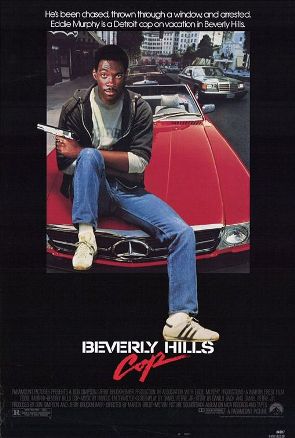
Eddie Murphy, the future of his fat paychecks and lavish entourage related perks in jeopardy, is working with experienced TV writer/producer Shawn Ryan to pitch a TV series sequel to his 80s action comedy Beverly Hills Cop.

Now Murphy's not leaping into the weekly TV grind. Instead the lead will be the son of Axel Foley, the titular cop, who leaves his native Detroit to take a full time job as a detective with the Beverly Hills Police Department. Murphy himself will only do occasional guest appearances as Axel.

Shawn Ryan is a good TV writer with a good record with police procedurals, and I thought his show The Chicago Code was unfairly cancelled, so this show might have a chance to at least be entertaining and get the taste of Beverly Hills Cop 3 out of the audience's collective mouth.

Will it sell, I can't say.

But if it doesn't have Judge Reinhold as the Beverly Hills PD Lieutenant, it will be doomed.

DOOMED I SAY!

DOOMED!

Where has he been lately?

2. ABC RAISES THE S.H.I.E.L.D.

ABC has given the green-light for Joss Whedon to co-write and possibly direct a pilot for a TV spin-off of his mega-hit The Avengers, centering on the secret agents of S.H.I.E.L.D.*

For those who don't follow comics, SHIELD is the American intelligence service of the Marvel Universe, and is run by Nick Fury, who is played in the movies by Samuel L. Jackson. So expect lots of spy-fi action, that might involve super-villains, but not any that might appear in the next Avengers related movie.

Now if Whedon directs the pilot, and it goes to series, he could be looking at a sweet, long-term payday. That's because the director of a pilot gets a check for every episode that airs, and then gets rerun for as long as the show appears on screens, even if they never direct another episode, because they set the look and style of the show. It's all gravy.

I find it interesting that they're going for SHIELD, a more direct connection to The Avengers, when I thought a cheaper TV version of Daredevil was a good fit for Whedon's style.
*Don't ask me what the acronym stands for, Marvel has a couple of different versions.
3. ANGER MANAGEMENT GETS A MEGA-ORDER

Charlie Sheen's comeback vehicle Anger Management got an extremely rare 90 episode back order from the FX Channel.

That means that FX has to pay the producers and stars of the show for 90 more episodes, if they want to or not.

This type of situation doesn't happen very often. Most channels order at most 22-25 episodes a season.  However, once in a while a show that has a deal, either for syndication or a cable channel, has to produce a minimum 65-100 episodes necessary for what the producers hope is a healthy life in reruns.

The first time I heard of a show doing this was a Canadian revival of the Addams Family. They shot 65 episodes in about a year and a half to fulfill their commitments. This model was repeated with shows from the Tyler Perry machine that ran on TBS. They sold the pilot, shot 100 episodes as quickly as possible, and moved on.

Now being the star of a multi-camera sitcom is normally one of the cushiest gigs in Hollywood. The workload is light, with two table reads, one day of filming, a week. Then you have several months off until you start filming the new season.

That might change if they try to cram all 90 episodes in as fast as possible, which could burn out their star.

So, what's the over-under before Charlie has another meltdown?

I suspect somewhere around episode 60.

What do you think?

Tuesday, 28 August 2012

Hollywood Babble On & On #946: Comic Book Kisses & Musical Numbers

OH, SUPERMAN!

The comics fan community is all aflutter about DC Comics. Right after launching their most recent reboot of their comic book universe with the "New 52" they're shaking it to the core once again because...

It's probably inevitable, since Wonder Woman's one of the few women in the DC Universe who could probably survive the rigors of making sexy-times with a hopped up Kryptonian. (Just ask Ma & Pa Kent about the holes that started appearing in the ceiling in Clark's room when he hit puberty.)

However, this whole thing just reeks of yet another pointless publicity stunt on the part of DC Comics.

I can remember the 1990s. The collector's market had exploded and the comics industry felt that every frigging thing they put out had to have some sort of "collectible" status. In every issue someone had to be killed, married, crippled, or otherwise drastically and irrevocably changed, and then they changed everything back as soon as frigging possible.

DC's gonna grab some headlines, then they're going to let it fade away because the odds are pretty good that they don't know what to do with it after the initial consummation.

Much ado about nothing folks.

WILL FAME FLY AGAIN?

MGM-TV has inked a deal with TV talent show maven Nigel Lythgoe to produce a TV series revival of MGM's franchise Fame.

In case you don't know Fame is about the students and staff at New York's Fiorello H. LaGuardia High School for Music, Art, & the Performing Arts. They're all singers, dancers, musicians, and actors and all are looking for a shot at... FAME!

 The franchise started in 1980 as a movie directed by Alan Parker, that was followed by an NBC TV series starring some of of the movie's original cast. The NBC show didn't do very well in the ratings and was cancelled during its second season. However, it was the show that would not die, at least for a while, and went into first run syndication for four more seasons.

MGM did a movie remake in 2009, and while the film did turn a modest profit, mostly because of its small budget, even the few people who saw it, don't really remember it.

But that's not the reason why I'm feeling iffy about this project.

You see MGM is hot to get this off the ground because they think they can cash in on the popularity of shows like Glee and American Idol

Now here's the problem.

American Idol is on a ratings slide, and can't keep their celebrity judges for love or money.

Then there's Glee.

If your twitter feed contains more than one twenty-something to thirty-something female you can get an interesting sample of the Glee audience and how they feel about the show. They talk about how much they love the songs, but hate the story-lines, the characters, and just about everything else about the show.

I don't see Glee hanging on after its last contractually obligated season, and I don't see people rushing to see a Glee clone, even if it was inspired by a movie made over 30 years ago.

Personally, I think MGM should look a little deeper if they want to turn one of their old library titles into a TV series.

Friday, 24 August 2012

Hollywood Babble On & On #945: Have Writer -- Will Travel


The original series, which ran from 1957-1963 and 225 episodes was set in the 1870s starred Richard Boone as a man living under the name of Paladin. Paladin was a man with sophisticated taste, a classical education, and a vague and mysterious past. He made his living as a freelance champion, charging up to a thousand dollars a job protecting people from outlaws, scoundrels, and rogues.

He would arrive in town, dressed completely in black, and give the miscreants one chance to end their criminal ways and leave in peace. Usually they didn't listen, and then the fighting would commence, and the bad guys would promptly rest in peace.

The show featured a lot of the then up and coming writers and directors working in TV at that time, including Gene Roddenberry, Sam Peckinpah, and even Ida Lupino.

So, let's look at the pros and cons...

PROS:

1. DAVID MAMET: David Mamet is probably one of the best dramatists working these days. He also has experience making TV, as he did as a writer/producer with the military drama The Unit, which ran for 4 years on CBS.  He can bring depth of character and story to the normally wafer thin genre of the action-drama. Plus, he won't be bound by political correctness when it comes to presenting the historical setting.

2. THE GENRE:  There was a time when Westerns dominated television. But it faded away eventually, and despite some attempts it, so far, has only shown signs of life on cable channels like AMC and HBO.

However, in the right hands, an adult-oriented Western, with good characters, story, and a liberal peppering of action, could be seen by audiences as exotic and interesting.

CONS:

1. THE GENRE: While the "adult Western" genre has a potential for a comeback on network television, the networks have managed to find ways to screw it up.

The problem is the mindset that many network executives have that dictate that shows set in the "wild west" have to be either The Lone Ranger, Little House On The Prairie, or some bastardized amalgamation of both.

If they go for The Lone Ranger they treat it as an action-adventure aimed at boys between the ages of 6 and 12. Lots of unrealistic action, politically correct (for the time) lessons for the young members of the audience, thin characters, no romance, and no drama.

If they go for Little House, they try to mold it into an overly sincere family drama about life with cute bucket-headed children that tries to teach a different lesson about understanding and working together in every episode.

2. THE NETWORK: As I've written earlier this week it's really hard to get something that breaks the mold on network TV.  While there was once a time when a new Western show would be a no-brainer, it's now a tremendous risk.

CBS is notoriously risk-averse. So far it's worked out well for them, but I fear that they may have forgotten that their biggest hits of the past decade, like the CSI franchise, their multi-camera sitcoms, and their recent hit Person Of Interest, were all considered "risky" choices at the time they were given the green light.

Personally, while I normally don't care for remakes on principle, I would like to see a network try to make a real adult Western, and I would like to see Mamet's take on the genre. 

That's what I think, let me know what you think in the comments.

Thursday, 23 August 2012

Hollywood Babble On & On #944: Legendary Tunes Out Of Television

Legendary Entertainment, the production and financing juggernaut behind the Chris Nolan/Batman trilogy, and about a dozen other major big screen blockbusters is shutting down their TV division, ending their partnership deal with Warner Brothers TV division, and putting their plans to expand into television on hold.

Now you are probably wondering why such a successful and growing company would want to drop out of a market that is so potentially lucrative.

The answer is development.

Legendary reportedly didn't care for the way networks develop new TV shows.

Development is the process where a studio or a network "develops" anything from a completed screenplay to a rough idea, into something that can be made into a movie or TV show.

That means polishing the script, recruiting cast, director, producers, and in the case of television convincing a network into commissioning a pilot.

Once a pilot's made the network can decide to make it into a series or not.

And by the way, during every step in the TV development process, every executive in the company and their cousin gets to toss in their two cents, and if you don't take every word from every yahoo like it's gospel, the project is sunk.

And then there's the element of internal network politics you have to deal with.  A classic example is if the network's vice-president champions your show, there's no way the network's president is going to endorse it, because it might make the vice-president look good as a potential replacement for the president.

Does that make any sense?

If it doesn't, then you can at least take the lesson that very little in major TV network develop makes even less sense than my little statement.

Network TV development is inefficient, slow, erratic, wasteful, and lets a lot of shit go through. Just look at NBC's schedule. The exit of Legendary, simply because it couldn't do any business, should be seen as a wake-up call.

But it probably won't.