Monday, 15 April 2013

Hollywood Babble On & On #1010: You Gotta Question, I Gotta Answer!

A reader has a question and I have the ability to pretend I have the answer...

Robert the Wise asked... Why do they only hire the stupidest people to run entertainment companies?

That's a bit of a loaded question, or at least it's asked in a rather loaded way, but it does raise the issue of hiring at the major studios and the television networks, the social milieu of these executives and how it creates the appearance that only the stupidest people get to the top in many major media companies.

This appearance owes itself to three major factors:

1. HIRING PRACTICES.

2. GLAMOUR.

3. SOCIAL ISOLATION.


Now let's dive into the details.

1. HIRING PRACTICES.

There's no way you can learn to run a major media company in a classroom and be ready to leap into the corner office. A certain level of apprenticeship is required to learn the ins and outs of management and administration of a business that isn't like many other businesses.

In the old days bright youngsters with hustle were talent spotted by more senior people and given entry level jobs usually in the mail-room. In some cases, especially with the talent agencies, college was preferred, but not essential. If these youngsters showed, drive, ambition, and street-smarts they earned their way to becoming assistants, then junior executives, and, when the time came to stab their mentors in the back, senior executives.

This system brought the world talented moguls as diverse as Universal's Lew Wasserman and David Geffen.

That began to change in the 1960s and 1970s and I blame country clubs.

Back in the golden age Hollywood moguls weren't exactly welcome in the rich WASP elite enclaves otherwise known as country clubs. This was mostly due to antisemitism, but also due to what the elite considered the unseemliness of the entertainment business.

However, during the blockbuster era things began to change. Hollywood became huge business, and way too big for even the most elitist antisemitic snobs to ignore doing business with. So the moguls began to join the country clubs.

Then the moguls began to recruit from the country clubs.

Not the valet parker or the caddy who showed some savvy and moxie to start in the mailroom. No, they started hiring the children of people they played golf with. They also created two career tracks and only led to the top.

On track was where everything is based solely upon merit, but this one led only to middle management, and barring a miracle, no further. The other track which leads straight to the top, is dictated by politics.

Now when it comes to politics I'm not talking about which party they vote for, I'm going by a bastardized version of a definition David Mamet gave which is "all the nonsense that has nothing to do with accomplishing the task at hand."

To get on this track you have to have gone to the right Ivy League school, preferably Harvard, and have someone in your family/friends who is either a person of authority in Hollywood, or connected to a person of authority in Hollywood.

That can get you an assistant's position in Hollywood, naturally these assistant jobs pay less than shit for the hours they're expected to work and the image they are expected to present. This means that those who stay in the assistant position long enough to advance can only do it if they have some other means of support, like having rich parents or a spouse with a well paying job.

If you're really, really lucky, you can get the right assistant's job with the right person. The right person is someone who has the ear of those who make decisions, and the internal political clout to be appeased by giving an assistant that person likes a job that can help expand that person's internal political clout.


You can work really hard and show real talent, but if your immediate superior doesn't have the clout, you're probably shit out of luck when it comes to reaching the top without a miracle, and will probably have to settle for middle management at best.


2. GLAMOUR.


Having a position of serious power in Hollywood is amazing.

You're paid really good salaries, have tons of benefits, live in barely imaginable and everyone is kissing your ass, including many of the most famous people in the world.

That can have an intoxicating effect on even the best of us. In this environment you can start to think that you are somehow above things like making mistakes.

Suddenly you start making decisions as you're a 17th century French absolute monarch and not the employee of a corporation whose mission is to make movies and/or television that make money for the corporation's shareholders by winning audiences.

Since no one wants to risk their jobs by telling you that you're making a mistake, or even ask questions, the executive can enter a spiral of bad decisions, which is made even worse by the position's innate...

3. SOCIAL ISOLATION.

When you're in an elite position in Hollywood the world of Hollywood will soon become all you know. You socialize with the people you work with, you take a vacation, it's usually to the same spots as the people you work with. You read the same books, or at least get the gist of the same books from your assistants, you get your news from the same sources, and you watch the same shows, or at least claim to watch the same shows.

This leads to a strange disconnect and a warping of priorities. Decisions are made not on the basis of winning an audience, but on appealing to your immediate social circle. The problem is that this social circle is pretty well cut off completely from the outside world.

So when you see a studio boss making seemingly inane decisions they're not doing it because they were hired for their stupidity. They're making those bad decisions because their career was based more on internal politics over merit, they're awash in glamour that makes them believe that they're infallible, and that those stupid decisions are the right ones, because they seem right in the tiny world that they live in.

If any of you readers have anymore questions, then leave them in the comments.

Thursday, 11 April 2013

Hollywood Babble On & On #1009: SyFy Wants To Do Sci-Fi?

After a couple of years of trying to get away from being the "Science Fiction Channel" to the point of changing their name to the nonsensical SyFy, it looks like they're trying to embrace science fiction again. They're developing new shows with outer space settings, and are looking at miniseries adaptations of the classic science fiction novels Ringworld by Larry Niven, and Childhood's End by Arthur C. Clarke.


Science fiction fans are both excited and worried about these developments. They're excited because it's been a while since there's been a new show set in outer space, and they'd love to see adaptations of their favourite novels, but they're worried because SyFy's record is not all that hot, especially with adaptations which is the main thrust of this post.


The channel twice tried to adapt Phillip Jose Farmer's beloved series of Bangsian science fiction novels Riverworld, and both attempts were considered failures by non-science fiction fans, and complete artistic abortions by fans of the source material. 

The channel's poor record with adaptations extends to popular fantasy novels as well. The channel's attempt to cash in on the popularity of Lord of the Rings led them to attempt to adapt Ursula K. LeGuin's Earthsea novels as a miniseries. Like their two attempts at sailing through Riverworld, it bored non-fans and repulsed fans of the source material.


I now have to wonder what SyFy is going to do with these adaptations. Is it possible for them to learn from their past mistakes? There are examples out there for them to follow, but the question is, will they follow, or just lead themselves down into disaster... again.

I SUGGEST THAT THEY DON'T OFFEND THE FANS! 

SyFy operates on the assumption that people who watch TV adaptations of novels have not read the novels, and that the people who have read the novels don't watch television adaptions.

That's insanity.

They appeared to have treated the source material like they were spec-scripts written by first time unknown authors who didn't have a single fan in the world. They looked like they ground them through machinations of so-called "experts" and market research focus groups trying desperately to find some sort of magic bullet to create the perfect television show.

How about being at least slightly respectful of the source material to win over the material's core fans.

What those focus group gurus don't tell you is that if the source material's fans are flooding the internet with what a big steaming pile of shit you've put on the air, the other key demographics won't tune in no matter how homogenized and hip-chasing you make the show.

If the core fans like the show and see that it's at least respectful to the source material, they will let the world know via social networks and the viewership will spread to people who aren't familiar with the source material.

That helped make Game of Thrones a hit, and Walking Dead a sensation. Science fiction is loaded with books and book series that could be adapted for television, and a quick flip around the dial would tell you that you can make successful TV out of books. 


So why not SyFy? 


The biggest problem is that the channel seems to be run according to a corporate culture that doesn't seem to understand how to properly connect with hard-core science fiction and fantasy fans because they're not "hip" enough for Hollywood and seem genuinely baffled when people watch a decent science fiction or fantasy show.

Wednesday, 10 April 2013

Hollywood Babble On & On #1008: More Random Drippings From My Brain Pan


There are three reasons behind this decision...

1. Baldwin apparently been doing a popular podcast, though I haven't heard it myself, since I have enough podcasts on my listening plate.

2. NBC has a two year retention deal with Baldwin that was inked after his acclaimed but little watched sitcom 30 Rock ended its miraculous 7 year run and a late night talk show is an inexpensive way to keep him in the family since they're already paying to do that.

3. Since Baldwin is part of Lorne Michaels' rep company of "hosts-on-speed-dial" it will most likely complete the Canadian ex-pat's plan for total control of all of NBC's late night TV programming.

If Baldwin takes the deal, instead of doing things like David Letterman's Stupid Pet Tricks, he's going to do "Stupid Messages To My Children."

_____

Artist's conception of Stroumboulopolus with stomach trouble.
Speaking of talk shows, Canadian interview maven George Stroumboulopolus (yes that is his real name) is leaving the tax-supported bosom of the Mother Corp (aka the Canadian Broadcasting Corporation) to do a talk show for Jeff Zucker's CNN.

It's a major event because it's the first time a Canadian in showbiz has crossed the border to seek a smaller audience.

_____

If any of you remembered the long canceled but much beloved sci-fi show Firefly you would know the reference to "Jayne's Hat."

If you don't the reference I'll explain. The show featured a character of a man named Jayne. Jayne Cobb to be exact. He was a big, tough, amoral mercenary, and in one episode got a gift from his mother in the mail, a home-made knit hat that looked ridiculous, but don't dare say that to Jayne's face.

Now Jayne's hat has been a popular prop among cosplaying fans of the show, and fans make and sell home-made copies to other fans.

That's where Fox got involved...


You see, they had already licensed an "official" Jayne hat to another company, and felt that these hats put those official hats in danger.

But I think the folks at Fox and the licensee had to weigh what this knitted "piracy" was costing them as opposed to what looking like big corporate nimrod-bullies will cost them in the long run.

Tuesday, 9 April 2013

Hollywood Babble On & On #1007: Go Global, Why Not?

Television is not only already global, it is becoming more and more global every day. Cruise the industry's news sites and not a day goes by without talk about some format being brought from one country to another, TV shows being not only being shot in multiple countries, but being produced by companies from different countries, or some actor from another country signing a deal to work in Hollywood, or about a Hollywood actor signing a deal to work in some international co-production.


I think you would have a hard time finding a show on any major American network that doesn't have at least one Canadian, Brit, or Australian somewhere in the cast or crew. It's even more prevalent on cable, where outright Canadian shows like Lost Girl, and Continuum, do great business on the SyFy Channel, and the Canadian/British/Irish produced but Hungarian shot drama The Borgias does well on Showtime, and the American based History Channel's first scripted drama Vikings, is not only a hit, it's a Canada/USA co-production shot in Ireland.


Now some see this as a reason to be concerned, feeling that it will somehow dilute national identity, and create something akin to what the Brits called "Europudding."

Europudding was coined to describe the first attempts at international TV co-productions in Europe in the 1980s to take advantage of European Union trade rules and local tax breaks and funding opportunities. The problem was that in an attempt to appeal to everyone, especially the government funding and tax break dispensing agencies, by creating the blandest and broadest shows most of these productions failed to appeal to anyone, and sank like a stone.

But I think the situation now is quite different, and we won't be seeing any more "Europuddings" or what some might call "Atlantic-puddings."

First thing is that while tax breaks and production costs do play a part where these shows are being made, they don't dictate the creative side. Not only that, but this round is not being driven by government agencies and public broadcasters trying to fulfill some sort of bureaucratic spending target. The bulk of these international productions are being driven by private broadcasters and producers, and they don't seem to be trying to create programs that are processed and homogenized for global audiences out of whole cloth.

The process now seems to involve someone coming up with a premise or story, then that gets taken by a producer who then takes it around to other producers and broadcasters from other countries who might be interested in pitching in. If they're interested, they buy in. If they're not, they don't, and have to buy a dubbed version later if it becomes a hit in the original countries of origin.

You see, homogenizing programming fails because it is based on the premise that audiences in different countries have different tastes. They do, to a certain extent, but there are certain things that all audiences share. They like stories where lots of things are going on. They like action, suspense, and soap-opera melodramatics. Give it a historic, fantastical, or science-fictional setting, and your audience gets even wider.

Also co-producing in the Europudding era was all about doing shows as cheaply and as quickly as possible to fulfill some mandated quota or take advantage of some financial scheme that was probably both ethically and fiscally unsound. Which meant that the production values were often very weak.
These days you can't get away with cardboard sets, flat lighting, and tinny sound and expect to sell your show anywhere, let alone in the whale of TV markets the USA.

Good production values are now cheaper than ever, but they're even cheaper when producers and broadcasters from different countries work together sharing the costs.

Now kitchen sink dramas centred around hyper specific local phenomena probably won't qualify as an international co-production. But on the bright-side, the profits made by successful international co-productions can pay for making them if the producers so desire and their domestic audience wants them.

So I say bring on the co-productions.

Thursday, 4 April 2013

Hollywood Babble On & On #1006: Random Drippings From My Brain Pan...


A group of writers for the Joan Rivers' show Fashion Police have filed suit saying the E! Network show is in violation of California's labour laws and owes them over $1 million in unpaid wages.


Now I have only seen commercials for Fashion Police, and those commercials give the impression that it's Joan Rivers and a bunch of other catty self-professed fashion experts sitting in a cheap little studio making catty comments about what celebrities are wearing.

Which raises the question: Just how lame are the people on that show that not only do they need writers to provide them with the cattiness they pretend is coming off the top of their heads, they work them to the point of owing them over $1 million in unpaid overtime?

I would ask Joan Rivers, a former writer herself, for a comment, but she is probably at a loss for words.

***

Both Paramount's World War Z and Marvel's Iron Man 3 are having specially edited versions released in China to appease the government's censors.

World War Z is reportedly removing scenes from the book that imply the communist country is the epicentre of the zombie plague due to a government cover up. However since the movie doesn't appear to have anything to do with the book, it might be a moot point.

Now I'm not sure what changes they have made to Iron Man 3, but I suspect that they're changing the name of arch-villain the Mandarin to the Englishman, and Tony Stark has a speech about the glories of Chairman Mao.

But seriously, this is a pitfall of what I call the Chinese Movie-Trap. China has a massive population, one that goes to the cineplexes to see movies far more regularly than people in North America and Europe, so it's a huge potential market.

However, like I always say, it is not a free market.

The Chinese government, despite recent market reforms, is still a dictatorship. It controls what people see, and how they see it, especially movies from the west, only allowing a handful to be released there each year. It also restricts the amount per-ticket that the studios can collect to some of the lowest levels in the world.

The Hollywood studios are facing declining numbers of theatre goers at home, and skyrocketing costs. Any attempt to reverse the negative trends in the west would require a lot of work and the challenging of some of Hollywood's fundamental shibboleths when it comes to their attitudes towards their own management practices and how they treat the audience.

It seems easier to just deal with a handful of elite politicians in China in the hope that they will provide the magic pill they need to save their jobs.

***

David Ellison, sibling of indie darling Megan Ellison, is expanding his blockbuster financier Skydance Productions into television.

Why?

Because that's where the real money is.

Sure, everyone likes to point at the hundreds of millions of dollars raked in by big budget blockbusters at the theatres, but those numbers are mostly an...
Because when a big budget movie makes big money at the box office the profits have a tendency to shrink into nothingness.

However, if you get a show on TV that has a long and healthy run you pretty much have a license to print money. You have the broadcast license fees, repeat fees, home video and streaming, merchandise licensing, and international broadcasting fees.

It all adds up to some sweet sweet greenbacks.

So if you're a producer it's just good business to get into television.

Wednesday, 3 April 2013

Hollywood Babble On & On #1005: How To Kill Crowd-Funding

Yesterday Deadline: Hollywood posted a story about an experienced film finance maven that has just opened BlueRun Crowd-Fund, a consulting firm that specializes in organizing film-based crowd funding campaigns.


First thing that struck me when I read the headline was: "That should kill crowd-funding."

Bear with me for a minute, because I'm not just playing the cynical bastard, I really do have serious concerns about this.

After Veronica Mars shattered records in both speed and amounts raised for a project I got a nagging feeling in the back of my neck that the floodgates will open and crowd funding will de-evolve from a spontaneous way for fans to express themselves to just another way for Hollywood to do business as badly as they do all their other business.

One of the problems Hollywood has is that all of their business affairs are run by alleged "experts." These "experts" aren't really expert in anything other than convincing other "experts" into believing their theories on managing businesses.

Crowd-funding is all about artists connecting with fans directly without the meddling of big corporations and their "experts."

In the aftermath of Veronica Mars, now the corporations are saying "me too," because it's more or less free money for them, and with the corporations come the "experts" and their snake oil recipes for guaranteed crowd funding success.

I fully expect the crowd-funding sites to become flooded with projects that are not the sincere creations of struggling artists but are the creations of "experts" and focus groups not for their creative merit, but based on what the focus groups tell the "experts"  to then tell the other "experts" in the corporations what they think the key demographics who donate to crowd funded projects supposedly want to see.

The trick is that the people who back crowd-funding tend to be a bit savvy when it comes to manipulation. Give them something they truly want to see, and they'll give generously. However, if you present some pasteurized homogenized and sterilized project conceived by consultants and executives something isn't going to smell right to those people, and they'll stay away.

With the websites flooded with these projects, truly independent projects run the risk of being lost under the tide of corporate goo, and then everyone loses.

Monday, 1 April 2013

Hollywood Babble On & On #1004: Poor Mouthing & The Price Of Minimums

A group of prominent filmmakers and producers in France have signed a petition against the passing of a law that would set minimums for wages and sizes of film crews operating in the country.

The unions for the crews, and some politicians want these minimums put in place because they think it will protect them from being screwed over by greedy producers, however, when it comes to economics, such actions are a double edged sword.

I don't know what the French call it, but around here the phenomenon that they're trying to protect their workers from is called "poor-mouthing." That's where a producer tries to squeeze as much as they can in concessions from the crew by pleading poverty.

I can understand the crew feeling some resentment when they take a 20% pay cut and the producer then uses the money to buy themselves a Rolls Royce and charge it to the film, or, since we're talking about French producers cases of wine and cigarettes and a nice holiday with their mistress to make up for him paying to much attention to his wife and his girlfriend.

However, not all producers are faking when they're poor mouthing. Sometimes the concessions are the one thing that might actually get the film made because the film is too artsy, or the subject matter too controversial.

If this law passes, then the option of negotiating up-front pay cuts in exchange for a piece of the back end will end. That means that the costs of production will go up, many films will not get made, and lots of crew-members wouldn't get any jobs, let alone jobs with reduced pay.

Another factor is that they're also demanding guidelines that determine the minimum size for crews.

This too is a double edged sword that can do just as much, if not more, harm than good.

Sure, they claim they want these minimums to ensure that crew members aren't overworked, and takes away the power of hiring and firing from the greedy producers and in the hands of the unions who are solely out there for the good of the workers.


Well, maybe in a perfect world where unicorns frolic in the fields, unions are run by saints, and Karen Gillan is writing me passionate love e-mails, but we all know that perfect world can only be found in a realm of fantasy.

Unions, like corporations, are run by people, and people have agendas that don't involve the mission they're supposed to do. Corporations are supposed to create wealth for their shareholders, but too often end up the personal piggy banks of the senior executives who loot the company and leave everyone high and dry. Sadly, unions can become hotbeds of cronyism where minimum crew sizes get fattened up to create do-nothing jobs for the friends of the guys who run the unions or the politicians who pass the laws.

So you get production costs going up even more, fewer films getting made, fewer new jobs being created, and the jobs that do get created are snapped up by cronies.

Also, low budget productions are the gateway for new people to get into the business. If the costs go up and fewer smaller films get made, then fewer new filmmakers, fewer new actors, and fewer new crew-members get their collective foot in the door.

You're probably wondering what can the crews do to avoid getting screwed, but without falling into the traps that the proposed laws could cause.

Well, the first they could do is make a list.

List all the working producers in the country. It shouldn't be that hard for them since they do business with these people every day.

Then they divide that list into FULL PRICE producers and DISCOUNT producers. Obviously, the Full Price Producers have to pay full price in not only salaries, but in crew sizes, while the Discount Producers qualify, naturally, for discounts in salary and crew sizes if they meet certain criteria:

1. The project in question really needs those discounts in order to be made.

2. The producer in question actually fulfills promises when it comes to paying back end promises.

If the production or producer fails to meet those criteria, then they have to pay full price or they just won't get what they want.

New producers could be given the benefit of the doubt, but if they don't fulfill their promises, then it's full price for them from now on.

It's not rocket science, it's business.

Friday, 29 March 2013

Hollywood Babble On & On #1003: Two TV Tidbits

1. GANGS OF TELEVISION

Miramax, under new owners, has decided to get back into television, and they're going to do it with a little help from Martin Scorsese.

They're teaming with Scorsese and GK Films to produce a series adaptation of his movie Gangs of New York. The film itself was loosely based on the Civil War chapters of an "informal history" of New York's underworld by journalist and folklorist Herbert Asbury. 

The series, like the book itself will go beyond the slums of the Five Points Era featured in the movie to centre on the turn of the 20th Century and how street gangs of New York, Chicago, and New Orleans evolved into modern organized crime.

I actually like this idea. The movie could only gloss over the colourful characters, and the high drama, and had to mangle history a fair bit to do it, and, to be honest, I just couldn't accept Leonardo DiCaprio as a street tough. I just kept picturing him screaming "not the face" during every fight scene.

Now by moving the focus to the 1900s they have a whole bunch of new colourful historical characters and their mostly untold stories to the screen. Monk Eastman* alone could probably carry his own TV series.

Also costume dramas sell, and if the production values are good, they could sell for years after the show's initial run because they're hard to date.

So how should they handle this show?

Scorsese already has a show on HBO called Boardwalk Empire, so the temptation is to head straight there again, but I think Scorsese and company need to branch out of the premium pay-tv mini-verse. HBO is good at attracting media attention as the epicentre of TV "cool" but it's capacity to bring in viewers is limited in these hard economic times. 

I'm not saying they should go with a mainstream network. The mainstream broadcast networks lack the imagination and even the reach to sell a gritty historical drama. Plus you will have every nimrod in a suit butting in with their two cents if they don't have the change in their pockets.

Basic cable has been having great success with costume drama series in recent years, and while they can't do the nudity on the level of HBO or Cinemax, they do offer a level of creative freedom you can't find in a mainstream network. Plus, the cachet of getting Scorsese's "brand" associated with their channel will do wonders for maintaining that creative freedom.
_______________________
*Monk Eastman was one of the most feared hoods in New York City, engaging in every conceivable crime. After a prison stint he found his grip on the streets slipping, so he joined the army. During WWI the middle-aged Monk became a full fledged war hero who couldn't get a medal despite his actions.

2. WHO SHOULD RUN THE MOUNTAIN?

Brad Grey, the head of Paramount Pictures is looking to undo one of the company's biggest mistakes by getting back into the crucially lucrative television business.


Now I haven't done this in years, but I'd like to suggest that Brad Grey...

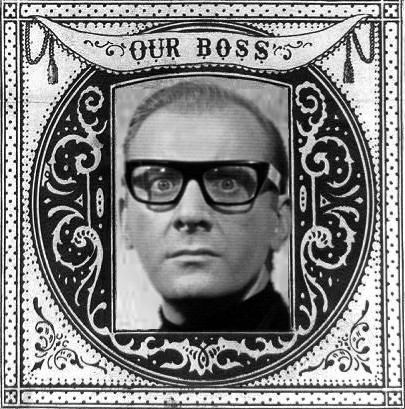
As my brilliantly photoshopped campaign poster says, I won't give away one of the most fundamental functions of any major entertainment company.

The history of TV production is littered with people trying the "best," so why not try the rest... chiefly me.

I also promise to not let my position go to my head. 
So hiring me to a powerful, and highly paid executive position makes a lot of sense, sort of like this picture...
;-)

Thursday, 28 March 2013

Hollywood Babble On & On #1002: Something The Networks Might Want To Try.

The cable network FX has given the green-light to a TV adaptation of the indie Midwestern noir classic Fargo, that will be executive produced by the Coen Brothers themselves. 

But that's not the important part.

The important part is that they're adapting it not as a regular television series which has an open ended run. They're going to follow a more British format by developing it as a limited run series. That means that it is designed to run for a set number of episodes and then be wrapped up by the end of those episodes. If the audience wants more, then the channel will commission the makers to do more, but the next "series" will be treated as a separate project.

This comes with a wave of other limited run or miniseries projects that the FX family of channels is developing.

Personally, I think it's a good idea that the mainstream broadcast networks could learn from. There are two reasons for this...

1. The audience is incredibly fractured into small niches that full run network style television series are having a hard time reaching. 

This is because the broadcast nets are based on a system where every show has to appeal to the widest range of the audience it can get, depending on its time-slot.

2. Audiences seem to like serialized story-lines, especially mysteries, but it's hard for an audience to accept a serialized storyline, especially a mystery based one, from a mainstream broadcast network. This is because networks want shows to run a minimum of seven seasons, of around 22-25 episodes a season.

This creates the temptation to string along the mystery long past the point where the audience doesn't give a royal crap about whodunnit, or where the aliens are being hidden. If the show's premise is unable to operate if the mystery is solved then the temptation's doubly strong to just keep that puppy going.

But the problem is that it usually never works, the audience either loses interest, or doesn't get involved at all, and the show is cancelled with no questions answered for anyone.

Now this is where the miniseries can step in.

1. Using the miniseries you can create and air niche-targeted programming that don't involve big and expensive multi-season commitments that come with a full strength TV series.

2. If the miniseries has a central mystery then the fact that it's a miniseries tells the audience that they won't be left hanging if the shows doesn't play with the middle class tween girl demographic in California.

3. There are a lot of popular books that don't really translate into feature films. They're too long, too bulky, and any movie version would be just a quick skim. However a miniseries can do a more detailed adaptation, and the performance of shows like Game of Thrones show that people seem to like detailed adaptations of their favourite books.

4. If a miniseries turns out to be popular, you can always do a sequel, but pace them out so people don't get sick of them.

5. Miniseries can sell after their initial run as DVDs and/or downloads.

So there is a place for the miniseries, and networks should consider it.

Tuesday, 26 March 2013

Trailer Trashing: World War Z's Second Trailer...

Paramount has unleashed a second trailer for their upcoming horror/sci-fi epic World War Z. I had reviewed the first trailer and expressed some misgivings, let's watch this new trailer and see if it assuages any of those misgivings...


I'm afraid this new trailer hasn't really eased my misgivings and I may be forced to repeat myself.

1. It still looks like they spent the Gross National Product of Bolivia to make this movie.

2. I still think Brad Pitt's "I'm the producer, I don't need to shave or get a haircut" look doesn't fit in with someone who is supposed to be a senior UN official. Also, making him an official for an organization known for impotence and corruption doesn't seem all that heroic.

3. I think they miss the point of zombies that author Max Brooks was trying to get across. Zombies are your friends, family and neighbours who have had their humanity forcibly removed, and now they want to feast upon your flesh and make you one of them. The movie's faceless blob of body parts that moves with the speed of a cheetah on meth is a completely different kind of monster and might have worked in another movie, but not this one.

You can go click the link to the piece on the first trailer for the rest of my misgivings, which are not assuaged, not assuaged at all.