Showing posts with label Independent Daze. Show all posts

Friday, 1 January 2016

Hollywood Babble On & On #1258: 2015 - The Year In Stupid

2016 has finally stumbled into our lives like an alcoholic uncle who shows up late for the holidays with a bottle in his hand screaming for everyone to keep the party going even though all are still hungover from the last year.
Anyway, 'tis the season for looking back in list form and I'm not immune for that sort of easy clickbait, so let's look back at the year in stupid.
THAT'S OFFENSIVE: 2015 was the year when EVERYTHING was declared offensive. In fact, I'm pretty sure that someone, somewhere is offended by my mentioning people finding things offensive.
It was also the year that a select few saw that no matter what they try, popular culture will always be in the wrong to the new class of professionally offended people who write thinkpieces for websites.
Let's use sexism as an example.
Hollywood does have a sexism problem. They don't know what to do with female stars and female audiences like they did in the allegedly more sexist Golden Age, when both female stars and audiences were much bigger box-office players. However, modern Hollywood sexism is trapped in a never ending circle of offense. Even when they try to appease or even please their critics they still get crapped on.
Critics complain that there are not enough stories being made about the accomplishments of historic women. Hollywood responds with SUFFRAGETTE a lavish period drama about the fight of women to get the vote. SUFFRAGETTE is almost immediately condemned that the suffragette movement was too white and middle class to matter to modern audiences. (Ironically, a complaint made about the real suffragette movement at the time)
Critics complain that there are not enough competent female heroes on the screen, so they give them Rey in STAR WARS: THE FORCE AWAKENS who is tough, competent, and capable of tackling any problem. Many of the same critics then condemn the film and the character as a "Mary Sue" a female character who is "too perfect" to be believed.
There is literally just no pleasing some folks. 
The greatest irony is that when there is something that just reeks of sexism, it's treated as a victory. I'm talking about the all-women reboot of GHOSTBUSTERS. Hollywood is literally tossing women the scraps of a franchise that's been dead for over 25 years, instead of creating something new and original, and it's seen as a victory for feminism.
To borrow a phrase from Admiral Ackbar: "IT'S A TRAP!"
If the film succeeds, the credit will go to the affection people have for the GHOSTBUSTERS franchise.
If the film flops, the blame will be put on its female stars. 
Yet I appear to be the only person who sees this.
Ironically, I'm not offended by it, just saddened.
GEORGE LUCAS: Lucas called Disney "white slavers" after they dropped $4 billion on his lap for Lucasfilm because they revived the long moribund and once creatively bankrupt STAR WARS franchise sans Lucas and his whims like Jar-Jar Binks.
George, I love ya for creating STAR WARS, but you're driving me crazy with this sort of spoiled brat chatter. It was nice that you apologized, but maybe you shouldn't have said it in the first place, right when people were about to forgive you for the prequels? 
SLOW WEST: My problem is not with the movie itself. It apparently got lots of good reviews. My problem is with the title.
It's hard to sell a Western, but calling a Western SLOW WEST is about as smart as naming a play THEATRE CLOSED FOR RENOVATIONS. 
It's going to turn audiences away.
What producer or distributor allowed themselves to be convinced that it was a good title for a Western?
It makes the film sound pretentious, annoying, and, most of all SLOW, and audiences hate slow and will avoid anything that literally promises slowness in the title and makes the film lucky to pull in the $200,000 it did at the box-office.
Not seeing that means those who green-lit that title should probably reconsider their career choices.
MARTIN SHKRELI: Now this isn't an entertainment or pop culture story, but it does have some lessons people in any business can learn.
In case you're living in a cave Martin Shkreli is a millennial multimillionaire who took over a drug company and immediately jacked up the price of a drug for people with compromised immune systems by about 7,000%. He claimed he was going to kick the profits back into research and development, but his lifestyle, business record, and overall attitude about everything made everyone doubt his word.
In fact, when he was arrested and arraigned on running a high financed Ponzi scheme the internet pretty well cheered in unison.
Which brings me to the lesson.
A little known fact about business life is that no matter how honest an American businessperson strives to be, they commit on average several felonies a day without even knowing it. This number goes up exponentially the higher up you go in the financial food chain.
The majority of these felonies are violations of obscure Federal regulations that even the regulators don't fully understand. 
That creates an interesting situation.
First, there are laws that everyone breaks, but since they're so complicated and obscure they're selectively prosecuted.
Second, if you want to be prosecuted for something, be a business person that makes himself a politically attractive target.
Which means that Shrkreli was nowhere near as smart as his ego told him was, or he would have seen that coming. If Conrad Black could be convicted of a crime that never happened, then any businessperson can become a pelt on a prosecutor's wall, so be honest, be straight, and for the love of Xenu, don't make yourself a target.

There's been a lot more stupidity this year, but I've decided to just let it go, and pray that 2016 will be a lot smarter.

Wednesday, 23 September 2015

Hollywood Babble On & On #1251: The Stonewall Mystery


Director Roland Emmerich, best known for his tendencies to spend massive amounts of money to pretend blowing up landmarks on screen, and for a dubious taste in home decor has a new film out called Stonewall, about the 1969 Stonewall Riots, and guess what: everybody hates it.


Critics are calling it a disaster, the gay community, whose story the film claims to tell, is calling it an abomination, and most likely audiences are going to call it a miss.

Now this presents a mystery that I would like to solve, but before I get to that, I think you might need a little background.

Our story begins in the late 1960s. At that time there was no gay rights movement. In fact, most of what is now called the LGBT community were more interested in not getting assaulted, locked up, either in prison or a mental hospital, or blackmailed. Places for them to socialize were rare, and the few that did exist were usually owned by gangsters, and regularly harassed by the police, either through constant raids or demands for payoffs.

One such place was The Stonewall Inn in New York's Greenwich Village. It was often described as a dive. The place was ugly, seedy, usually crowded, with more than a few shady customers, the staff wasn't big on checking ID, or doing their jobs all that well, and the less said about the state of the bathrooms, the better.

But Stonewall was relatively large, it allowed the customers to dance, another rarity, and its mobbed up owners usually made sure the NYPD's Public Morals Squad were paid off, making it a bit safer than many of the other places in the city. One night in 1969 something went wrong. No one is sure if a payment was missed, or if the cops were just feeling ambitious, but the place got raided right at the peak time for trouble. The place was packed, the weather was hot, and the crowd's mood was fired up by a combo of intoxication and anger at years of regular harassment.

The raid didn't go to plan, the cops lost control of the situation quickly, and a full scale riot broke out.

That riot sparked what is now called the Gay Pride movement, and is seen as a pivotal moment in the history of America's gay community.

It's a story that's more dramatic and complex than my little summary could possibly tell, full of colourful characters, and is the sort of underdog story that might take it from beyond a niche audience to somewhat wider appeal.

Which brings me to the mystery of the Stonewall movie: Why did they give the green-light to Roland Emmerich?

The Stonewall story requires a filmmaker who can express and explain the complexities inherent in it. Someone who can bring the stories of the real people to life, and use it to possibly bridge the gaps between the LGBT community and the wider "straight community."

Emmerich is not that filmmaker, and in no possible way can he be mistaken for that kind of filmmaker.

Emmerich's the crass vulgarian spawn of blind commercialism and a particularly childish kind of post-modernism where as long as he looks down on what he's doing, he doesn't have to try to be good at it. His specialty is destroying famous landmarks with CGI while cardboard cut-out Hollywood-marketing-executive-friendly stereotypes recite hackneyed dialogue written with a shovel from a compost heap of cliches.

He's also known for tossing scientific and historical accuracy out the window. And not for taking liberties in the name of narrative cohesion, character development, or even to compress events for time. Emmerich does it for stuff he thinks looks good in the trailer.

The investors and producers who financed this film should have known that.

They also should have known that we live in the Golden Age of Offence. People get horribly outraged over little things, so the people behind the film should have known that something as inherently politicized as the story behind Stonewall would be nitpicked for so-called micro-aggressions and macro-douchebaggery.

Getting the film would require diplomacy, and class, two things Emmerich doesn't have.

When asked about why he downgraded all the real people, who were predominantly black and hispanic, to focus on a fictional caucasian lead/saviour, Emmerich replied by saying he knows what sells and they don't.

That's only going to make it worse, especially in this hypersensitive day and age. It only serves to alienate the core audience the film needs to take that step towards a more mainstream audience.

You see it is possible to take a story like the Stonewall Riot, and make a film that's both compelling and possibly successful. You just have to follow these simple steps:

1. Be as accurate as you can be. Everyone knows that liberties and changes have to be made when bringing a true story to the screen, but there's a limit to how far you can go. It may be necessary to create a fictional "gateway" character that would allow the audience to get the know the milieu they're being brought into, but that character should not overshadow, or outrightly replace the real people at the heart of the story. A good gateway character would be a tabloid journalist, assigned to write a lurid exposé about an underground subculture witnessing history and learning about the shared humanity I'll be getting to shortly. That way you have a someone who has an excuse to witness events without taking anything away from the actual participants.

2. Don't offend the core audience. If the front line of people most interested in the Stonewall story are going to feel short-changed or even insulted by your film, then your film will fail on every level. The only way you can defuse criticism is by embracing as much of the truth of the source material as you can. If they say "I don't like that part" the only viable defence is to say: "I'm sorry, but that's what actually happened, and I'm trying to tell the truth." If you're just making shit up, and that angers the core audience, you have no defence.

3. Emphasize what's shared. For any film about the Stonewall Riots to succeed it would need to cross over to at least part of the mainstream audience. Now Emmerich fails because he thinks along the lines of marketing, by casting someone who goes too far when it comes to identifying with the mainstream audience. According to some reports they just barely stop short of giving him a girlfriend, which sort of defeats the purpose.

You don't sell a film about a minority to the majority by trying to hide the differences. Instead you acknowledge those differences quite clearly, but emphasize what they share on a deeper human level.

Going just be surface appearances the average American doesn't look like they have much in common with the average citizen of India. So how did Gandhi become a success in an era less "diverse" and "politically correct" than today?

Because when they sold the film they emphasized that the characters, despite their ethnic/religious background, were human beings facing the all too human problems of being outcast and harried as the underdogs.

Emmerich doesn't seem remotely interested in shared humanity. He seems interested in padding his resume with what he thinks will be Oscar bait simply because of its subject matter without the work and sensitivity to make something that does justice to the subject matter and the audience.

Anyway, if the people who financed this picture still have some money lying around, and still want to make movies, call me. For a reasonable fee, I can do research about subjects and people to help save you the hassles you're facing now.

Monday, 10 August 2015

Hollywood Babble On & On #1246: Can Relativity Media Be Saved?

As a regular reader of this blog will know indie production company and distributor Relativity Media has filed for Chapter 11 bankruptcy protection because it has about $500 million in assets and about $1 billion in debt.

Can it be saved?

The answer is "Yes" but with caveats. It would have to meet certain conditions if it is going to have a second chance. 

1. Dump Ryan Kavanaugh. Sure, the Hollywood business press seems to love him, and he seemed to be really good at getting investors to pony up the dough for a while, but he still managed to rack up a hell of a lot of losses and debts in a whole variety of hare-brained schemes that were heavy on sales jargon but low on results. I know he's a major shareholder, but if former newspaper mogul Conrad Black can be forced out of two companies, one where he was the sole proprietor, on the basis of crimes that the appeals court ruled hadn't actually happened. If that's possible then you can get rid of Kavanaugh for driving the company into the ground.

2. Trim Fat/Find Money. One big problem the company has is that there isn't enough money coming in to service the debt and keep the company running. Naturally a selling off of assets will have to come. The sports agency, the "branded content" agency, and all the other schemes will have to be either sold off, or shuttered completely. Then there's the company's distribution capability. They may have to open themselves to even more distribution only deals with other independent producers than they already have.

3. Stick To The Core Business. Relativity was originally founded to produce, and eventually distribute, movies and television shows. 

Maybe it needs to do that and only that.

It should also avoid trying to compete with the studios for the massive blockbusters. The new Relativity should target the middle ground, smaller scale pics that the big studios don't seem to make anymore even though, back in the day, they were seen as the profitable backbone of the industry. They should also be budgeted tightly to decrease risk, and increase the potential for reward.

They should just follow this simple formula:

STORY > STARS + QUALITY > BUDGET

No more wacky schemes to produce only hits, no more "lifestyle brands" and no more BS, just stick with making stories people would enjoy seeing more than once.

Then Relativity might have a shot to live again.

Tuesday, 28 July 2015

Hollywood Babble On & On #1243: The Last Theory of Relativity?

Relativity Media, the upstart film financier turned producer and distributor run by Ryan Kavanaugh is having some pretty serious money troubles that threaten to sink the whole company.

When I saw that report, the first thing that popped into my mind was "How come this didn't happen sooner?"

If you're a long-time reader of this blog you might already know that Relativity Media, and it's propensity for questionable decision is a regular subject of this blog. The earliest posts were about some of their questionable decisions, and lacklustre box office that I soon learned were based on their use of a computer program they thought could predict hits. Then came more questionable decisions like wanting to "crowdsource" screenplays, using really obvious sock-puppet accounts to praise their movie trailers, releasing movies they produced alone to directly compete with movies they co-produced with important partners, alienating other investment partners, and spending big money buying the name of Universal's low-budget horror division, Rogue Pictures, to re-imagine it as a "lifestyle brand."

Yet, the company was able to survive this litany of dumb ideas and stay afloat, at least they were until recently.

So why are things coming to a head so brutally?

Well, being an independent film financier is like a bastardized version of Margaret Thatcher's explanation of how socialism ends: eventually you're going to run out of other people's money.

There is only one way to prevent that, and that's to show some kind of return on investment.

Movies are a glamorous and confusing business, and  wealthy big money investors tend to be forgiving when they realize that being a "movie producer" is better at picking up starlets than being the biggest fertilizer dealer in the Midwest.

However, there is a point when the glamour and the sexiness no longer blinds, and the investors take a look at the numbers and say: "Where's my money going?"

You will have to do better than rehashing old sales pitches about how you're on the cusp of finding that magical golden ticket that will create only hits. Investors stop believing in that snake-oil when all the revenue from the occasional smaller profitable films arez burned away by over priced "blockbusters" that fail to bust blocks.

You can go in search of new investors, but guess what, word gets around, and you will quickly find yourself in a series of ever decreasing circles heading downward.

It's kind of sad to see yet another independent company go down the same path as so many before it, and many more after it. 

Monday, 20 July 2015

Hollywood Babble On & On #1241: Got A Billion Dollars?

The investor cluster that owns the once powerful and feared Miramax Films is considering putting it up on the auction block, and they're asking for…
ONE BILLION DOLLARS!

Now I only have one reaction to that price…

HAHAHAHAHAHAHAHAHAHAHAHAHAHAHAHAHAHAHAHAHAHA!!!

Okay, that's a little mean, I guess a more accurate reaction would be:
But seriously folks, let's take a look at what the company has to offer which is mostly the film library of 700 titles.

Libraries have value, because movies don't really make serious money until they are licensed to what are called the ancillary markets after their theatrical release. That means home video, television, and online streaming services.

A lot of money can be made this way, and the bigger the film library, the more money you can make. In fact, a lot of studios view the box office earnings as just gravy, and that the real money is in those ancillary markets.

However, there's a catch.

Several catches to be exact.

700 movies may sound big, but in the grand scheme of things it's actually not that big, especially when compared to the majors. The major studios literally have thousands upon thousands of titles in their libraries and regularly churn out new material by the pound.

Miramax has been more of less moribund for years, only sporadically putting out a handful of new films under the current ownership.

That's not good.

Because having seven hundred films is fine and all, but any film library, even if every film is as evergreen in popularity as Casablanca, your company is going to reach a point when the outlets you're selling to will say: "What else you got?"

And that's if every film in your library is as perpetually popular as Casablanca, and Miramax's stable is pretty light on films like that.

A lot of that has to do with how the company was run under the Weinstein Brothers. Under their reign Miramax had two business models; one was to acquire independent films for a theatrical release, and the other was to acquire independent films for the sole reason of keeping other distributors from getting them.

That means that for every movie Miramax released during that era, there were several that haven't been seen by a living soul since their Sundance Festival debut in the 1990s. This practice brought the company to the brink of collapse before being bought up by Disney, and it's what made Disney force out the Weinsteins a few years later.

Even if all of the films in question are brilliant, it's next to impossible to sell, for a decent price, rights to a flick that no one can remember, and many of films in the Miramax library are not brilliant at all.

That means that out of the 700 films in the library, maybe about 200, at most, are sellable.

That ain't healthy.

"But what about remakes?" you ask, waving your hand and hooting like Horshak. "Couldn't you remake Miramax movies into big blockbusters?"

Well, you could do remakes of some of the films in the library. But remaking the Oscar winners would offend fans, and remaking the unknowns would just befuddle people. You might as well just make an original film from a script no one has heard of because at least then you could avoid being entangled with…
The Weinstein Brothers.

You see, as both the producers and studio bosses of those pictures they made sure that if anyone wanted to do a remake, reboot, re-imagining or sequel would have to involve them.

The problem is that if you're 90% of people who have done business with them in the past, you are far less likely to want to do business with them again.

So, is the business really worth $1 billion?

I'm not even sure it was worth the $600 million the investors gave to Disney back in 2010.

Anyway, that's what I think.

Tuesday, 12 May 2015

Hollywood Babble On & On #1232: We Gotta Question!

Reader Nate Winchester sent me an e-mail asking me this question about the Weinstein Company's most notorious business practice:
Forget how they get other people to go along, why do they keep doing this???  


HOW does a company survive a repeated business plan of "I'll cut off my nose to spite my face." 

Satan just has to be involved.
Now the link is for this video from Good Bad Flicks investigating the cult film All The Boys Love Mandy Lane.

Here is the video, but be warned, he gets into spoilers after he talks about the film's troubled history.

If you're too lazy to watch the video, or want to avoid spoilers, I will give you the gist of what happened to the film, and then we'll try to figure out why it happened.

All The Boys Love Mandy Lane was made in Austin Texas by some aspiring filmmakers for around $750,000. It premiered at the Toronto International Film Festival where it became the darling of the 2006 Midnight Madness slate, which is normally seen as a great sign for it future success.

A bidding war ensued. Every indie distributor wanted to get their hands on it, but it was the Weinstein Company that won, paying out $3.5 million for the privilege.

TWC then held a test screening, and declared that the results were so awful, the film did not deserve to be released.

The film gathered dust on a shelf for a few years. But online pressure inspired TWC to sell it to another distributor, who promptly went bankrupt. Then more time passed, just about everyone involved in the film went on to bigger and better things, and after seven years in limbo it got a token theatrical release, and then was dumped on home video, with pretty much all momentum lost.

Which brings us to Nate's question:
HOW does a company survive a repeated business plan of "I'll cut off my nose to spite my face." 
Satan just has to be involved.
Satan is probably not involved, as far as I know, but there are some theories as to how this keeps happening.

First the Weinstein's are masters at convincing people to go along with them. They can point to their Oscars, their hits, as well as their personal wealth, and say "Look at what we did for them, and we can do it for you."

The problem is for every Oscar winner or box office hit they probably have about a dozen films that either sink completely, or are just not released at all.

So why buy a film and not release it?

There are two reasons for the Weinsteins to do that. One is financial, the other is psychological.

The financial reason has to do with accounting rules. According to those rules a film that they bought for $3.5 million goes on their books as an asset worth $3.5 million.

If they release that movie, they must then deduct the cost of its release from that value, and then add any profits that comes in.

If the film bombs then it's considered a loss.

So it's better to just have it sit there gathering dust.

As I said, the second reason is psychological. From everything I've ever read or seen about how the Weinstein Brothers do business is that they must win EVERYTHING, even contests they're not truly interested in. Also, not only must they win, everyone else must LOSE.

The history of Miramax and the Weinstein Company shows a repeated strategy of buying films they have no interest in for the sole reason of making sure that no one else can do anything with them. 

Now this business model isn't as successful as the Weinstein Brothers would like you to think. First they almost bankrupted Miramax, but was saved by selling out to Disney, only to have Disney force them out of Miramax when they repeated those antics. Just a few years ago TWC had to hand over the rights to almost its entire film library up to that point to its creditors to avoid getting crushed by the debt they piled up to acquire those films.

Basically, their entire business model is based on hustling. Hustling Wall Street for capital, hustling filmmakers for movies, hustling academy voters for prizes, and only occasionally hustling audiences for ticket sales.

TWC does not have a model for a self-sustaining film company. Either they will run out of steam, filmmaker goodwill, and other people's money, or an ill-timed heart attack will bring the whole house of cards down. Then TWC will be nothing more than a footnote in film history.

Tuesday, 14 April 2015

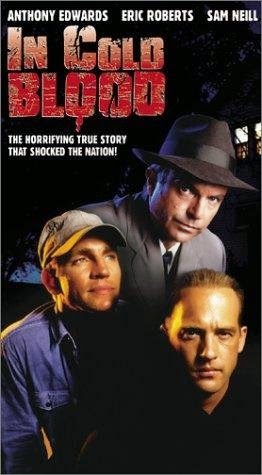
Hollywood Babble On & On #1226: In Cold Blood…Again?


This news has inspired one question:

WHY?

In case you spent the last 60 years in a cave I'll do some explaining.

In 1959 two recent parolees Dick Hickock and Perry Smith slaughtered four members of the Clutter family in rural Kansas because they heard a nonsensical rumour that the family had a mythical stash of money in their house.

Truman Capote, already a successful author, and his childhood friend turned personal secretary Harper Lee, travelled to Kansas to write about the case, and Capote got to know the killers very well as they waited for their execution in 1966.

The book was a monster best-seller and opened the door to a flood of "True Crime" books that sell well even to this day. Ironically it was the last substantial work Capote ever wrote, producing only short pieces, one unfinished novel, while transforming himself from an author who became a celebrity into a celebrity who was once an author.

Despite some disputes over its accuracy In Cold Blood became his most famous and enduring work.

Which brings us back to the question: Why do it again?

The first adaptation was in 1967 and is considered a classic due to the powerful performances and Conrad Hall's vivid black and white cinematography.

Then it was done again in 1996 as a TV miniseries.

Then two other movies, Capote and Infamous, were made and released almost on top of each other and they were about Truman Capote's writing of the book.

So, it's not exactly as if the story's never been told on screen.

In fact, it's been told FOUR TIMES.

Even by remake-crazy Hollywood standards that's a little extreme. Even reboot nutty superhero movies they at least try to change things up with different villains and situations.

This is not that kind of story.

It's a story that's been told, repeatedly, and often pretty well, so why try again?

Thursday, 9 April 2015

Hollywood Babble On & On #1225: Farewell To Nova Scotia?

The Finance Minister of Nova Scotia is planning to slash the payroll tax credit for film and television jobs by about 75%. Local producers naturally object to this, because it burdens them with extra costs, and even American rapper Snoop Dogg declared his support for the tax credit because it makes his favourite show, Netflix's The Trailer Park Boys, possible.

Now you're probably wondering what all the fooferall is about, so I'll do a little explaining.

A little over 20 years ago the Nova Scotia government instituted what's called a payroll tax credit program for film and television productions that shoot in Nova Scotia and employ Nova Scotians. At the time, there was about $6 million a year spent in film/TV production in Nova Scotia, but it has grown to about $130-$140 million a year.

That's a lot of jobs created by taxpaying companies, and held by taxpaying citizens.


That's not counting the secondary and tertiary jobs created by the spending of those same taxpaying citizens. Usually an industry creates between 2-3 secondary and tertiary jobs for for every one of their jobs.

That's a lot of jobs that otherwise wouldn't exist.

I'm betting that the Nova Scotia government breaks even on the income taxes at the very least, but more likely turns a profit when all the numbers are crunched.

And dropping the tax credit would be really stupid since without it the province would probably lose Tom Selleck's freshly revived Jesse Stone TV movie franchise, The Trailer Park Boys, and CBC's flagship political satire series This Hour Has 22 Minutes. For many productions the credit makes Nova Scotia affordable, and in many cases possible. 

Now you're probably wondering why I'm defending what many see as a government subsidy, since I regularly state my opposition to government subsidies in the film business.

Well, it's not a subsidy when you look at the facts, and it's not run like a subsidy.

You see, the tax credit is basically a refund of all or some of the payroll taxes employers in film and TV would normally have to pay the government for the privilege of employing Nova Scotians.

That's right, the payroll tax is a tax on anyone who is creating taxpaying jobs.

That's a stupid tax.

It's also not handled like a normal film subsidy. You don't have to go to a funding agency and kiss the ass of bureaucrats in Toronto to prove your worthiness of taxpayer's money by employing the same-old same-old pack of cronies you see in 90% of Canadian productions. All you had to do for the tax credit was prove that you were making film and television programming that was shooting in Nova Scotia, and that you were employing Nova Scotian taxpayers.

Then you didn't get a subsidy, you got relief from a stupid and counterproductive tax regime.

And let's not forget that it's not just foreign productions shooting on location getting these benefits, there's also a hell of a lot of 100% homegrown work that wouldn't otherwise exist without it.

So save the tax credit and save Nova Scotia's fledgeling industry. A quick way to make your voice heard is via social media, like Twitter, so let the Nova Scotia Finance Minister know what you think.

Tuesday, 31 March 2015

Hollywood Babble On & On #1223: Europe, Movies, & Money.


The folks running Europe are hoping to streamline the movie business by eliminating what's called "Territorial Exclusivity." You see if you want to distribute a movie in Europe now, and don't already own a European distributor, you have to make a deal with distributors in each country or territory. If this new legislation becomes law, filmmakers will only have to deal with one distributor for the whole of Europe.


Filmmakers, especially independent ones, are not happy with this because they're pretty sure it'll kill their business.

How?

Allow me to explain.

You see independent filmmakers and smaller studios like Lionsgate rely on the fact that films are sold in Europe on a country by country basis. If you don't have a major studio backing your movie you're going to have to go to Europe before you film, attend an event like the market at Cannes where all the deals are made, and you "pre-sell" your movie to the local theatrical and home video distributors. 

That adds up to a lot of Euros that independent filmmakers need to get their movies made.

If Europe gets reduced to one market, I'll bet you Euros to croissants that all the small regional distributors will be run out of business or absorbed by two to three all-Euro-encompassing major players who then dictate the prices they will pay for all of Europe.

That means indie filmmakers who need a dozen small players each putting up a certain amount will be forced to take whatever the new mega-sized trans-Europe distributors offer, and it probably won't be anywhere near enough.

Now I'm usually all for free trade over borders, but this is a situation that could easily lead to something akin to a monopoly in everything but name.

Which is why I think it's a bad idea.

Monday, 19 January 2015

Hollywood Babble On & On #1211: Amazon's Getting Theatrical


They're setting up a new feature film production company with veteran indie producer Ted Hope as head of production, and will release the films theatrically, and then in video streaming on their Amazon Prime service four weeks later.

Now let's look at the PROS & CONS!!

PROS:

1. Ted Hope is an experienced producer renowned for his good taste in projects by critics and cinephiles the world over.

2. Despite recent losses & feuds with just about everyone they've ever meet, Amazon is a big operation with deep pockets and a wide reach.

3. The project could open up opportunities to new filmmakers.

CONS:

1. While Hope is known as an critical and awards darling his record doesn't exactly burn up the box-office. If he's going to survive as the head of production of what I'm pretty sure Amazon wants to be a mainstream studio he's going to have to find a way to translate his tastes into something that will put the maximum number of bums in seats. 


2. The reports don't say if Amazon will start their own distribution company or if they'll make an output deal with a distributor like Open Road, eOne, or Lionsgate. Either way Amazon's stomp & destroy business ethic might alienate relations with theatre owners, and their distribution partners. 

3. The odds of anyone new getting a chance via Amazon are slimmer than a haute couture model. Look at their TV pilot program that was supposed to bring new voices and ideas into the TV biz, and just about every show that gets produced is by someone with a minimum of 20 years of experience and deep connections in show business. I don't see that practice changing with their feature films.

That's what I think.

What do you think?