Showing posts with label Miramax. Show all posts

Monday, 20 July 2015

Hollywood Babble On & On #1241: Got A Billion Dollars?

The investor cluster that owns the once powerful and feared Miramax Films is considering putting it up on the auction block, and they're asking for…
ONE BILLION DOLLARS!

Now I only have one reaction to that price…

HAHAHAHAHAHAHAHAHAHAHAHAHAHAHAHAHAHAHAHAHAHA!!!

Okay, that's a little mean, I guess a more accurate reaction would be:
But seriously folks, let's take a look at what the company has to offer which is mostly the film library of 700 titles.

Libraries have value, because movies don't really make serious money until they are licensed to what are called the ancillary markets after their theatrical release. That means home video, television, and online streaming services.

A lot of money can be made this way, and the bigger the film library, the more money you can make. In fact, a lot of studios view the box office earnings as just gravy, and that the real money is in those ancillary markets.

However, there's a catch.

Several catches to be exact.

700 movies may sound big, but in the grand scheme of things it's actually not that big, especially when compared to the majors. The major studios literally have thousands upon thousands of titles in their libraries and regularly churn out new material by the pound.

Miramax has been more of less moribund for years, only sporadically putting out a handful of new films under the current ownership.

That's not good.

Because having seven hundred films is fine and all, but any film library, even if every film is as evergreen in popularity as Casablanca, your company is going to reach a point when the outlets you're selling to will say: "What else you got?"

And that's if every film in your library is as perpetually popular as Casablanca, and Miramax's stable is pretty light on films like that.

A lot of that has to do with how the company was run under the Weinstein Brothers. Under their reign Miramax had two business models; one was to acquire independent films for a theatrical release, and the other was to acquire independent films for the sole reason of keeping other distributors from getting them.

That means that for every movie Miramax released during that era, there were several that haven't been seen by a living soul since their Sundance Festival debut in the 1990s. This practice brought the company to the brink of collapse before being bought up by Disney, and it's what made Disney force out the Weinsteins a few years later.

Even if all of the films in question are brilliant, it's next to impossible to sell, for a decent price, rights to a flick that no one can remember, and many of films in the Miramax library are not brilliant at all.

That means that out of the 700 films in the library, maybe about 200, at most, are sellable.

That ain't healthy.

"But what about remakes?" you ask, waving your hand and hooting like Horshak. "Couldn't you remake Miramax movies into big blockbusters?"

Well, you could do remakes of some of the films in the library. But remaking the Oscar winners would offend fans, and remaking the unknowns would just befuddle people. You might as well just make an original film from a script no one has heard of because at least then you could avoid being entangled with…
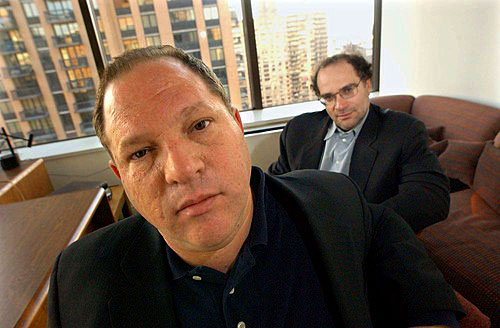
The Weinstein Brothers.

You see, as both the producers and studio bosses of those pictures they made sure that if anyone wanted to do a remake, reboot, re-imagining or sequel would have to involve them.

The problem is that if you're 90% of people who have done business with them in the past, you are far less likely to want to do business with them again.

So, is the business really worth $1 billion?

I'm not even sure it was worth the $600 million the investors gave to Disney back in 2010.

Anyway, that's what I think.

Friday, 29 March 2013

Hollywood Babble On & On #1003: Two TV Tidbits

1. GANGS OF TELEVISION

Miramax, under new owners, has decided to get back into television, and they're going to do it with a little help from Martin Scorsese.

They're teaming with Scorsese and GK Films to produce a series adaptation of his movie Gangs of New York. The film itself was loosely based on the Civil War chapters of an "informal history" of New York's underworld by journalist and folklorist Herbert Asbury. 

The series, like the book itself will go beyond the slums of the Five Points Era featured in the movie to centre on the turn of the 20th Century and how street gangs of New York, Chicago, and New Orleans evolved into modern organized crime.

I actually like this idea. The movie could only gloss over the colourful characters, and the high drama, and had to mangle history a fair bit to do it, and, to be honest, I just couldn't accept Leonardo DiCaprio as a street tough. I just kept picturing him screaming "not the face" during every fight scene.

Now by moving the focus to the 1900s they have a whole bunch of new colourful historical characters and their mostly untold stories to the screen. Monk Eastman* alone could probably carry his own TV series.

Also costume dramas sell, and if the production values are good, they could sell for years after the show's initial run because they're hard to date.

So how should they handle this show?

Scorsese already has a show on HBO called Boardwalk Empire, so the temptation is to head straight there again, but I think Scorsese and company need to branch out of the premium pay-tv mini-verse. HBO is good at attracting media attention as the epicentre of TV "cool" but it's capacity to bring in viewers is limited in these hard economic times. 

I'm not saying they should go with a mainstream network. The mainstream broadcast networks lack the imagination and even the reach to sell a gritty historical drama. Plus you will have every nimrod in a suit butting in with their two cents if they don't have the change in their pockets.

Basic cable has been having great success with costume drama series in recent years, and while they can't do the nudity on the level of HBO or Cinemax, they do offer a level of creative freedom you can't find in a mainstream network. Plus, the cachet of getting Scorsese's "brand" associated with their channel will do wonders for maintaining that creative freedom.
_______________________
*Monk Eastman was one of the most feared hoods in New York City, engaging in every conceivable crime. After a prison stint he found his grip on the streets slipping, so he joined the army. During WWI the middle-aged Monk became a full fledged war hero who couldn't get a medal despite his actions.

2. WHO SHOULD RUN THE MOUNTAIN?

Brad Grey, the head of Paramount Pictures is looking to undo one of the company's biggest mistakes by getting back into the crucially lucrative television business.


Now I haven't done this in years, but I'd like to suggest that Brad Grey...

As my brilliantly photoshopped campaign poster says, I won't give away one of the most fundamental functions of any major entertainment company.

The history of TV production is littered with people trying the "best," so why not try the rest... chiefly me.

I also promise to not let my position go to my head. 
So hiring me to a powerful, and highly paid executive position makes a lot of sense, sort of like this picture...
;-)

Tuesday, 22 January 2013

Hollywood Babble On & On #893: Miramax Loses A Partner

Construction magnate Ron Tutor has obviously tired of his run as a Hollywood mogul and sold his piece of moribund one-time indie mega-player Miramax.


If you're not familiar with the saga Tutor, investment fund Colony Capital, and the Qatar Investment Authority purchased Miramax for $663 million from Disney, beating former owners the Weinstein Brothers, back in 2010 with what could be considered a novel business plan.


Miramax was going to be a movie company that didn't make movies.

Seems sort of odd, but I can explain.

You see, Miramax has a lot of movies in its library. Some of those movies were big hits, and some were big award winners. The plan for the new owners was to license out the home video, TV and possible remake rights to those movies, and pocket the money with a minimum amount of effort and money invested.

That's exactly what they did, making deals with Netflix, and for DVD and Blu-Ray releases.

Well, now that it's all done and dusted, Tutor is cashing out, because there's literally nothing left for them to do that doesn't involve making movies.

Their library-only strategy has two very strong limitations...

1. THERE ARE A LOT OF JOKERS IN THAT DECK.

I'm sure when the sales pitches for the licensing rights were made there was much hullaballoo made about Pulp Fiction, Shakespeare In Love,  The Crying Game, and other award winning hits, however, there's a catch, and it's a big one. For every big award winner and box office hit, there's about half a dozen films that were either complete and total stinkers, or were completely forgotten.

It's hard to license the rights to films that people either can't remember, or know for a fact that they stink to high heaven.

2. THE "WHAT ELSE YOU GOT?" CONUNDRUM.

Even if a movie company has nothing but classics and big hits on their roster, they're going to hit a wall eventually. That's because you can only license a movie, even a classic, so many times before the outlets that buy those license look and ask: "Hmmm... what else ya got?"

This is because every film, no matter how great, goes through periods where it fades from the zeitgeist. People get kind of sick of it, especially if it gets repeated plays on television.

There are only 2 ways to keep a film library company going.

1. Make more movies, so you have a fresh stock to sell.

2. Buy up other film libraries.

Both require lots of effort, money, and risk, and that's probably not something Mr. Tutor is interested in.

Sunday, 6 May 2012

Hollywood Babble On & On #895: Wanna Buy Miramax?

Billionaire construction tycoon Ron Tutor has decided that he's had enough of playing mini-movie mogul who does everything he can to avoid actually making movies as much as possible, and announced that he's hoping to sell his stake in Miramax within the next week or so.

If you don't know your history, Miramax was the indie film powerhouse founded by brothers Harvey & Bob Weinstein in 1979.  It became an indie film powerhouse in the early 1990s, attracting the attention of the Disney empire which bought it in 1993.  However, the business practices and personalities of the Weinstein Brothers chafed with the more staid Disney management culture.  

Things came to a head in 2005 when the Weinsteins were forced out of the company they founded.  After that Miramax became just another division of Disney distributing art house films in ever dwindling numbers until 2010 when they sold it a partnership between Vegas builder Ron Tutor and investment fund Colony Capital.

Since then the number of productions dwindled even more to a token trickle, since the business plan of the new owners was to turn the company into a library management firm as opposed to a traditional movie company. They made some big deals licensing Miramax movies in various mediums, and even made a deal to add management of the rights to the Samuel Goldwyn film library to their stable.

Now this is the part where, if you listen carefully, you can hear me kick my own ass for being stupid.

You see, I should have seen this coming the moment they announced the Samuel Goldwyn deal, because that was the moment the whole Miramax as library business plan hit about as much value as it is ever going to get.

As I've been saying all along the key to running a successful film library is maintaining a steady stream of fresh product. A library that isn't growing will inevitably become dead weight. Even classics fall out of fashion for periods of time as the media outlets that require content look at everything you have and say "What else have you got?"

The Goldwyn library was the last major collection of cinematic assets that aren't already under the control of someone else. That's it, there is no more to be had.

Tutor isn't a dummy, he saw that too, knows that they've done the 3 things needed to be done to increase the value of Miramax while avoiding making new films as much as possible:

1. Deals were made to profit from the existing library.

2. They added all they could to the library by assuming management of the Goldwyn movies.

3. They got David Bergstein to fuck off. (Though it would have been better not letting him have anything at all to do with the deal in the first place)

There's nothing else they could do outside of making lots of new movies, and Tutor apparently has no interest in doing that because it takes time, serious calorie burning, and a hell of a lot of risk.

It's the smart move for him to sell out now, and I really should have seen it coming.

Tuesday, 10 April 2012

Hollywood Babble On & On #880: Another Tainted Burrito...


Last week I wrote about how James Frey is like a tainted burrito, and by which I mean something unpleasant that keeps gurgling up again and again no matter what.

Another tainted burrito is bankrupt film financier David Bergstein.  I've written about him many times, and none of what I've written was remotely nice.  

Long story short he's a self-styled film financier who started about half a dozen or more independent film financing, production and distribution companies, with names like ThinkFilm and Capitol Media, all over Europe and North America. He then went on to drive all of them into bankruptcy and accumulated lawsuits the way a rich comic book geek accumulates action figures.

Well, fate has regurgitated Bergstein into the news again, it seems he's suing the current owners of Miramax Films over their purchase of the company from Disney.

He claims that he was instrumental in bringing billionaire Ron Tutor into the fray to buy Miramax by doing all the legwork and due diligence for him.  Bergstein then claims that other partners like Colony Capital moved in by kicking in some money of their own, and promptly began squeezing him out.  He saw his stake in the affair dwindle down and now he's suing to get back what he thinks is rightfully his.

I have to admit, if I was in Colony Capital's position, I'd probably do the exact same thing.

Hell, anyone with half a brain cell would want to distance the company from Bergstein and his decidedly colorful business history.

I'm not saying that Bergstein is a crook. He may be as pure as the driven snow, and just a victim of bad luck, poor decisions, and tragic misunderstandings.  However, his overly-complicated corporate structure, involving dozens of shell corporations, high flying casino-rocking lifestyle, and tendency to attract litigation like flies to shit, sure as hell makes him look like the last person you want to be in business with.

He has only himself to blame for that.

Does his case have merit?

That's for the court to decide, and then be appealed repeatedly until no one knows what the hell is going on anymore.

That's how independent film operates these days, and why it's so hard to get anything done.

Monday, 2 April 2012

Hollywood Babble On & On #876: Miramax Goes For The Gold(wyn)


Miramax continues its transformation from being a major player in independent film to being a manager of film libraries by inking a deal to manage the library of the Samuel Goldwyn Company.

Now this deal involves a good chunk of Hollywood history, and this history is kind of convoluted, so I'll try to explain it as briefly as I can.
The story begins with producer Samuel Goldwyn (nee Goldfisch) who had just been ousted from Goldwyn Pictures which he had founded with a partner named Anthony Selwyn. Goldwyn Pictures went on to form part of the MGM mega-studio, and Sammy went independent.

He formed Samuel Goldwyn Productions, struck distribution deals with United Artists, and later RKO Pictures,  and made films with the philosophy of "make fewer, but make them better."  He knew he couldn't compete with the majors like Paramount and MGM when it comes to quantity, so he pursued quality, hiring the best writers, directors, and actors to make his films.

Samuel Goldwyn Productions put out a hell of a lot of Academy Award winners during an over 30 year run.  But a company built around the skills and energy of one man can only last as long as that one man.  Eventually the founder and the company just ran out of steam.

But that wasn't the end.

Samuel Goldwyn's son, Samuel Goldwyn jr. started his own company, The Samuel Goldwyn Company in 1979. During the company's run the company went from being an importer of art-house and foreign films, to regaining control of Sam sr.'s film library.

Now a series of takeovers, buyouts, mergers, The Samuel Goldwyn Company ended up yet another moribund piece of the MGM/UA/Orion/Polygram film company heap. 

Sam jr. then went on to start Samuel Goldwyn Films, keep control of the family's film library, and now make this deal with Miramax, now owned by Ron Tudor and Colony Capital, to manage said library.

Now let's look at the PROS & CONS of this deal:

PROS:

1. FRESHNESS:  When you manage film libraries there will come a time when you go to the people running the TV/home video outlets and they sigh, and go "What else you got?" So making a deal with a company that has several hundred movies in their library is a great deal.

2. QUALITY:  The Samuel Goldwyn library has a lot of Oscar winners, and acknowledged classics that don't get the exposure in the marketplace that a lot of the big studio movies of the golden age get.  That means they're still relatively fresh to large swathes of the audience.

CONS:

1. FRESHNESS:  While it's great to make a deal with a company with a good sized library of classic movies, eventually you're going to run out of companies with film libraries in need of management.  

When your company doesn't make new product, just shuffles around the old stuff, it's inevitable, no matter how large your stable is, they're going to say "What else you got?"  Even classics can fall out of fashion for periods of time, and if you're not consistently restocking your shelves with new content, you're going to go stale.

2. WILL TO SHILL:  There is a question that has to be asked by anyone with a library that needs managing and it is: "Will they shill the movies I own with the same verve that they shill the movies they own?"

Shilling their own productions involve fewer hands in the till when it comes time to share the profits, so there's going to be a tendency towards favoritism.  That means the owners of the library are going to have to watch Miramax like a hawk.  Relationships can get strained, and eventually break with this worry in the way.

Anyway, I stand by my case that a film company has to do more than just manage libraries if it's going to be viable in the long term.