Monday, 19 August 2013

Hollywood Babble On & On #1059: Bombs, Brazilians, & Bad Ideas

BOMBS

Relativity Media's release Paranoia has officially tanked at the box office, sparking some firings and hirings in the marketing department, that some have compared to shuffling the deck chairs on the Titanic. 


Relativity's box office record is not very good for a wannabe studio. Per film domestic box-office revenues haven't cracked the $100 million mark yet, and while they may toot the horn of the film's raking in bigger money overseas, that's a bit of an illusion because Relativity doesn't have the international distribution ability of a major studio with branches in every country.


That means that they have to license their films out to other distributors, who need to take their cut out of rentals that, while different in almost every territory, are usually much smaller than the rentals they get in the domestic box office. That only counts if they get rentals at all since most indie producers will "pre-sell" their pictures for money up-front to make the movie.

No matter what, Relativity needs to make money at the domestic box office, or they won't make any money at all.

Maybe "mediocrity at best" is their business plan, but it doesn't strike me as much of one.

BRAZILIANS

The Mayor of Rio De Janeiro is offering to have the city pay for 100% of the budget if Woody Allen shoots his next movie there.

Now targeting is probably a smart move on Rio's part since his films aren't known for their lavish budgets. However, I don't think cities, or governments, should be in the business of financing movies, something I've written about before.

BAD IDEAS

Timur Bekmambetov needs a new agent.

After Abraham Lincoln: Vampire Hunter tanked at the box-office he's got two potential projects lined up, and both look like pretty bad ideas.

One is a horror film called Squirrels, about, naturally, squirrels, who become man-eating terrors.

The second is a remake of Ben-Hur, which I also think is a really bad idea.

Let's look at the facts.


The premise of Squirrels says that it's supposed to be some sort of  horror/comedy hybrid, something that isn't one of Timur's strength if you go by the reviews for Abraham Lincoln: Vampire Hunter.

Then there's the alleged cause for the squirrels becoming homicidal flesh-feasting maniacs. Apparently an evil energy company is drilling for gas, and that's put the environment out of whack and the squirrels respond by developing a taste for human flesh.

That just reeks of filmmakers trying to be "relevant" and "important" and elevate their gory little fright film to the realm of Swiftian satire.

It never works.

When Hollywood attempts satire it the usual result is a ham-fisted failure that bores half the audience and annoys the other half.

Real satire requires a singular vision that isn't afraid to tackle their own shibboleths as well as those of their peers. Hollywood never does that. Hollywood's idea of satire is to look at what people outside of Hollywood do and then paint them as cartoonish freaks.

Hollywood is too isolated and too heavily invested in  the group-think of their own superiority to do it. 

Then there's Ben-Hur.

We all remember the big William Wyler version starring Charlton Heston, but even that was a remake of a silent film starring Ramon Navarro.

Both were monster hits, and the folks running MGM think history is due for a 3-peat.

I beg to differ.

The average American in flyover country doesn't trust mainstream Hollywood to handle religious themes, usually because the people making movies these days view religion as an evil oppressor, and religious people as a variety of mental defective.

So even if a Hollywood filmmaker does a religious themed film with all sincerity, the audience will probably steer clear expecting another hatchet job.

MGM should save their money and make a good idea for a change.

Thursday, 15 August 2013

Hollywood Babble On & On #1058: The Check From China Is In The Mail.


The MPAA is hooting victory, the studios who were denied their profits from China have been "paid in full" by the state owned national distributor, and everything is going to be all flowers, puppies, and unicorns.


Is it time to strike up the band and hold a parade to announce the dawn of a new golden age of cinema?

Nope.

China is paying the money only because the apparatchiks who run the country see it is in their personal best interests to pay the money.

Remember, we're talking about state run monopolies in the Chinese movie business. They don't have to worry about judges saying that the law of contracts dictate when, where, how, and to whom, payments should be made. They appoint the judges and make the laws whenever they want and however they want them.

This will happen again, repeatedly. It may take many different forms but when you boil it down, it will all be the same people doing the same thing.

I'm not saying that Hollywood shouldn't do business with China. It's a big market with a vibrant cinema-going culture. However, Hollywood thinks that China's billion+ ticket buyers will heal all of their self-inflicted injuries, and that's just a pipe dream.

Thursday, 8 August 2013

Hollywood Babble On & On #1056: How About A Little Common Sense?

Word is that Disney, looking at a $160-$190 million write-off with The Lone Ranger, is mulling cracking the whip on the people behind it, especially producer Jerry Bruckheimer, taking away his final cut rights, and trying to impose some fiscal discipline on his next fantasy epic for the company Pirates Of The Carribean 5: Flogging The Dead Horse.


For those of you who don't know Hollywood jargon, right of "final cut" means that Bruckheimer had  the final say on how his finished films came out and that Disney had to take them "as is." 

Only the top Hollywood power players get to have final cut, especially on the big budget monstrosities that Bruckheimer specializes in. Bruckheimer, star Depp, and director Gore Verbinski, used to be such power players.

Now I don't think whether or not Bruckheimer has final cut will make much difference in Disney's, and by extension, Hollywood's coming blockbuster meltdown. Nor will the demands for tighter budgets, insisting on budgets that require only $1 billion at the international box office to break even instead of the usual $1.2 billion.

That's like someone who eats two bags of Oreo cookies everyday goes on a diet that says everything will be peachy keen as long as he only eats one and a half bags of chocolate chip cookies.


Here's an idea: USE COMMON SENSE!


Bruckheimer is a major player, but his films are very rapidly pricing themselves out of the market. If he can't deliver a film that can break even before breaking records, then let him move on, and let someone else have a chance.

Remember, he pledged to take $50 million out of the budget for The Lone Ranger, and literally days later, they had gone over the newly negotiated budget almost to the level of the budget they originally wanted.

That was a blatant act of territorial pissing where Bruckheimer declared himself the Alpha in the relationship with Disney.

Disney literally can't afford to let that happen, but can only have the testicular fortitude to do what it takes if they're willing to see beyond the "track record" and the glamour of his position within Hollywood to the cold hard facts on the ground in front of them.

Maybe Disney could start a trend where they buck from the rest of Hollywood and use common sense in their budgeting practices.

I doubt it will happen, but one can dream.

Tuesday, 6 August 2013

Hollywood Babble On & On #1055: Did Critics Kill The Lone Ranger?

The stars, the director, and the executive producer of Disney's mega-flop The Lone Ranger are blaming the film's failure on the critics who were harsh on the film because of its bad buzz.

Well, I just happen to have a device that can tell Depp, Hammer, Verbinski, and Bruckheimer exactly who is responsible for the failure of The Lone Ranger.
It's called a MIRROR!

Why did the film have bad buzz?

Because the people starring and making the film went completely bugshit crazy with the overindulgence. They spent too much, they "acted" too much, they put everything on size and campiness, and not on story.

The whole project reeked of overindulgence in everything except creativity.

Now not everybody paid attention to the stories of overspending and overacting coming from the movies rather monstrous sets. However, the market is like a big hive mind comprised of millions of minds. While the majority may not know the facts, they do get a sense of what's going on, even without the specifics.

That's called "buzz" and there was no good "buzz" of any kind coming from The Lone Ranger.

That's not the fault of the critics, but of the people behind the film.

Critics can hurt a film, but I doubt they can really kill a film. Adam Sandler's career would have ended years ago if that were true.

What can kill a film are the sort of self-inflicted wounds people like Depp, Bruckheimer, Verbinski, and Hammer put on it.

Monday, 5 August 2013

Hollywood Babble On & On #1054: 2 Sides of the Same Coin

I can't help it.

I like it when rich people have a little slap fight with each other, especially when it helps me make a point.

This time it's actor George Clooney versus hedge fund mogul & major Sony investor Daniel Loeb.  Loeb wants Sony Pictures to make more money after a summer where the company has dropped bigger bombs than the Enola Gay. Clooney says Loeb is an anti-artistic Philistine who should leave Sony alone.

Personally, I think they have more in common than anyone thinks, both sides of the coin, and that coin is called What Is Fundamentally Wrong With Hollywood.

Loeb's attitude reminds me of a legend about a management shift at a major studio in the 1960s. The founder had retired, and a new CEO moved in. The CEO had worked in the theatrical and financial divisions in New York, and really didn't have any experience in actually making movies. At the first meeting of the company's top brass the new boss declared: "From now on, we will only make hit movies."

There was a moment of stunned silence, then someone asked him "How?"

The new boss didn't know.

And that's the point. William Goldman once described  Hollywood as a community where "nobody knows nothing." Even with the best of intentions and the best information, there is still no way to predict whether a film will hit or miss. By all of Hollywood's metrics both After Earth and White House Down should have been sure things. They cast people the studios tell us are big box office stars, made by established names with "track records," they were big budget high concepts that the experts say are what the audience wants, and multi-millions were spent promoting them.

But they still tanked.

Movies are a crap-shoot at best, and even the most crassly commercial shilling can't guarantee a profit.

Now this doesn't mean that Loeb is completely without a point.

Hollywood in general and Sony in particular could use some fiscal sanity when it comes to spending. Budgets for big star vehicles are way too bloated, and too little of those budgets are making it onto the screen. What does make it to the screen doesn't seem to hold much appeal for the audience, and they either lose a fortune, or just scrape by with a razor thin profit margin once all the "Dollar 1" deals with the people with "track records" are paid out.

Now onto Clooney.

Clooney, if you listen to Hollywood talk about Clooney, is the biggest star that ever existed. Hollywood wants you believe that men want to be him, and that women want to be with him, at least until their 33rd birthday, then they're out the door.

Now if all you knew was his coverage, you'd think that Clooney was the biggest box office draw in the world.


In fact, he hasn't had a movie break the $100 million mark without the word "Ocean's" in the title and at least 10 other stars to back him up since A Perfect Storm in 2000. Even then his one hit franchise was killed by rising costs and declining returns.

So he's not really a "star" in the classic sense that he can sell tickets.

As a producer he's getting all sorts of praise for backing Argo, which did better than his recent starring vehicles, pulling in over $136 million domestic gross on a $44 million budget and won an Oscar for Best Picture. Currently all the insiders are chattering about his upcoming film Monuments Men, about recovering art stolen by the Nazis in World War 2 is going to be the next big Oscar winner.

And that makes my point.

The people who buy tickets are not Clooney's target audience.

Hollywood is Clooney's target audience.

He makes movies for Hollywood to give awards to, and to make Hollywood feel better about itself. He's the perfect symbol of an insular, isolated community that's supposed to be the heart of our popular culture.

The one up-side is that Clooney doesn't seem to over indulge in the budget department in his personal projects. A quantum of fiscal sobriety in a crowd that  is usually high on the most potent drug of all, OPM, Other People's Money.

What Sony in particular, and Hollywood in general need to do is get back to the fundamentals.

1. Remember that they are in the business of selling stories to the audience. If people don't get stories that interest them, they will stay home and watch their stories on television.

2. Remember that they don't need to spend the GDP of a third world country to make a film. The appeal of stars are over-rated, and special effects can only go so far. The only real hedges against failure are sensible budgets and quality of story. Lower costs lower risks, natch, but quality can give a film a shelf life that can help it get discovered in the future by audiences in our fractured media-sphere. Remember It's A Wonderful Life, it tanked so badly, the producers let the copyright lapse. Now it's an annual TV event that consistently wins good ratings.

3. Remember that the audience is out there, in the real world, and they are a lot smarter than you give them credit for, but they are finding it hard to trust Hollywood to deliver quality entertainment. Regain that trust, and you can have a business that can be the heart of pop culture for another hundred years.

That's what I think, let me know what you think in the comments...

Hollywood Babble On & On #1053: Fighting Over Who Would Be Who?


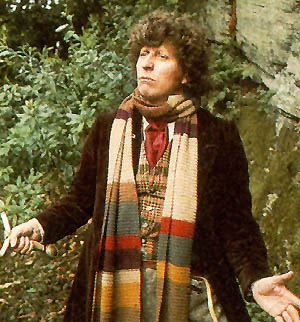
It's official, 55 year old British actor Peter Capaldi has been named the new star of Doctor Who, thus bucking the trend of younger and younger actors playing the ancient Time Lord from the Planet Gallifrey.


It's also official that some folks are feeling emotions ranging from annoyed to angry that the Doctor has not been changed to a woman or minority. They're saying that changing the character to reflect what they want is the only "fair" thing to do.


If you're too lazy to click the link, I'll sum it up.  People ask for characters that better represent our diverse society. Rather than let diverse creators create and support diverse new characters, they change an established character. This gives them a lot of hype in the media, some pats on the back from their former critics, and they get to call anyone who questions the decision racist, sexist, homophobic, and fattening.

This desire for fairness exists in denial of the fact that heroic characters are, to a certain extent, idealized reflections of their creators, and that they have a certain dynamic that has to be maintained or they literally become a totally different character.

However, these changes radically shifts the character's dynamics, and in doing so, could potentially hurt it in the fields of ratings/sales. So they're always done in mediums and franchises where they be changed back if the sales slump, or they're pawned off on some alternate universe where they won't interfere with the mainstream "canon." It's a form of tokenism that media companies use to get some publicity and polish their PC credits without the effort of opening the door to new diverse creators and characters and making any lasting commitments to those creators and characters.

Which brings me to my next point...

What happens when they reach the inevitable time to change the character back or cancel the project?

Those who demanded the change in the name of fairness, then demand that everything must now stay the same, still in the name of fairness.

But none of it's really fair.

Popular culture is like a pot-luck buffet. People bring the dishes they made. Dishes that reflect where they came from, what they are, where they want to go, and what they want to be.

Changing a character's sex, race, or whatever, is the equivalent of the powers that be saying to women and minorities: "You don't need to bring your own dish to this buffet for all of us to sample and enjoy. Instead, we're going to give you some of our scraps. Enjoy them, but don't get used to having them regularly, because the powers that be believe that you're not really worth it."

That's pretty insulting, and not really fair at all.

What is fair is letting everyone, regardless or gender, race, religion, or lack thereof to bring their dishes to the pop culture buffet, which despite what people say has plenty of room for all, regardless of their background, gender, or ethnicity. That way those who want more diverse characters can create and then support these characters and prove that there is an audience for original diverse characters.

That would be fair for everyone and we won't be wasting time arguing over who would/should/could be Doctor Who, because then we'd know that any casting choice would be for purely organic reasons and not for politics or publicity.

If you don't agree with me, then you are officially racist, sexist, homophobic, and way worse than Hitler!

Thursday, 1 August 2013

Hollywood Babble On & On #1052: Franchise Fricassee?

Mike Fleming at Deadline: Hollywood has an interesting rant on how Hollywood can't seem to successfully launch franchises that aren't based on something that's already successful, thus creating a parade of comic book adaptations, and remakes, reboots, rehashes, and regurgitations.

He blames two big problems for this...

1. The prohibitive costs of making and releasing summer franchise movies. (I agree)

There is no reason for this picture.
2. How the media pays too much attention to actually inaccurate tracking services that measure the pre-release "buzz" films get. Those tracking numbers are always skewed towards movies from already recognizable franchises and under-appreciate interest in new original work. This means that new original work get's dismissed out of hand by the media, and don't get the coverage they deserve. (I also agree)

However, I think Mr. Fleming is missing one thing, probably because he's inside Hollywood and hasn't seen the phenomena that I've seen first-hand.

Trust.

Or to be more specific the lack of trust.

The audience is losing their sense of trust that Hollywood will entertain them if it isn't already something they know is entertaining.

They can't trust the critics to help them either, since they see big names as either shameless quote whores, effete film snobs, or judging everything along some sort of political/social agenda that doesn't involve the quality or enjoyment of the movie in question.

Couple that with the hassle and expense that goes with going to a movie theatre, and the audience will only go out if they trust that the film will be worth that hassle and expense. They might as well stay home and watch TV because that seems to be where all the good stories are these days.

I've seen this happen in Canada. English Canadian cinema lost the trust of the audience that would entertain them, and you couldn't sell tickets to an English Canadian movie if it was showing in the only bunker during a nuclear holocaust.

French Canadian cinema in Quebec is very different. The audience trusts their filmmakers, and the filmmakers work very hard to earn and keep that trust. That's how they can have a costume drama about an unhappy marriage in the 1840s outsell the latest big budget blockbuster featuring giant robots beating the snot out of each other at the Quebec box office.

Once that trust is lost it is extremely hard to get back. So Hollywood better do something pretty drastic, or they may end up having that meltdown that even the insiders are predicting.

Tuesday, 30 July 2013

Hollywood Babble On & On #1051: Once Again I've Been Proven Right

Because I'm essentially pessimistic I hate being proven right.

Despite some big hits this summer there have still been some massive bombs, and some large scale under performers, and when compared to some previous summers things are looking down, even the fathers of the modern blockbuster Stephen Spielberg and George Lucas say that a meltdown is imminent because the industry is too dependent on blockbusters, something I've been saying for years as any long-term reader of this blog can attest.

But that's not the main topic of this bit of online gloating.

The main topic is something I've been griping about a lot lately, and that's Hollywood abusive relationship with China.

I've laid out the Pros & Cons, making sure to explain that while China is a big economy, it's not a free economy. An unfree economy is prone to political interference, cronyism, and corruption on a scale you won't find in a free economy.

I also explained how the powers that be that rule China will not allow economic reform to go too far, because too much economic freedom leads to political freedom. Just ask Pinochet.

But that's not made Hollywood act with anything remotely resembling caution. They're leaping in head first with their eyes closed because they're convinced that a market of over a billion regular moviegoers will solve all their problems. 

Pissed away the gross domestic product of a small European nation on a Western?

No problem, they believe, China's market will solve it somehow, if the Chinese government allows the film to be released, uncensored, in the country, and it sells enough tickets to make the small percentage of the ticket price that the studio gets worthwhile.

Well, it's looking more and more like a total pipe dream.

Those receipts from China, the money that was going to save Hollywood, is now either in a state of flux as the more diplomatic put it, or just not being paid out at all, as others put it.

Either way, the Chinese government has the money, but it ain't going to the people who earned it.

Now no one is sure if this non-payment is because of a new Value-Added Tax the Chinese government has imposed, that just happens to suck up exactly all of their profits, or just someone in the government being a dick, which shows another problem with depending on an unfree market.

Unfree Markets tend to be controlled by the greediest and least competent members of that society. That's because the abilities of surviving in a truly free market, like adherence to the rule of law, long term thinking, and the willingness to let partners profit too, are positive hindrances to getting ahead in a unfree market. Getting ahead in an unfree market is all about your political connections, and your skills at treachery, conniving, and grabbing as much as you can for yourself.

It's a lot like doing business with gangsters. Sure, you can get along well enough with the really smart ones, however, they're the exception to the rule. Most of the time you'll end up dealing with someone who wants everything for themselves, and you can go pound sand. Forget about the rules, these guys make them up as they go along.

Remember my rule of being a cynic: You're never disappointed, and often pleasantly surprised. I'd like to be pleasantly surprised some time, but I'm not holding my breath.

Monday, 29 July 2013

Hollywood Babble On & On #1050: Under The Dumb?


When CBS announced that they were doing a mini-series adaptation of Stephen King's obese science fiction novel Under The Dome, I gave them some tentative kudos. I've long advocated that television was a good medium for adapting large works of fiction that would otherwise be butchered by any attempt to squeeze them into the limited running time of a feature film.


I was tentative because I know how major broadcast networks think, and I know that if there was a way to screw up a good idea, networks executives would find it, and jump on it.

I had hoped that CBS was smart enough to avoid the temptation, but hope is the handmaiden of disappointment.

CBS has found the way to screw it up, alienate their audience, and butcher the source material.

How did they screw it up?


That means that they've reneged on their promise of a faithful adaptation of a best-selling novel, and will butcher it in the opposite direction of feature films by trying to transform it into an open ended serial.

Now I can understand that the show is doing well in the ratings, and when something does well, the urge among TV executives to try to stretch it out forever.

However, that wasn't the sales pitch that got people to watch the show.

The sales pitch was that the show promised a set beginning, middle, and ending.

Now that sales pitch is out the window, and those who have watched the show, can now just forget about resolution, because the network's going to start plopping Lost-style out-of-our-ass plot twists to try to keep this gravy train rolling.

Of course, it'll stop being a gravy train, so the network would then scramble to win the ex-viewers back and it all becomes an exercise in flogging a dead horse. Eventually it'll be cancelled, probably on a cliffhanger season finale because they thought they were going to squeeze out a third.

Now was there a way for CBS to avoid this screw up?

Yes.

It boils down to branding.

When CBS first announced Under The Dome, they should have referred to it as the first "CBS Novel For Television." And when it started doing well they should have bought another hefty best-seller and put it into production as the next "CBS Novel For Television" and promoted it as such.

Then, when Summer 2014 approached, the audience that enjoyed Under The Dome would see the ads for the next "CBS Novel For Television" and think: "Oh, I think I'll give that show a chance."

Then CBS would have a franchise that's not based on any single story being stretched beyond its limits. As long as they maintain a standard of source material, and production quality they could probably maintain a healthy viewership.

But that would take a little more effort than just ordering a second season and letting the poor show-runners figure it out for you.