Monday, 19 November 2007

Hollywood Babble On & On... #6: How to Measure Star Power?

Recent reports showing Hollywood movies suffering a 26% drop in revenues from the same period last year. Some attribute it to a recent slew of anti-war movies that has driven the audience away not only from them, but from other films for fear that may contain similar political and religious messages.

But there's another reason for it as well.

It's the stars.

Too many names on the supposed "A List" couldn't sell a movie if their lives depended on it, and they being paid way too much to fail.

For the last couple of decades the positions on the 'A-list' of Hollywood stars has been based on the concept of "name recognition."

Basically, name recognition is based on how many times a person's name and face appear in the various tabloid media, from People Magazine, to Entertainment Tonight, to the National Enquirer, and even internet gossips like Perez Hilton.

But just because a person gets a lot of attention and are read about whilst on the toilet doesn't mean that they're going to do the chief job of a star, which is to sell movie tickets.

You see appearing in those media doesn't mean that the average movie-goers will pay money to see them on the big screen. It just means that their publicists have a lot of clout and influence with people in the media.

And publicists don't buy tickets, the audience does.

I have discovered a simple mathematical formula to determine the real star power of Hollywood actors. I originally came up with it years ago, but the success of the show 'Numbers' means that some people might actually pay attention to it now.

Here it is: (A+B)-C= B.O.S.S.

B.O.S.S. stands for "Bums On Seats Status" or if you want to be more scientific sounding "Box-Office Sales Status" and is a fair and accurate assessment of what a movie star's real box-office appeal is.

So here is how you do it.

A: This is a percentage of how many profitable films the star has been the lead in for the past 5 years.

Don't go by the studios profit/loss statements, they contain more fiction than a Barnes & Noble superstore.

For the purpose of this formula you take the production costs of the film, double it, and add $30. This will give you a rough estimate of the total costs of the film, including prints, marketing, distribution as well as the theater's piece of the action. If the box-office take is more than this amount, it's profitable, if it's less, it's a money loser.

B: Now this is the only part of the formula where market surveys are used. You do a poll of average moviegoers about the star in question and take the percentage of people who say that they would pay to see that star in a movie, and deduct 90% of that value.

I call for the chopping of the 90% because the majority of people who answer the poll are just being polite, or so lonely they will talk to anyone and say anything to keep the talk going.

Trust me, I know how wildly inaccurate they can be having been involved with a clever sketch comedy pilot that was bastardized into a sitcom based on a cream cheese commercial because of market research.

C:
This is a percentage of movies that have been negatively affected by the star. Now this can be interpreted in several ways. The most concrete involve profitability lost due to the over-sized salary or unprofessional behaviour of the star in question. A star who drives up the budget isn't worth it anymore.

Now you add all that up together and you should get a score between 1 and 100, you then compare that score to this easy to read chart.

SCORE 0-10: This actor's next role should feature the line: "Do you want fries with that?"

SCORE 11-30: This actor might be okay cast as a wacky neighbour on a sitcom on the CW network.

SCORE 31-50: This star could be either on the way up, or on the way down. Stick to supporting roles in big-budget projects, leads in small budgets.

SCORE 51-70: You can call this person a "star" but unless you have a good script and a good director making a good film, it will still be a bit of a crap-shoot. They should get good money, but not so much that it cripples the budget, and points only if they are willing to take a cut in the up front money.

SCORE 71-90: The word 'bankable' might be used now. They have the charisma to sell a picture, and may even be forgiven the odd stinker or two, but you shouldn't push it too far. They should get good money, and a modest points deal.

SCORE 91-100+: These actors can sell out a theater with dramatic readings of the Peoria Illinois phone book. They are worth every penny they can get, and a heap of points too because you're going to be swimming in money like Scrooge McDuck on a meth binge.


So, there you have it, the solution to Hollywood's 'star' problem.

And all I ask is 10% of the gross profits derived from this system. I'm not greedy.
Monday, 12 November 2007

Hollywood Babble On & On... #5: That's Just Gross...


This piece was posted on the IMDB's little newswire:
Studios Operating at a Loss, Says Report
Back-end participation deals with top directors, producers and actors, in which they receive a percentage of a movie's gross -- regardless of whether it is profitable -- have been principally responsible for pushing the movie industry into an annual loss, according to a report produced by research company Global Media Intelligence and Merrill Lynch and reported by today's (Monday) New York Times. In its report about the study, the newspaper commented that it may be particularly relevant during the current writers' strike. "As it turns out, the pot of money that the producers and writers are fighting over may have already been pocketed by the entertainment industry's biggest talent," the Times said. The study examined releases last year that yielded $23.7 billion from sales to domestic theaters, foreign theaters, home video, pay television and every other source of income. Total costs for those films, however, amounted
to $25.6 billion -- or a combined loss of $1.9 billion. The loss, the study determined was due partly to a 15.5-percent decline in foreign DVD sales, but "the real killer," said the Times was the growth in participations, which totaled an estimated $3 billion. By comparison, the newspaper noted, citing WGA figures, total residuals for the year amounted to $121.3 million, while a single actor could easily earn $70 million from a so-called first-dollar gross deal on a hit movie. And such deals amount to super-residuals. As Steven Blume, CEO of Content Partners, a company that buys participations for cash, told the Times. "These participations are paid in perpetuity."
Okay, did you read that?

Did you understand it?

Okay let me explain it.

You see back in the early days of Hollywood, stars, writers, and directors were under contract to the studios. Now these contracts are often compared to slavery, but the situation was actually closer to a pampered form of indentured servitude.

The average contract lasted about seven years, paid a generous weekly salary, and granted the talent the protection of the studio from bad publicity, but gave the studio complete control over what projects the talent could do and where and when they could do them.

Now that system began to change in the 1950s. Big name stars like Jimmy Stewart, and powerful directors like Howard Hawks and John Ford wanted to have more control, not only of their career, but a bigger piece of the pie from their work.

So they became their own producers and demanded what became known as 'back end' money. Back end money, is not the normal salary that was paid up front, but a piece of the profits.

Sadly, when it came time to divide those profits, the newly independent talent realized that there are profits, and then there are profits.

You see first come 'rentals' earned by the ticket sales of any given feature film. A rental is a portion of the ticket price that goes to the distributor, the rest is kept by the exhibitor (aka The Theater) and is called the 'house nut.'

The rentals earned by the studios are the 'gross revenues' or if the ticket sales are really good, the 'gross profits.'

After that things get a little hazy.

Because after the gross revenues come in, they start to get whittled down. Now this whittling is supposed to done to cover the expenses of the studio for marketing, distribution, and administration.

However, that's not the only thing that happens.

You it's at this stage that studios start adding things like the costs of less profitable movies, and, since they're all now part of bl
oated conglomerates, the costs of bad investments that have nothing to do with movies at all.

For instance, a major summer blockbuster can, through the magic of 'colourful accounting' lose a fortune because the studio's corporate parent lost money on cattle futures in Argentina.

What survives this whittling, or to be more exact, hacking, is called the 'net profit.'

Except there is never a net profit.

The net is a myth.

It's a fantasy.

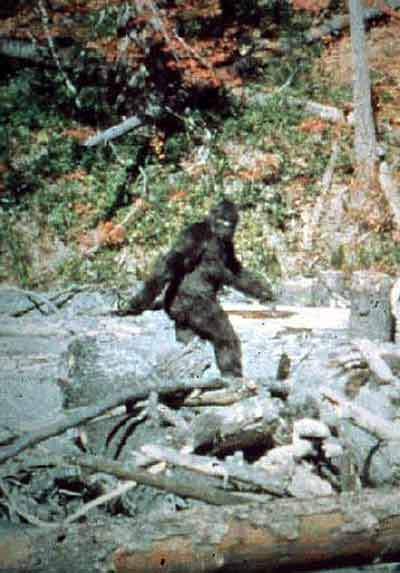
It's the corporate equivalent of bigfoot. Traces have been reported, but no one has ever actually caught one.

So the talent started demanding a piece of the gross profits.

So the book-cooking extended to the counting the gross revenue, and suddenly gross profits turned into the fiscal equivalent of the Loch Ness Monster. Rumoured to be out there, but no one got a piece of it.

So the talent started demanding a piece of the gross revenue from the first dollar earned by the first ticket sold.

These demands extended into television broadcasts, and then to home video with the arrival of the VCR and later the DVD player. This means that certain, perennially popular films, could generate a steady income for the talent well into infinity.

And this has put Hollywood in the mess it is in right now.

Here's why.

The studios are both starstruck and blinded by greed.

They are starstruck because they give the 'A-List' not only large fees up front, but large shares of the 'back-end' whether they actually deserve it or not.

So movies that are only mildly profitable in theaters, or don't have that much appeal on home video because of the star's lack of charisma and talent, are now losing lots of money because the lead actor is getting too much of the revenue.

At least, that's the studio's excuse.

You see, they're still cooking the books, in fact, they're literally deep frying them, and blaming their own perfidy on the bad deals with the actors.

But they're the ones to blame for actors taking so much. They take the word of Entertainment Tonight, and Hollywood's network of publicists over the word of the audience.

Take for example George Clooney.

Clooney is a big star. At least that's what the studios think. The only problem with his career is that unless he's playing alongside Brad Pitt in an Ocean's 11 sequel, his ticket sales are downright abysmal. And the last Ocean's movie couldn't make a profit, because the star's salaries were too high.

The man has dropped more bombs than World War 2, but he's still a big 'star', commanding big salaries, despite his inability to attract an audience because the entertainment media machine, dominated by the studios love him.

And pity poor Nicole Kidman, the woman is literally box-office poison, despite being good looking and talented. She couldn't sell a movie if it was the last film on Earth.

But the press thinks she's good copy, so her salary goes up while her box-office intake goes down.

Now if these analysts are to be believed, Hollywood is sinking in a sea of red ink. How do they stop it?

Well here's how:

Stop playing games with the money. Make a plan so that if the film really does make a profit on its own merits, that those profits are divided equitably among all involved. Trust me, playing with the books costs more money than it saves, ask Enron.

Pay actors what they're worth. I'm not saying that you pay them scraps, but pay them a salary based on their real box-office appeal, not just the number of times Mary Hart drops their name or how many magazine covers they get. It has to be based on bums on seats, and if they are box-office gold, they're profit more from a intelligently run profit sharing system and won't demand the immense up front money.

Simplify the business plan. You see when studios offer a mission statement, they always talk about 'paradigms' and 'maximizations' and other pointless buzzwords that have nothing to do with making movies. The real business plan of a studio is to tell stories and sell stories. Remember that and you can't go wrong.

Garson Kanin said that the trouble with the movies as an art was that it was a business, and that the trouble with it as a business was that it was an art.

It doesn't have to be if everyone gets their heads out of their backsides and do their jobs.

Sunday, 11 November 2007

Hollywood Babble On & On... #4: The Writer's Strike and What the Audience Can Do

Now I've been known to gripe a bit about how the modern movie business is run.  I'm especially displeased with how Hollywood has come to treat with contempt the most important people in their business: The Filmmakers who make the films and The Audience who makes them profitable.

Now the Writers' Strike has given me an idea for the filmmakers and the audience to unite and make the media powers that be stand up and take notice.

STOP BUYING DVDS

That's right.

The audience doesn't really need DVDs to live, but the studios do, that's why I think we, the audience should boycott purchasing new DVDs until a fair and equitable settlement of the Writer's Strike is reached.

It's not like the writers are getting anything from these DVDs anyway, and they won't until something dramatic happens.

Remember, the Xmas shopping season is coming, that's the most important time for DVD sales in the year.  So until a deal a reached, give your DVD money to charity, spend it on something else, but don't buy any more DVDs.

You have no idea how hard it is for me to ask this, but I am, because they've gone too far.

Friday, 9 November 2007

Hollywood Babble On & On... #3: Ins & Outs

The current writer's strike has made me think a bit about how Hollywood does business. Last time I talked about contempt, and how it's become integral to Hollywood's attitudes, and today I'm going to talk about another key ingredient: Isolation.

Hollywood folk aren't like you and me, they have a lot more money and a lot less sense. And the only people they encounter are either also in Hollywood (physically, economically &/or mentally) or want to be in Hollywood.

The average Hollywood denizen doesn't know much about the average person outside of its narrow little circle. In fact, they Hollywood folks don't even want to know anything about the outside world, because they believe that if you were worthy of their attention, you'd be one of them already.

This has created a strange culture in Hollywood that resembles high school on steroids and too much money.

A friend of mine brought this story to my attention that I think illustrates the point.

It's the story of director Peter Jackson, and studio boss Robert 'Bob' Shaye.

Director Peter Jackson made the Lord of the Rings trilogy. Those movies literally made billions of dollars for New Line cinema, and held the promise of other profitable projects for the studio.

Then New Line founder and CEO Bob Shaye shagged the pooch.

Or to be more specific, he tried screw director Peter Jackson out of his rightful share of the home video profits.

This led Jackson to file a massive lawsuit, Shaye to start name-calling, destroyed the developing adaptation of The Hobbit, and poisoned relations with Jackson and the audience.

So why did Shaye do it?

Was it greed?

Partly.

Was it stupidity?

In a way.

Was it contempt?

Yep. But it's a contempt based in isolationism.

You see, despite his position as a top-money earner, Jackson lived in worked in New Zealand. He did not belong to the 'in crowd' in the Malibu/Beverly Hills/Hollywood Axis and had no interest in becoming a member at any time.

Peter Jackson had become the equivalent of the science geek. The captain of the football team will have the geek do his homework to get an A+ in Algebra, but will still stick the geek's head in the washroom toilet and give him a swirly.

Sure, the science geek will stop doing his homework and the jock will flunk Algebra and severely mortgage his future, but at least he got the momentary giddy thrill of showing everyone who was the big man on campus.

And seeing the New Line is one the razor's edge financially, you can figure out who was the figurative jock in that story.

With Jackson out, Shaye, in his infinite wisdom, decided to top Jackson at his own game.

He was going to make a film that was similar in spirit to the LOTR trilogy, but will be uniquely Shaye's.

That film was The Last Mimzy.

Yep that's one sucky title. Sort of like that allegorical jock trying to do his own chemistry experiment, only to have it blow up in his face.

You see LOTR was a grand epic adventure with lots of special FX, and since Shaye, being a Hollywood person, thought that was it and filled The Last Mimzy with that.

Shaye couldn't see what lay beneath the LOTR trilogy.

Tolkien wrote the novels to promote Christian ideals and themes without directly mentioning Christianity. And though I have no idea of what Peter Jackson's personal beliefs are, he didn't shy away from, or edit out those ideals and themes out of the film version.

Those themes resonated on an emotional level with the general public in a big way. This led to the repeated viewings, the white hot DVD sales, and merchandising out the wazoo.

Shaye's film did have an element of spirituality, but it was strictly of a New Age California blend that didn't resonate with anyone whose spiritual adviser didn't live in Malibu. Also many were annoyed by some tacked on political statements, that didn't particularly fit what was supposed to be a family film.

The Last Mimzy tanked at the box office.

Did Shaye see the film's failure as a sign that he had lost his connection with the general audience?

Nope.

He called the audience 'stupid.' If they were truly 'with it' like he was, they would have made Mimzy #1.

And it's obvious that Shaye still hasn't learned his lesson.

His next project is producing The Golden Compass. It's based on a series of children's books designed to be the atheist's answer to LOTR and the successful Narnia books and film.

Already the film is tracking poorly with preview audiences and most analysts expect it to lose a fortune. For some reason being told that their deeply held faith is stupid and/or evil just isn't entertaining for the average moviegoer, even the ones that aren't particularly religious.

Will Shaye learn his lesson then?

Probably not.

Because Hollywood is High School, and no one wants to tell the captain of the football team that he's flunking out because he won't do his homework and actually learn something.

That will get you a swirly and a swift booting out of the 'in crowd.'

Saturday, 3 November 2007

Hollywood Babble On & On... #2: Contempt & the Death of Hollywood

You've probably heard that the Writer's Guild of America is going on strike, effective Monday, barring some miracle, and that Hollywood's movie industry is going to completely freeze for a while.

That might be a good thing.

Hollywood needs to shaken down to the core. It needs to wake up, smell the coffee and mix any more metaphors that would imply that radical change is necessary if they hope to survive as a viable industry.

Hollywood has spent so long as the principal source of entertainment that it has developed a serious case of contempt for two of the three types people that make profitable films possible, and an overwhelming, almost hypnotized awe for the least important one.

The three types of people who make a film successful are:

1. Filmmakers- These are the writers and directors who make the stories that are essential to a successful film.

2. The Cast- Actors whose charisma and talent are often essential in properly marketing a film to the audience.

3. The Audience- Most important of all. It's their bums in theater seats that determines whether or not a film will sink or swim.

Now can you guess which of those is the most overpaid and overfed of the three?

Well let's see.

The Filmmakers, right now, the writers, are on strike because the Hollywood studios are trying to screw them out of royalties from the sales of internet downloads. There's no reason not to pay them a fair royalty for download sales outside of studio greed and most importantly of all, contempt.

The Audience is also faced with the overweening contempt of Hollywood studios, and it's affecting the box office. Box office returns for most releases over the past couple of years have been dismal and they're getting worse.

A good example is the recent trend toward 'political' films coming out of Hollywood. Now Hollywood had been a stronghold for the Democratic Party since Kennedy's assassination and they want revenge for Bush stealing the 2000 election from Al Gore. This has led to a slew of films that can most diplomatically described as 'critical' of American policies, while most folks outside of Beverly Hills and Manhattan view consider them anti-American propaganda. American soldiers, currently fighting in Iraq and Afghanistan, are portrayed almost uniformly as either bloodthirsty psychopaths, emotionally scarred losers, dimwitted hillbillies or all of the above.

The American audience do not want to see movies like while their country is fighting a war. And guess what, all of the 'political' films coming out of Hollywood, and even films that have subtler political stances, are bombing worse than an Al Quaida terrorist hopped up on caffeine and hate.

In fact, Tom Cruise's first picture as head of United Artists Lions for Lambs is tracking so poorly in advance screenings that it is endangering the financial prospects of parent studio MGM, which has taken a severe beating distributing many failed political films for the Weinstein Company.

It even hurts films like The Kingdom, that was slightly more politically neutral than the other films, but the audience had been conditioned to expect the diatribe, and it cost the film at the box-office.

Now when political films bomb, the companies do not blame the films, their content, or their political stance for the failure, they blame the audience.

They condemn the audience for being 'stupid' and 'unhip' for not spending their hard-earned money on Rendition instead of Transformers. Yet they don't realize that while Transformers may insult the audience's intelligence, it does not insult the audience itself. And, at least, Transformers held the promise of nostalgic escapist spectactle, while Rendition and others of its ilk, offer nothing but the insult.

You see, they're holding the audience in contempt, like they do the filmmakers.

But who isn't being held in contempt by Hollywood's studios?

Actors, not all actors, only the folks on the supposed 'A-List.'

We live in the era of extremely overpriced actors. The salary demands of Hollywood's supposed A-List stars can double, if not triple a budget.

Yet the overwhelming majority of actors don't deserve the bloated salaries, or the attention because they can't deliver what an star can: Bums in seats.

Instead of 'movie stars' Hollywood is overrun with what I call 'Media Stars.' Media Stars are people who are good at getting attention from other people in the media, but can't really hold onto, or attract the attention of the audience.

Take George Clooney for example. Every film he's made since A Perfect Storm that wasn't an Ocean's__ movie has tanked badly at the box-office. Yet he still commands top money because he's good at attracting attention from people within Hollywood.

It's the folks in flyover country who buy the tickets don't really give a toss about him.

But studios base star-power, not on box-office appeal, but on how many times a month their mug can get on Entertainment Tonight or the cover of People Magazine. It's called 'name recognition' and it's destroying the star system.

Now lets go back to Tom Cruise and Lions for Lambs. He must have seen the poor performance of the other political films and realised that it would be a money loser, but it was a sure-fire albeit cynical way to get back on the A-List.

We all remember his couch-jumping, hooting, hollering, and declarations that a high school dropout knew all about psychiatry, that made him an embarrassment and threatened his status on the A-List.

The audience didn't seem to care, Mission: Impossible 3 did well at the box office. Even though his antics made profitability for MI3 impossible, it did show that he could still put bums in seats.

But like the rest of Hollywood, he doesn't care about the audience, the audience and their opinions do not matter.

What matters is getting on the good side of the powers that be in Hollywood, and since the powers that be are more inbred than the hillbillies they claim live in the other states, it only left him one option. To make a propaganda film against his own country.

But it looks like he may have overplayed his hand, and his future as a mogul is in doubt. In fact, the future of MGM is now in doubt.

Now this just might be what saves Hollywood, if they see what's in front of them and take the right path.

They have to get rid of the contempt.

They have to stop wasting time, money, and resources trying to figure out ways to screw people who make films, and dedicate it to what really makes money. Telling stories that the audience wants to hear with stars that the audience actually likes.

They have to open themselves up to some outside ideas. That means quit coming up with reasons to not look for new talent/ideas and to actively look for it. And to look for it outside of the increasingly narrow thirty mile zone that seems to contain all of entertainment these days.

And they have to stop looking down on the audience.

The audience is their reason for existence.

It's how they make money.

Now will Hollywood actually change its ways?

Probably not.

Then the new Hollywood will rise, and toss them into the dustbin of history, like Old Hollywood had done with vaudeville.

It's called the circle of life.

Wednesday, 31 October 2007

Discount Bin Movie Club #7: Halloween

Nope I'm not talking about the Rob Zombie remake. I'm talking about the original John Carpenter horror classic HALLOWEEN, that even though it wasn't the first 'slasher' film, did give the genre legs.

The film starred movie veteran Donald Pleasance as the definitive Dr. Sam Loomis and Jamie Lee Curtis in her feature film debut as babysitter/killer target Laurie Strode and Nick Castle as The Shape, better known as Micheal Myers.

Like all good horror stories, the plot is simple and direct. Michael Myers killed his sister when he was a little boy in 1963. In 1978, he escapes from the booby hatch, and, thanks to a brief glimpse of her through the window of his old house, becomes obsessed with nerdy babysitter Laurie Strode.

Then the killings begin and it's up to Michael's shrink Dr. Loomis to stop him before he wipes out the whole town with a little .38 caliber therapy.

Now modern gore-hound deride the film because

1. It is relatively bloodless.

2.it takes a while for the killings to begin

3. The audience never learns much beyond the bare minimum of the backstory of killer Michael Myers.

Well, I think those are the film's strengths.

1. Gore is overrated as an element in horror. There was a time when it was shocking and new, but that time has passed. Hell, the CSI franchise dish out more gore than the average Dario Argento picture. The makers of Halloween opted to go for fear over disgust.

2. It does take a while from the initial burst of violence with Michael's juvenile killing of his sister, to get to the murders of the babysitters and their friends, but that was a good choice by the filmmakers. It allowed them to let the characters have a little personality. Sure none of them are Hamlet but it's enough for the audience to identify with them enough to feel horrified at their deaths.

3. It is necessary to make Micheal Myers an enigma. Everything about him is kept vague, because the audience needs to see him as more than just a nut with a knife, but as an unstoppable force of evil.

The film even sets up questions about Michael and blatantly refuses to answer them. These deliberate loose ends make the film more unsettling because there's nothing scarier than the unknown.

All in all, the film Halloween is a mandatory addition to any horror fans DVD collection. And Anchor Bay's latest 'remastered' edition looks even sharper and clearer than it probably did when it was released in theaters. This edition (there are dozens) also comes with a 'making of' featurette made in the year 2000 and it's loaded with trivia and amusing stories about the making of the movie.

"You Moronic gore-hounds wouldn't know good horror if it stabbed you in the chest and nailed you to a wall!" -Michael Myers.

Sunday, 28 October 2007

On Comedy: Not The 9 O'Clock News

Today is the debut of what I hope will be a new feature of this blog. It's called On Comedy, and in it I will look at classic comedy sketches and analyze what works.

Today I'm looking at some sketches done by Not The Nine O'Clock News a show that was not only devised by the 'TV Generation' but also a show about TV, that could only be done on TV.

First a little history.

Most sketch comedy was done in the form of a stage-bound revue show, with a studio audience, musical acts, and they didn't go out much on location.

Monty Python
changed all that with their quickly changing sketches, and while they did a lot of 'stage-style' material, many sketches were shot on location, a radical move at the time.

In fact they were so successful that many thought sketch comedy was dead without them.

Well some folks at the BBC thought differently. They pieced together a new sketch show starring up and comer Rowan Atkinson, Oxfard Revue veteran and director Mel Smith, Australian actress Pamela Stephenson, and Welshman Griff Rhys-Jones, whose sister was dating the producer at the time.

Now what made them radically different was that they rejected the 'stage show on TV' format that had made a comeback since the debut of SNL and made a show that could only be done on TV.

But enough of the history lesson, let's look at the material. First up is Rowan Atkinson and an off-screen Mel Smith in The Judge.


This sketch works because it follows a basic rule of comedy, use the unexpected and if possible, make it naughty.

The set up: Rowan is a judge, and appears elderly, out of touch, stuffy and possibly senile. Since that is the stereotype of British jurisprudence, it's is what's expected. The audience is lulled into thinking that it will be a sketch about him being stuffy, senile and out of touch with the modern world.

The punchline: Despite not knowing about digital watches, video recorders, and whatnot, he knows exactly what the deluxe inflatable woman is. This is the unexpected. He may be out of touch about most ordinary things, but he is very knowledgeable about sex toys, introducing the element of schoolboy naughtiness that cannot help but inspire a giggle.

Then there's a quick edit, and they're out of there and onto another joke.

There's not wasted time working on catchphrases or trying to stretch it out in order to score a movie deal, like a certain other sketch show that will remain talentless. They do the job and they do it quick.

It's called efficiency.

This same efficiency can be seen in this sketch also featuring Atkinson.


Now this operates on the principle of absurdity. He's stealing, but he's still looking for the best price. Such blatant illogic is where it comes from, and they don't waste time with speeches about the issue, they just let the camera show it.

And that's why it works. The sort speeches found in a stage-bound production would give the audience time to ponder the situation, and in sketch comedy time is the enemy. You have to get the laugh done quick and be on the next sketch before the devil knows it's dead.

Also shooting it on location at a real store, lends some credibility to the sheer silliness inherent in the sketch. Punctuating the laugh.

Now they also brought this same efficiency to their longer sketches. Take for example this parody of long running British quiz show University Challenge.


First, an element of absurdity. The top-level students are all from two of Britain's toughest prisons, and despite their educational qualifications, (another absurdist element) they're not there to discuss science or the arts. They're there to snitch or 'grass' on their associates to win early parole or a slot in witness protection.

Having the policeman pop up right beside the host is an excellent addition. Also look at how he pops up. He appears out of nowhere, gives a suspicious quick look-round, then takes out his notebook to start scribbling away. In less than a second he encapsulates that this is a rather shady deal all round, but does it anyway.

Also, the use of the camera is important to the sketch. On a stage they would all be at a distance from the audience. Their appearance would have to be exaggerated to make it obvious to a stage audience that they're criminals. But on TV they're able to go with a more realistic thuggish look, as a counterpoint to the absurdity of the sketch itself.

They also don't waste time, getting through the questions and answers quickly, and the 'help' the host offers, isn't a clue, but a bribe. It uses comedy to show the problems arising from Britain's program of parole for snitching becoming so widespread.

Now when the show wrapped, they wanted to go out with a laugh, and they did, using this blend of sentimentality and bawdy humour.

If you don't know why it's funny, you don't get out enough.


Or maybe you do get out enough and that's why...

That's all for now.

I hope to do this again soon, let me know what you think.

Wednesday, 24 October 2007

The Millisecond Men Part 6

THE MILLISECOND MEN

PART 5: THE STORY CONTINUES

BY DUNCAN R. MACMASTER

"Argle thrax!" grumbled the Treskarian, brandishing a strange looking pistol.

"Damn," said Bob, "it's much more convenient on TV, all the aliens speak English."

"That weapon's enough translation for me," said Quo Vida raising her hands.

"Why are you raising your hands?" asked Bob of the hologram of Quid Civitas.  "You're already dead."

The hologram shrugged.  "Force of habit and experience."

Bob raised his shotgun and pointed it at the alien.

"You drop your weapon punk!" growled Bob, channeling the spirit of Lee Marvin.

"Your gun is useless," said Quo Vida.

"You know that," hissed Bob, "I know that, but I'm hoping he doesn't know that."

The Treskarian paused.  Though its face was behind an opaque mask, Bob could see confusion in its body language.

"It's working," said Bob, "now I show him how useless this is."

Bob pulled the trigger.

A ball of flame and hot metal formed at the mouth of the shotgun's barrel.  Then it froze.

The Treskarian raised his pistol.

Bob shoved the shotgun into the alien's face.  Suddenly the alien flew backwards from the weapon and slammed into the wall.  The ball of fire and metal stuck to its face and the pistol flew from its hand.

Bob grabbed the barrel of the shotgun and swung.

The butt of the shotgun connected with the alien's helmet and knocked the creature to the floor.

"You kicked its ass," said Quo Vida, amazed.

"Sorry," said Bob.  "I just don't like getting threatened, especially by something that's going to blow up the universe.  Is it dead?"

Quo Vida took out her does-all and scanned the creature.

"Out cold," said Quo Vida.

Bob picked up the alien's pistol.  "This should work, shouldn't it?"

"Yes," answered Quo Vida, "but I'd point that end away from you."

"Thanks for the tip," said Bob.

"There is only one thing that could synchronize the time-streams," said the hologram of Quid Civitas, who then flickered and took the form of a triangular rock with a red stone in the center.  "It is called the Stone of Time.  It appears to be common rocks, but is in fact pure tachyons and exists both inside and outside this time stream.  The only problem is that it's a legend, no one knows where it is."

"I know where it is," said Bob.

TO BE CONTINUED

Thursday, 4 October 2007

The Millisecond Men Part 5

THE MILLISECOND MEN

BY D.R. MacMASTER

5

Quo Vida spun around when she heard the voice behind her.

"Quid?" she said, tears choking her voice.

Bob had spun around to, his useless shotgun raised, for no reason other than his own comfort. In front of them was a tall man in a double breasted charcoal grey pin-striped suit and matching fedora.

Actually, he wasn't so much standing in front of them but floating a few inches above the floor.

"Dude," said Bob, "you're flickering."

"I'm an interactive holographic simulacrum of the Quantum Agent Quid Civitas," replied Quid.

Bob looked over at Quo Vida and saw a tear run down her cheek.

"Is this one of those 'if you see this message I'm already dead' kind of things?" asked Bob.

The holographic simulacrum nodded.

"Sorry," said Bob to Quo Vida.

"What happened?" asked Quo Vida.

"You know that I... or to be more accurate, the person I'm modeled after was always fascinated by Millinarian dimensions," said Quid. "Well I decided to break the rules, go into the past and visit one that we had scanned using a temporal compression and expansion matrix."

"Then what happened?"

"I met the Treskarians," said Quid. "I learned something we missed in our scan. They were the only sentient life in their universe and for good reason, they killed everything else."

"That's not good," said Bob.

"It isn't," said Quid. "They overpowered me. Forced me to teach them about our technology and then they killed me. Thankfully I was able to record my neural patterns into the holo-web before they cut off my head."

Quo Vida stepped back, he hand over her mouth.

"They don't want to last a millisecond of our time," said Quid. "They want to bring their universe in sync with ours..."

"They did," said Quo Vida. "They destroyed it all."

"But you survived," said Quid. "That means that you can stop them. All we need to know is why they came here, to this primitive time and planet."

"I happen to live in this primitive time," snapped Bob.

"Yeah," said Quid. "Why are you working with a guy in pyjamas and a housecoat that has definitely seen better days?"

"He's a tachyon emitter," said Quo Vida. "Long story but he has proven to be good in a pinch."

"Thank you," said Bob.

"He better be good," said Quid. "Because a Treskarian just walked in behind you."

TO BE CONTINUED...
While you're waiting for the next exciting installment, pre-order OUT OF THE GUTTER's Issue 3.
It has to be great, I'm in it.

Monday, 1 October 2007

Discount Bin Film Club #4: The Changeling!

Hello there.

Today is the first of October, and in keeping with my promise, this will be a month of scaaaarrrryyy movies that I've found in the Discount Bin.

First up is THE CHANGELING (1980-Canada) starring George C. Scott, Trish VanDeVere, and Melvyn Douglas and directed by Peter Medak.

The film was made during the waning days of what became known as the 'tax shelter boom' in Canadian cinema. This program allowed investors in movies to reap the benefits of tax breaks and profit (by legally deducting more money than they invested) whether the film made money or not.

Now most of the movies made in this era were pretty cheap and pretty awful, but it was the period that brought the world David Cronenberg and produced such cult classics as Black Christmas, The Silent Partner and the supernatural horror film The Changeling.

The story is fairly simple. A successful and famous composer named John Russell (Scott) is an emotional wreck since losing his wife and daughter in a car accident. Desperate for a change of scenery he moves to his home city, that hasn't visited in a long time, to take a job teaching music at the local university and work on a new orchestral project.

A friend recommends that he get a lady from the local historical society (Van DeVere) to help him find a place to live. The society will lease him a place relatively cheaply if he promises to retain it's historical character. He finds a large rambling mansion with an acoustically perfect music room, and it's available at a price that can't be beat. So he moves in.

But he's not alone in the house.

There's a spirit there, and it's emotionally unstable. It wants its new housemate to expose the dark secret of the previous owners. A secret that involves a wealthy and powerful US Senator (Douglas).

The film scared the royal cheese out of me when I first saw it at the age of 12 on CBC's summer movie line-up, and when I found it for $4.99 at Wal-Mart I had to see if it still had any power.

It does.

The film doesn't have any fancy special effects, no glowing ectoplasm, no ghostly death rays, and no gore. It produces scares the way they should be done, through solid suspenseful film making.

Director Medak piles on the suspense through editing, eerie music and masterful cinematography by John Coquillon who fills every shadow with dread. And the house, which qualifies as a character in itself, has plenty of shadows. One scene that illustrates how well the film was made was the seance scene. It's just a group of people sitting around a table talking, but it is still one of the creepiest scenes you will ever see.

My only complaint is that the ending seems a tad rushed. There were some elements that I get the feeling were intended to be used for the finale, but had to drop them due to budgetary and time constraints.

All in all, The Changeling is an excellent little fright film to lend chills to a dark autumn evening with the lights down low.

You'll also never look at a simple rubber ball the same way again.

When you see the movie you'll know what I'm talking about.