Tuesday, 11 May 2010

Hollywood Babble On & On #506: Sometimes A Series Shouldn't Be A Series

Welcome to the show folks...

In TV, history has a habit of repeating itself. ABC's
Happy Town, a murder mystery has been yanked from the schedule, and may return as summer filler material. Meanwhile the sci-fi shows FlashForward is probably going to be flash erased and is going through show-runners like Kevin Smith goes through toilets, and I'm not holding much hope for V getting a victory.

Now the main problem shared by these shows, and others before them, (remember The Sarah Conner Chronicles) are attempts by networks to create long form storytelling that goes beyond the "plot of the week" format found on most network dramas. They're basically trying to do what has been so critically, and even commercially successful on cable.

Unless you're a soap opera that is founded on a formula of constant sex, sin, and scandal the odds of making it as what I call a long form television series are pretty damn slim. The main reason for the odds being against these shows can be found in the fundamental model of being a network TV show.

When you're a network TV show the model of success is pumping out 22-25+ episodes a season, and doing that for as many seasons as possible. Nothing is allowed to end, no loose ends wrapped up, and no popular characters allowed to exit unless the show is canceled with some warning, or the actor asks for too much money.

This means that the audience is wary of committing themselves to such dramas, because they don't want to end up left not knowing who shot Lord Autumnbottom, because the network dropped the show before Inspector Stenchwad unmasks the killer, or wait all summer for the conclusion of the plot if the show does get renewed.

Now 24 beat this trap, because it promised 1 story over 24 episodes, then that crisis would be done and dusted. You got an intense beginning, a slightly saggy middle, and a whopper ending, and that's what sold the show. Even the title told you that it had a locked in ending.

Cable channels do a continuing drama they only order 10-13 episodes, and usually ask that those behind the show do something that might be construed as an ending, because they might not renew the show and let those 10-13 episodes stand alone.

Do you see what I'm getting at?

If the networks want these kinds of shows to succeed, they should declare that a show of this kind will not be a typical series, but instead a limited series, or a TV Novel. (Try to separate it from the soapy image of the "telenovellas" popular in Latin America) Promise viewers that there will be some sort of closure, and that closure will be a whopper, and if it's popular, sell it in a DVD box set, and start working on a sequel. But only work if the stories meet a proper level of quality that will make viewers trust the people that make them, and the networks that air them.

It's so stupidly simple an idea, it just might work.

Monday, 10 May 2010

Hollywood Babble On & On #505: 1 Story of Yes 1 Story of No

Welcome to the show folks...

BUSINESS WITH A CARTOON METAPHOR

Well, it looks like the Weinstein Bros. will be getting Miramax back, sort of.

You see, barring any major developments in the final negotiations billionaire Ron Burkle is actually going to own the company, the brothers are just going to get paid to manage the company and the company's film library. If all goes well in time for the Cannes Film Festival, they hope to make a big announcement there.

Which reminds me of a scene from the old Bugs
Bunny cartoon Mutiny On The Bunny. Bugs has been conned into working on Yosemite Sam's sailing ship by being told it will be a free luxury cruise. As the ship sets sail Bugs waves goodbye, but the only well wisher on the dock is a tiny Irish mouse calling out: "He is not long for this world."

I'm the tiny mouse, and you can pretty well guess who is playing the roles of Bugs and Yosemite Sam, and that this deal is probably going to act out a lot like the cartoon. There will be a lot yelling, threats, lawsuits, and a pretty good chance of slapstick comedy.

Burkle may be under the influence of Harvey's Hypno Coin at the moment, but that effect isn't as strong or as long lasting as it was back during the heyday of Miramax, thanks to the seemingly constant doldrums of TWC. The moment that wears off the Brothers Weinstein are going to find their hands full. Burkle has deeper pockets, deeper political connections, a bunch of hard-ass lawyers and he's not afraid to use them.

Which is why I'm having one of my patented psychic flashes, and the spirits of the future are telling me that all the drama and comedy coming from Miramax won't be playing in theaters, but in boardrooms and courtrooms.

LET THE LIONSGATE GAMES BEGIN!

Speaking of drama and comedy in boardrooms and courtrooms, the war over Lionsgate has shifted into a new gear. Billionaire takeover mogul Carl Icahn's offer to buy Lionsgate stock at $7 a share was extended due to the length of time needed to tender all the stock, however, the management of the mini-major are crying victory.

The management is also holding a special meeting of shareholders to hold a vote on the poison pill defense that was blackballed by the Canadian courts. Which means that the whole meeting, the "Shareholder Rights Package" and all associated with it is just a load of hooey. Of course all this could lead to a proxy fight, which is a costly nuclear option that could easily do more harm than good.

Damn it Lionsgate Management, you're not really sending out the right message here.

You're supposed to be saying to the world that you're only in it for making movies that make money for your shareholders. You're supposed to make sure that guys like Icahn can't make a rational argument for your removal, because all your shareholders are just too damn happy with you.

Instead you're playing all sorts of silly games that make you look like you're only interested in protecting your own positions and paychecks, and to hell with the rest of the company.

That's not a good image to project.

The more stunts like this you do, the more ammunition Icahn will have for his battle. All he needs is a few institutional shareholders and hedge funds to smell blood in the water and come in for the kill.

You know, at first I found the fighting amusing, but now it's becoming a combination of farce and tragedy that has the potential to damage the company, possibly irreparably.

I wish they had come to some accommodation that made everyone happy, but that's not in the cards. All I hope is that whatever the outcome, that the company itself will survive, because the movies can't afford to lose another company.

Hollywood Babble On & On #504: Two Stories of No

Welcome to the show folks...

NEWSWEEK SAYS "NO HOMO!"

The floundering Newsweek magazine has sparked the wrath of Chenoweth, and by that I mean singer, actress, and pint-sized hot tamale Kristen Chenoweth. A Newsweek writer decided to write a piece stating that openly gay actors can't be believed when they play straight characters, and that Sean Hayes, currently co-starring with Chenoweth in a revival of Promises, Promises, is the perfect example. Chenoweth didn't care for this article slamming her co-star, and I must admit that I don't either.

The article paints with far too broad a brush. Judgments on acting have to be based upon the individual actors, and the roles they play. I've seen a lot of heterosexual actors who aren't believable playing heterosexual, but I'm not going to slam the entire acting profession because of them.

Now a lot of people will bring up Rock Hudson as the prime example of the gay actor who believably played straight for his entire career, but that's not an entirely accurate analogy. Hudson was in the closet for his entire career, right up until his untimely death. Only a few Hollywood insiders knew the truth about his life, and they didn't talk about it.

Hayes' emergence from the proverbial closet was really just a matter of paperwork, since most people filed that news under "W" for "Well D'uh," and that's the hair the Newsweek writer is trying to split. Newsweek's claim is that an openly gay actor can't play hetero because he thinks Hayes' performance strikes him as "stiff" or "camp."

If he has a problem with Hayes' performance, then he should say that has a specific problem with a specific actor's performance in a specific role. He should not declare it evidence of some sort of failing of an entire segment of the acting population. Openly gay Neil Patrick Harris successfully plays a rampantly hetero womanizer on the sitcom
How I Met Your Mother, and openly gay comedian Rick Mercer, successfully played a heterosexual TV producer on the Canadian TV show Made In Canada (aka The Industry in the USA), so I just don't see Newsweek's theory about all gay actors holding that much water.

In fact, it says more about the personality of the author of the article than it does about homosexual actors and what roles they should play. I prefer letting the individual stand on their own merit and talent, and not condemn gay actors to the choice of playing either gay, or some sort of sexless eunuch, because it's unfair and limiting not only to the actors, but to filmmakers / playwrights, and the audience as well.

Besides, if the author finds knowing about the personal lives of actors distracting, then the entire media should put a moratorium on reporting on the personal lives of actors. It might cost them a lot of money in lost sales, but it might help them enjoy their entertainment better.

BACON SAYS "NO DINO"

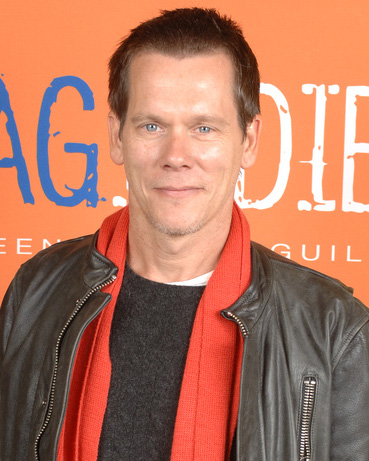
I guess Bernie Madoff didn't completely clean out Kevin Bacon's piggy bank because he found enough change in between the couch cushions to turn down the leading role in Stephen Spielberg's Terra Nova about a futuristic family living among the dinosaurs.

But seriously, while I might make light of the decision, I can see Bacon's point.
Terra Nova sounds a lot like Land of the Lost with lots of expensive special effects, and we all know how that turned out for Will Ferrell. And let us not forget that Spielberg doesn't have that great a record as a TV producer when you take Michael Crichton's ER out of the picture. Most prime-time shows that had Spielberg's name in the producing credits were either short lived, or limped along for a couple of seasons because his personal clout, and not because they lived up to any of the promise they held in their debut.

I suspect that Bacon's keeping his options open for a project that has a better chance of success without locking him into a dead weight of a TV show that outside of the immediate paycheck could do more harm than good to his career by keeping him tied up for 2-3 seasons.

Sunday, 9 May 2010

A Gift For My UK Readers

Welcome to the show folks...

I don't normally discuss politics on this blog, but news of the paralysis hitting Britain as the leaders of the various parties haggle over who gets to use the loo at Number 10, has struck me deeply.

So, as a gift to my readers, both of them, I now present a little something they can put in their windows, on streetlights, or anywhere they like to tell their fellow countrymen how they truly feel once a government is settled. I hope you like it. (Click pic for full size)

Friday, 7 May 2010

The Case of the Mangled Metro-Goldwyn-Mayer!

The sun was beating down on Hollywood like Buddy Rich on crystal meth, and I was baking in my office.

Cupcakes to be exact.

I had just taken out the cupcakes and put them on the cooling rack, when the door to my office swung open.

"Ya gotta help me," croaked a weak voice. "Ya just gotta."

It was Leo The Lion, my metaphor for MGM, and he was dragging himself along my floor.

"Leo," I exclaimed melodramatically, "what happened?"

"You were bored writing another rant about the movie business," answered Leo the Lion as he went limp on my floor, "so you started writing another one of your silly detective story parodies."

"Well," I replied, "I could have written about the Lionsgate management losing their appeal in the fastest Canadian court loss since they hanged Louis Riel, but no one outside of Canada would have gotten that reference, and quite a few Canadians wouldn't get it too."

"I can understand that," said Leo.

"But my question was actually about what happened to you," I said. "You're bleeding all over my new area rug."

"Real Private Dicks don't whine about their area rugs," replied Leo.

"It was a gift," I said. "Now spill."

"I am spilling."

"Not your blood," I said. "Tell me what happened to you!"

"I don't know what happened," answered Leo, "last thing I remember I was one of the top studios in the world. I made big movies with big stars.... then everything got hazy... then I blacked out. Next thing I know I'm in a dumpster, with United Artists tattooed on my backside."

"You don't remember anything?"

"Not a clue," said Leo.

"Well," I said, "you were passed around owners like a doobie at a pot party. Kirk Kekorian took the most puffs so to speak. You were merged with United Artists when they went bankrupt. Then you passed around some more. People used you to buy up the libraries of failed companies like Orion, Cannon, American International, and Polygram Filmed Entertainment, racking up billions in debt. You were passed around some more. You were even owned by Ted Turner for a while--"

"Oh god," croaked Leo, "not Ted Turner!"

"More debt was racked up," I continued, "all the pre-1986 classic MGM movies were sold to Time-Warner, you were passed around a few more times. And now you're almost dead, but your early films do live on TCM."

"Shit even more Turner," moaned Leo.

"Don't worry," I added, "Time-Warner shitcanned him years ago."

"Then what happened?"

"A new consortium bought you," I said, "a partnership between Sony and some others. They revived the Bond franchise pretty strongly, and brought in some new management, but too much was spent on movies like
Hot Tub Time Machine."

"How much?"

"Reports say $50 million."

"Shit," croaked Leo. "They should have never gone above $15 million."

"I know," I said, "but it happened. There was an attempt to get you yet another owner, but that sank and stank. Now your creditors are allegedly looking for a new mogul to run you."

"Am I doomed?"

"I don't know," I said. "I don't know."

"Man," said Leo, "this is a shitty detective parody. All we did is sit in this office and run all the ways I've been screwed over the last 40 years. You've barely done any of the bad puns you normally litter these stories with."

"Yep," I said, "it's Friday, a slow news day, and I'm feeling lazy. Wanna cupcake?"

CASE CLOSED

Thursday, 6 May 2010

Hollywood Babble On & On #503: Nutless Courage

Welcome to the show folks...

The people running the Comedy Central channel have reached a level of hypocrisy that I didn't think was possible, even for TV executives. Just weeks after folding faster than the Flash on laundry day to thinly veiled threats from radical Islamists, the cable channel has announced that they're developing a new series making fun of Jesus and Christianity.

Classy.

Now I could go on about the blazing obvious double standard of these very same executives censoring a recent episode of South Park in the name of "religious and cultural sensitivity," only to go on and green-light what can only be interpreted a pretty blatant insult to the religion of 80% of the population of the USA. Other bloggers will probably do a much better expiation of that.

What I'd like to talk to you is try to explain why they did it. It's not necessarily a hatred of Christians, though some can make a compelling case for that with some people in Hollywood. I'm going to explain why this phenomenon affects those who hold no personal animus toward Christians and Christianity.

I call it "Nutless Courage."

Nutless Courage is doing something that will get you pats on the back for your "bravery" from your Hollywood colleagues even though you've done nothing that put anything of yours at risk.

What are the roots of Nutless Courage?

1. EGO. Everyone in Hollywood wants to be considered an artist. They all want to seen by their peers as visionary rebels who are mad, bad, and dangerous to know, instead of the cowardly hacks they really are. They could be like the creators of South Park, and challenge the prevailing shibboleths of people that can fire them, like their Hollywood peers, or people that are willing to kill them, like the guy who stabbed Theo Van Gogh to death. However, being like Trey Parker and Matt Stone can get you fired, or dead, and the Nutless Courageous don't like to take those kinds of real risks. So they lob a few easy shots at Christians and turn for their applause because of....

2. ISOLATION. Folks in Hollywood spend their lives surrounded by people who are either in Hollywood, want to be in Hollywood, or are, for some reason, in awe of people in Hollywood. As long as they pretend to have the same prejudices as their Hollywood peers, they don't have to fear being cast out of the magic kingdom. Differ in their attitudes, and they may find themselves shut out of awards, and even employment. Which is the last thing they want to lose, because their jobs mean they can play with...

3. OTHER PEOPLE'S MONEY. One of the key reasons behind Nutless Courage is that the Nutless aren't going to lose their own money. The money comes from investors, banks, and other entities, and if it gets pissed away on... oh, let's just say.... a guaranteed to fail sitcom about Jesus on Comedy Central, it isn't going to cost the people behind it anything. In fact, it's failure is used as a measure of their "forward thinking," and "courage," so they actually want it to fail. This is because when you're among the Nutless, you don't have to be brave, because you have total...

4. SAFETY. Christians don't put car bombs in the parking lots of Viacom HQ because someone insulted their faith. Even the fringe dwelling crackpots of Fred Phelps' Westboro posse don't do violence, being the first to scream for the police to rescue them if there's even a hint of an ass whupping in the air (their own version of nutless courage.) So it's safe for them to go after Christians. They'll be praised as brave, when they're not, because everyone around them professes that same attitude, it's not going to cost them anything, because it isn't their money, nor will the offended parties do anything beyond write a few letters at most, or completely tune out at least.

South Park, and its creators, have consistently shown real courage since the beginning of the show. They've always attacked all sides of any issue, and even directly challenged the attitudes of their Hollywood peers, and the beliefs of people who actually do violence in response to any mockery, or criticism. They have nuts, Comedy Central, doesn't.

Anyway, we can all take comfort in the simple fact that this proposed show won't last long if it makes it to air at all.

Wednesday, 5 May 2010

Hollywood Babble On & On #502: Q&A

Welcome to the show folks...

My readers, both of them, have asked me some questions, and since I haven't got much else to do, I'm going to try to answer them.

First up...
Judy asked: Why would anyone green light Furry Vengeance.Also aren't producers supposed to oversee the making of the film and prevent crap from happening and winding up in your local cineplex? Isn't this known as quality control?
Ask anyone inside the Hollywood decision making machine, and they'll tell you that everything's all about quality control. Quality control is supposed to be the main reason why it's so hard to get a film made in Hollywood. In theory, there are legions of agents, producers, and executives whose mission in life is to filter out the shit and make sure that you in the audience get the best entertainment that you can get.

In theory.


In theory, communism works.

In reality, it all boils down to William Goldman's old maxim about Hollywood: "Nobody knows nothing."

Nobody knows if a script that reads well will turn into a story that plays well on the screen.

Nobody knows if the director is going to go off his nut during the middle of production and decide to replace the leading lady with a chimpanzee with anger management issues.

Nobody knows if once the film is shot, if the editor and director really know how to assemble all that footage into a coherent and entertaining story.

Any creative endeavor is a crap-shoot, and the odds of making something of quality are against you in a perfect world.

Which brings me to my next point.

We don't live in a perfect world.

The filtration system of agents, producers and executives that are supposed to find the diamonds in the feces are human beings. As human beings they have their own agendas, prejudices, and attitudes. These human failings create a system that can be gamed by those with the know how and connections, and they're exacerbated by these other factors:

ISOLATION: The average Hollywood green-lighter doesn't really know any actual average people. They live in a world where people are either kissing their ass or stabbing their back, and everyone is either in their little world, or they want to be in their little world.

UNCERTAINTY: The life of someone with the power to green light a movie is surprisingly powerless. Their careers, like the screenplay writers they judge, are founded almost entirely on the whims of people they consider idiots. They can get fired at any minute, or worse, pawned off with one of those "producer" deals that don't actually produce anything. That means they cling to whatever they think is safe, which often means decisions based on fads and misguided beliefs that sex sells, and that children will watch any movie, no matter how bad, as long as it has cute animals, slapstick and lame catchphrases.

EGO: People have egos. In Hollywood, they have big egos. These egos can compel people to make dumb decisions, especially if they think a film will either win them awards, or the admiration of their peers and invites to all the best dinner parties. This can lead to some pretentious crap being given the green light.

Next question:
Nate Winchester asked: Anyway, for your next article can you talk about how you would bring down movie budgets should you be in charge of the world?
I will not lie and tell you that as ruler of the world, I will be tough but fair. I intend to be tough, and totally unfair, and the lives of all humanity will be under the control of my capricious whims.

But, I will first bring film production budgets under control with this plan:

1. SIMPLIFY: The studios follow extremely complicated corporate structures that sign even more convoluted contracts thinking that they're clever. It's not clever, it's just complicated. All things will be simplified so that costs are more related to the actual costs in the marketplace.

2. SALARIES: Pay will become commensurate with money making ability. If you can put real bums in seats, you will earn real money. Fail to earn real money, and you won't get big money. Now if you are a new performer who lands a monster hit, you will be rewarded with a piece of the profits. Even if it's net, because under my rules, there will net. I will also have my geneticists create unicorns.

3. SAVE: Production managers will be given rewards for saving money. Basically 5% of every dollar they save without sacrificing production values. If this means cracking the whip on unprofessional people who waste time and money, then so be it. Whips will be issued by edict of the ruler of the world, me.

4. SHOOT: Those found wasting money on productions with stuff that doesn't contribute to the film, will be shot... out of their jobs, and possibly a window as well.

I hope those answered your questions.

Tuesday, 4 May 2010

Hollywood Babble On & On #501: Where Does All The Money Go?

Welcome to the show folks...

Judy asked...
Ah Furious D you said a mouthful about movie budget money...where oh where does that green stuff go?
Well the answer is actually both simple and complicated.

The simple answer is that the most important thing a movie's budget buys is
time.

It all begins with...

DEVELOPMENT: Also known as "hell" by writers. This is the period where studios buy "options" on scripts they might want to produce. An option is where the company pays the writer a set amount to let them have a chance to make a movie from their script for a certain length of time, usually two years. If a film is made, then a final payment is made on the first day of production of the full negotiated price. If the two years pass and there's no film made, the writer is then free to sell the option to someone else. The amount paid for the option and the final fee depends on the track record of the writer and the tenacity of the writer's agent.

The studio is paying for the writer's time, whether a film gets made or not.

This also goes with directors and actors that get involved in the development process. They too have to be paid for their time, and for being available to make the movie, no matter how it works out.

Studios think it's cheaper to develop properties they already own, like remakes, sequels, and comic book characters, than pay for original material, but that's not always the case. It's not like optioning a spec script, because the writer is usually paid their final fee for adapting the pre-existing material whether the film is made or not.

All this means that the development process can become extremely expensive. Especially when it involves indecision or incompetence on the part of those who give movies the green-light.

Superman Returns had around $50 million spent before a single frame of film was shot, most critics saying the waste was all on the head of Jon Peters, the film's producer, and his obsession with robot spiders.

If the development process has been survived, we move onto...

MAKING THE DAMN THING: Making a movie takes a lot of accumulated time. It's a lot like managing an army, large numbers of people have to paid, fed, housed (if on location), and transported, in order for them to design and build sets, make costumes, run the cameras, or any of the the thousands of little jobs that need doing during the making of a film. On a major studio film these are not volunteers or low paid semi-amateurs. These are skilled tradespeople who make a damn good living, with pension and health benefits, all paid out of the films budget.

Then comes the costs of materials, equipment, facilities, locations, and all the physical stuff needed for a movie. It's all expensive.

Then comes post-production, which involves editing, sound, special effects, and music. Once again this involves expensive equipment, and highly paid professionals.

But I haven't yet mentioned...

STAR SALARIES: A joke going around these days is that these days a movie star comes with two prices $20 million or free. It expresses the fundamental truth that unless the film is something that will guarantee a movie star an award, artistic street cred, or a guaranteed big profit share* windfall, they are going to demand as much as they can up front.

This is true for the supporting cast as well. They are going to try to make as much money as they can from each film, because acting is a feast or famine business. One day you're working steady, the next day you're in line with Lindsay Lohan to audition for the same part in a commercial that will air only in Kazakhstan, and it's not an endorsement deal.

It's also true for "star" directors and producers who collect big fees and depending on their clout, profit shares for the time they put into making films.

Once that's all out of the way we move onto:

SELLING & SHOWING: This is all about P&A, Prints and Advertising. Basically getting the films into theaters, and getting people to go to these theaters. Both costs literally shitloads of cash, depending on the size of the release. The more theaters, the more prints, the more ads. This may come down with the advent of digital projectors that don't need expensive prints to show movies, but I don't see it coming down too much. Most times the P&A costs will match, but often even exceed, the cost of actually making the movie, because ad men cost money to hire, and the TV spots and banner ads all take up lots of money and time.

Now let's say the movie does well. Over 50% of your ticket price goes to paying the theater's costs for showing the movie, that's called the house nut. The rest of the ticket price goes to the distributor, and is called the rental.

The distributor, usually a studio, then collects the rentals and the money then disappears into the black hole of...

STUDIO OVERHEAD: Basically this is the fine art of putting the costs of your crap onto the budgets of movies, and it eats up the rental like ravenous piranhas. It can mean anything from actual overhead, like salaries, facilities, etc., but is often misused and abused to the point of self parody.

All this means that movies are really, really, expensive to make and release. They are even more expensive when ego and incompetence get involved, because that eats up a lot of precious, and costly time.

I hope that answers your question.

*No profit shares are ever guaranteed thanks to studio accounting.

Monday, 3 May 2010

Hollywood Babble On & On #500: A Couple of Quick Bits...

Welcome to the show folks...

ANCHORMAN 2?

Looks like Will Ferrell and his fave writer/director Adam McKay are trying to revive their flagging careers by doing a sequel to their first hit
Anchorman. However, Paramount is balking at the idea, saying that they will green-light it if the film can be made for under $40 million, but the writers won't even pick up a pencil unless the budget is at least $70 million.

Let's look at the pros and cons of their proposal.

PRO: Both Ferrell, McKay and the others involved in the film have much higher profiles than they did when they made the original.

CON: While Ferrell was then an unknown quantity in movies, yet a popular SNL performer, Ferrell now is best known for films that cost way too much for the genre and appeal. His most successful film in recent years, the comedy
Step Brothers, made about $100 million domestic at the box office, yet cost $65 million to make. Which means that it needed to have made at least $130+ to break even. That's not counting his bigger stink bombs like Semi-Pro, and Land of the Lost.

PRO: The original
Anchorman made a lot of money.

CON: The original
Anchorman made $85 domestic, and relatively very little internationally, but was considered a hit because it only cost $25 million to make. For a $70 million minimum Anchorman 2 to break even it would have to make at least $140 million, but more likely $150 million at the box office. That's just to break even. Plus, one gets the feeling that the original was one of those lightning in a bottle moments. It came out at the right time with the right subject matter, but that time is past, and the subject matter passe.

I can understand Paramount's point of view. Will Ferrell doesn't play as well overseas as other performers, and with the DVD market stagnant, and TV rights sales tepid, the film has to make a profit in theaters to make it seem worth their while.

Remember Funny People could have been a minor hit if it hadn't had such a relatively bloated budget. It's under-performance at its opening weekend, coupled with news of its $75 million budget gave it a stench of self-indulgent failure that clung to the film and probably hurt its chances of doing better.

I suspect that Paramount doesn't want to repeat Universal's mistake.

EVERYTHING OLD IS NEW AGAIN

It's pilot season in Hollywood, where the major networks put their heads together to get new shows for their fall TV lineups.

And by new shows, I mean rehashing old ideas.

CW is hiring staffers for a potential run of spy thriller Nikita, which is a remake of a 1990s Canadian/French TV series, which itself was a remake of an 1980s French film.

NBC is picking up JJ Abrams new show Undercovers, which is another spy thriller, and is basically a remake of Abram's old show Alias, except with a sexy married couple at the center instead of a sexy single girl.

WATCH THIS

This video was made by a Vancouver Film School student on a budget similar to what the writers of Anchorman 2 spend on soy milk lattes. It's a mini-adaptation of part of Arthur C. Clarke's novel Rendezvous with Rama.


Makes you wonder where all the money goes when making a Hollywood movie.

Saturday, 1 May 2010

The Book Report: The Great Game Trilogy

Welcome to the show folks...

Bit of a turn from my usual ranting and raving about the business of popular culture where I show off my superiority in revealing to you that I still read books.

You do remember books, paper thingies with words on the pages.

Okay, that's enough
smug know it all posturing for now, and let's get to what I recommend as some damn fine reading.

Now I'm a bit of a history buff, and I especially like looking into what I call the nooks and crannies of history. Places, events, and people not normally covered by mainstream history.

Well you can't get much more nookier or crannier (are those even words?) that the Great Game Trilogy by journalist and historian Peter Hopkirk. The books are
The Great Game: The Struggle for Empire in Central Asia, Like Hidden Fire: The Plot to Bring Down the British Empire, and Setting The East Ablaze: Lenin's Dream of an Empire in Asia.

Now if you know nothing about the subject matter covered by these three books I should drop a little background on your lap.

It all begins in the 1700s. The British were in control of India, and didn't want the Russians getting control of India. In between India and Russia were literally dozens if not hundreds of kingdoms, city-states, and tribal territories. The Russian aimed to conquer those vast and mostly unmapped lands for their own riches but also as a pathway to the Jewel in the Crown, India.

The British responded with adventurous men who were a combination of Christopher Columbus, Dag Hammarskjöld, and James Bond. Plunging into unknown, and hostile territory dealing with not only their Russian rivals, but bandits, treacherous local rulers, and out and out holy wars. One of these explorer/ diplomats/ secret agents was Arthur Conolly, who dubbed this covert war
The Great Game, shortly before he was beheaded by the Emir of Bokhara and his corpse dumped into a pit.

The Great Game: The Struggle for Empire in Central Asia: Covers the time from the 1700s to the early 1900s, and introduces you to people like the aforementioned Conolly, and men like Alexander Burnes, (pictured) who mapped vast areas of Central Asia, became the first Brit to make contact with Bokhara and live, all by the age of 26, only to be torn apart by an angry mob in Afghanistan before he was 40.

And when you think that there's no such thing as an incredible feat of cartography, there's the chapter on the Pundits. Indian secret agents who mapped out immense areas of Central Asia in secret, and in great danger from all around them.

The book reads like an adventure novel, with all sorts of action, exotic locations, and incredible courage, and the whole thing is true.

Like Hidden Fire: The Plot to Bring Down the British Empire: Shifts the focus from Britain vs Russia, to Britain vs Imperial Germany. Kaiser Wilhelm wanted to drive his empire east, and conquer everything from Eastern Europe to China. He had been blocked by Britain and Russia at every previous turn, but with World War One tearing Europe apart, he saw his chance to bring down his enemies. His idea, use his ally, the tottering Ottoman Emperor and Caliph of the Islamic faith to declare Holy War and get all the Muslim peoples of Central Asia to turn against the British and Russian Empires.

From this beginning comes a story of spies, terrorists, and politicians all performing incredible feats of courage, madness, and duplicity. We meet German agent Captain Niedermayer, who did the impossible to reach Afghanistan without being captured by the Russians and Brits, British Captain Teague-Jones who had to deal with not only the Germans, but Communist revolutionaries, and Enver Pasha, wannabe Turkish emperor who sought glory, but reaped destruction.

An engrossing read.

Setting The East Ablaze: Lenin's Dream of an Empire in Asia: Is the last book in the trilogy, though it was published second in 1984. It centers mostly on the Communist revolution in Russia spreading to Central Asia, and the British Agents who sought to stop it from reaching India in the years between 1917 to 1948.

It centers a lot on men like British spy Frederick Bailey, who was so good undercover, the Soviet secret service actually recruited him to hunt himself down. True story.

One of the most haunting characters is the "Mad Baron" Roman Nickolai Maximilian von Ungern-Sternberg (pictured). He had converted to Buddhism before World War 1 while on a exploration mission to Mongolia. When the Communists drove him out of his home country, he declared himself the de-facto dictator of Mongolia and engaged in a massive reign of terror across a large swath of Asia.

This cat was crazier than a bedbug, but almost impossible to kill.

Also Enver Pasha, last seen fleeing the crumbling Ottoman Empire in the last book, returns trying to reignite his dreams of empire, only to engage in even more treachery, and when that fails, to seek a form of violent redemption in a Wild Bunch style blaze of gunfire.

It's as engrossing a read as the other two books, and I recommend all three to anyone with an interest in what goes on in those dark nooks and crannies of history. Though I must warn you, it was written in the early 1980s, so it makes reference to the Soviet Union as if it was still in power. But just go beyond that to enjoy the story.