Right now the FCC, AKA the Federal Communications Commission, is reconsidering its mandate of managing decency on broadcast television. Some are saying that the FCC is no help at all, as illustrated by the eons spent litigating and regulating Janet Jackson's nipple, and should be shuttered, while others are screaming that without a moral watchdog the broadcast nets will be awash with pornography.
As I've said before, hundreds of times, you could get rid of the FCC today, and the networks would jump straight into nudity and foul language galore, for about a season, then they'd probably go back to being even less sexual, violent, or raunchy as they are now.
Why?
The market.
Look at HBO, the most successful channel to offer the R-Rated combo of nudity, profanity, and extreme violence, and look at its most successful, critically acclaimed, and/or influential original shows like The Sopranos, Game Of Thrones, Sex & The City, The Wire, Boardwalk Empire, and The Larry Sanders Show.
All, to different degrees, has or had nudity, violence, profanity, and mature subject matter in them. However, if you edited out, or toned down those elements, the shows would probably still sell. But look at the HBO shows that were built solely around the promise of graphic sex, and most either fail outright, or just sort of limp around for a while with little or no impact on the cultural landscape.
Now look at network shows that try to sell themselves as "sexy" a classic example being NBC's debacle The Playboy Club.
The sexy show about sexy people doing sexy stuff in sexy outfits
The network spent tons of money marketing how sexy the show was. They even had the Parent's Television Council condemn it before it even aired for being so damn sexy. The day before its premiere NBC's executives were patting each other on the back because all that sexiness was going to ensure that everyone in the world was going to watch it making it the most successful show in the world.
The Playboy Club was pretty well cancelled about halfway through the pilot episode because the ratings were so poor.
Why did it fail?
Because beyond the promise of network television level sexiness, the show really didn't even pretend to offer much more.
Then there's what some call the water cooler effect. Imagine coming across a group of people at the office water-cooler talking about what they watched the night before. Do you want to be the one who bragged about watching the "sex show" on NBC? Or even if they were talking about a show on HBO, are you going to be the one who foregoes chatting about plot twists and "red weddings" to offer your opinion on an actress' boobs?
No, that would make you look like a scrofulent pervert.
Besides, when someone sees a show whose ad campaign hypes the sex angle, they unconsciously see it as code for "This show will be boring, so here are some boobies to distract you." They don't need TV to give them nudity when the internet offers nudity and sexuality more graphic than even HBO and "Skinemax" are willing to go, and cheaper too.
The people running networks and freaking out over the FCC loosening its mandate shouldn't need to have me explain this to them.
Today I have 3 stories that all involve decisions being made by Warner Brothers, 1 I can understand, 1 that I can sadly understand, and 1 I don't get at all.
1 DECISION THAT I CAN UNDERSTAND
Warner Brothers, as the parent company of New Line Cinema, passed on Dumb & Dumber To, the sequel to Dumb & Dumber reuniting the original stars Jim Carrey and Jeff Daniels and the original's creators the Farrelly Brothers.
Now some folks are saying that Warner Brothers made a mistake passing on the picture. They say that the proposed $35 million budget would have made the film a sure thing considering the original made over $240 million at the box office on a $17 million budget.
Those people have their points. But if you look at it from the perspective of Warner Brothers you might think about it differently.
Yes, the first movie was an out-of-the-blue blockbuster that convinced Hollywood that the success of Ace Ventura: Pet Detective wasn't just a fluke.
However, as a franchise it's not exactly the golden child people think it is.
First, the original came out almost twenty years ago. That's 20 years of constant replay on cable television to wear it's become the equivalent of a test pattern on certain channels. Then there was the animated series, which lasted a season and was cancelled because no one watched it, then came the high school set prequel, which did okay compared to the production budget, but when you toss in P&A probably lost money, and then there's the people in the Dumb & Dumber franchise.
The Farrelly Brothers had two monster hits with Dumb & Dumber and There's Something About Mary raking in a combined box office of nearly $600 million. But lately their record has been a bit more checkered. Some films did okay, some did poorly, but it was obvious that the near explosive success of the 90s is in the past.
Same with Jim Carrey. He had a run as Hollywood's golden fool, but the last 10 years have been a lot leaner. The costs of his films skyrocketed, often because of his salary, while the box office performance of his live action roles declined. While still capable of occasionally cracking $100 million, those that did, still probably lost money. Also, he's been actively alienating large swathes of the domestic ticket buying audience due to his public pronouncements on the evils of vaccinating children and gun ownership.
The audience doesn't see him as the loveable, rubber-faced clown like they used to. Now when they look at Jim Carrey they see a smug millionaire who seems to live in luxurious isolation completely out of touch with the real world.
That might make the audience a bit iffy on spending their hard earned money to see him as the goof from Dumb & Dumber again.
1 DECISION THAT I CAN SADLY UNDERSTAND
See this trailer...
Normally, I'd ask "Why?" but I know why.
The people running the studios are a pack of nutless wonders, and here is a movie that's just one big product placement toy-commercial that they think brain-dead children will flock to, dragging their money-bearing parents with them.
The fact that he's considering moving on, and Warner Brothers isn't bathing him with offers of cash, hookers, and blow to stay illustrates a dissonance in how the studios operate.
The studio, though cash rich, love to "poor mouth," and make partnerships with outside financiers to make movies. However, since they don't really need those financiers they tend to treat them like red-headed step-children riding rented mules. This treatment, and the studio's bordering on felonious accounting practices, mean that the bulk of studio-financier relations end sourly and often in litigation.
By all accounts the Warner Brothers and Legendary Pictures partnership has done pretty damn well. Especially when it comes to breathing new life into DC's comic franchises that Warner Brothers had allowed to be outshone by Marvel.
From what I've been able to gather the biggest complaint Warner Brothers had about this partnership was that Legendary's super efficient script-to-movie development process made them look bad.
The fact that they'd prefer to let Legendary go rather than learn from their success says a lot about the state of the studio system.
Let's take a look at the extended trailer to Neill Blomkamp's follow-up to his surprise hit District 9 called Elysium.
First impressions...
I had no idea Blomkamp would build a film around an apartheid metaphor. Really, I'm utterly gobsmacked.
Okay, I'm being sarcastic. The whole thing is like a rehash of District 9 but with poor people and robots instead of aliens, and the whole world turned into one big Soweto because the rich people seem to want it like that for some reason.
I'm also a little iffy on the social and economic mechanics of the year 2154. All the rich people live off the planet in Elysium because the planet's resources are all spent. There they live in luxury with technology that's near magical by the standards of the people below.
Now Elysium can only survive in two ways for the movie's plot to be possible.
1. They leech the few remaining resources from the planet below, and use advanced military technology to keep the oppressed masses from rising up and turning off the tap. However, if they push that too far, they could end up destroying what they need to stay alive. It doesn't matter how much cash you have when there's no food at all to buy.
Or...
2. Elysium is a completely self-contained uses their super-advanced technology to create a completely self-sustaining eco-system. However, since it's so much nicer up their it's constantly facing attempts to infiltrate it by the poor and the desperate, though exactly what they'll do when they get there seems to be a mystery, since any contact with the residents will result in either their return to Earth or their death.
Then there's the other question.
How do the rich support their lifestyles on Elysium?
Everyone on the planet is portrayed as living in Third World conditions where even if you have a skilled trade, you have to live in shitty slums swimming in garbage.
Who is making the Elysians rich?
People are wearing rags and living in ruins, it is stated that the entire planet is one big ghetto with no resources. Illnesses that can be cured on Elysium in minutes are death sentences on the surface. So how are the people on Elysium able to afford their luxuries and high technology?
No matter what they're going to have overhead. Either paying for the resources they get from Earth to stay alive, or, if they're self-sustaining, paying for the weapons and mercenaries needed to keep the great unwashed from the gates.
The people of Elysium also just can't sit on a pile of money. They need a steady income to support themselves and Elysium.
It's in Elysium's best interests to use their advanced technology to make life on the planet better. The better off things are on the surface, the cheaper it will be to get resources off planet, and also cut down on the number of illegal immigrants trying to get into their station, and the mercenaries and weapons needed to keep them out.
And the cherry on top is that if they get the planet's economy working again, they can use that to make themselves even richer and not have to worry about Jodie Foster tossing them out an airlock when they can't pay the rent or having cyborg-modified Matt Damons causing explosions and property damage.
So if there was some actual knowledge of how economics work both Matt Damon's character, and the cute kid he has to save would only be meeting in the waiting room at the clinic for their 5 minute medical treatment.
But it the premise had some real economics in it, there wouldn't be a movie.
Welcome Steve and Georgie to the Club of People Capable of Seeing the Obvious. The facilities are lousy, but membership is free.
What are the signs that the movie biz is troubled?
1. Bigger Money, Fewer Bets. The big studios are putting more and more into less and less. Basically they're making bigger and bigger bets on fewer and fewer movies with increasingly narrow release windows. This creates periodic gluts of mega-budget productions, each one needing to break records just to break even. Every summer movie season is a potential Heaven's Gate situation just waiting to happen.
2. Not A Franchise, Not Interested. The big studios are bit by bit reducing their output of films that are not sequels, remakes, reboots, or otherwise connected to some previously existing franchise.
3. Dysfunction. The environment of the movie business is growing increasingly toxic. Nowadays it would be news to discover that someone, be they talent or a investor, didn't get screwed over by a major studio.
4. Alienation. The people making movies for the big studios haven't been as far out of touch from simple normalcy as they are now, and view those who disagree with them as being mentally deficient, morally defective, or a combo of both. They need hired consultants to tell them how to dress, how to eat, how to exercise, and even how how to vote. Just how can they connect emotionally and intellectually with the overwhelmingly working and middle class audience?
5. Audiences are dwindling. Aside from the occasional upward blip, overall people aren't going to the movies as much as they used to. And if that's not bad enough you should look at the "solutions" the people running the studios are coming up with.
6. Faith in China. The folks running Hollywood think the Chinese market is the magic pill that will solve all of their problems. It's over a billion people, rates of regular moviegoing North America hasn't seen since the 1940s, and a burgeoning economy. However, while it's a growing market, it is not a free market. To do business in China they need to proverbially fellate not only the high mucky-mucks in the ruling Communist Party, but all their relatives, friends, and assorted cronies. That not only doesn't bode well for the movie business, it doesn't bode well for any business in China.
Not only are the movies you release, and the revenue they generate, subject to the whims of the political ruling class, the market the lucky few are getting released to is exponentially more fragile than anyone cares to admit. The slightest downturn or upset in the fragile balance at the heart of China's current economic miracle can make the whole thing come down like a house of cards.
That doesn't make it a safe bet in the long term.
7. Excuse Pricing. Why did the studios go big into 3D a few years ago? Artistic expression? No, it was an excuse to jack up ticket prices at 3D screenings, and are coming up with other excuses for audiences to pay extra. It will probably soon devolve to where if you want a seat at a screening you're going to have to pay a fee.
8. Dwindling Share. The big studios used to be the cornerstone of the big media conglomerates that formed in the 1970s to the 2000s. Nowadays they're a shrinking part of growing companies, gradually being outshone by their red-headed step-siblings television and the many other ways of delivering home video.
They're also being outshone creatively by cable television, many shows getting ratings that the studios' blood siblings, the broadcast networks, would kill to get. Nowadays if you want to shine creatively, and make a decent living, you avoid making big budget movies with the major studios, you get a good television gig.
Now you know that this blog is usually a bastion of maturity that wouldn't normally condone such behaviour....
However, part of me would love to see this degenerate into a childish prank war straight out of a 1980s frat-house comedy.
Why, because I love seeing the rich, pompous, and self-important knock each other and themselves down a peg, and if it involves the hoisting of petards, all the better.
So let's all collaborate on what CAA can do for revenge, and when they get that revenge, let's give ideas to WME.
Why?
So that helpfully this whole thing escalates to an unbelievable size that plunges all involved into untold depths of humiliation and embarrassment.
Plus, we're talking about top tier Hollywood people and as a community they're not really known for their imagination.
I'll get the ball rolling with:
AN OPEN LETTER TO THE MANAGEMENT OF CAA
Dear sirs. I'm pretty sure it's all going to be "sirs" am I right? Yeah, I'm right. But seriously fellas... Are you just going to take this shit from WME? Because if you do, then you're going to look weak and waffling, and you don't want that. The smell of your blood is in the water, the sharks are gathering, and the only thing to get rid of it is revenge! That's why I'm here to help, and I've made a short list of...
WAYS FOR CAA TO GET REVENGE ON WME
1. Overnight CAA poaches all of WMEs assistants by offering them a living wage. The next morning will be pure carnage as top agents are unable to find the source of their non-fat chai-mocha lattes.
2. Send Game Of Thrones spoilers to WME agents, because you can be pretty sure they didn't read the books.
3. Get the WME bosses on the mailing lists of Republican PACs and conservative Christian groups.
4. Post the e-mail addresses of top WME bosses on erotic fan-fiction and slash-fiction forums saying they're "Open To Submissions," and that attachments are welcome.
____________
If anyone else has any ideas feel free to leave them in the comments.
Last night I did something I haven't done in a long-long time.
I watched an award show without flipping to something else.
Okay, I only watched 2 hours of said awards show, but since my previous record of the past decade is less than 30 minutes, it's bordering on a miracle.
How did this miracle occur?
I think it was because it was the Tony Awards.
Now I know some of you live in caves, so I'll do a little explaining.
The Tony Awards is the show honouring the best in American Theatre.
Okay, technically not American theatre, since only shows in New York can qualify. Also, it's not only New York theatre since to qualify for a Tony Award the theatre your show is performed in must be in the theatrical district accepted as "Broadway."
Now I don't really follow Broadway, and my knowledge of the Broadway scene is limited to a dichotomy of musicals for tourists visiting New York City, and straight-forward plays geared toward the upscale New Yorker community.
So why did I sit through more of 1 night of the Tony Awards than I have for over a decade of Oscars combined?
The opening number might illustrate my point...
(Update: CBS has had the video pulled because they believe that people seeing the best commercial they ever had to watch the Tony Awards on CBS violates their copyright. Smart.) To sum it up, the Tony Awards show was something the Oscars haven't been in a very long time.
Entertaining.
The show moved quickly, only had a few minor missteps in the humour department, and for the most part the speeches were quick and even sincere for a change. No one tried to prove they were better than the audience, and a whole bunch of other things that the Oscars either do badly, won't do, or overdo to the point of annoying.
So why do the Tonys work better than the Oscars?
Probably because Broadway knows a little more about putting on a stage show than people who normally do movies, but I think there's a secret ingredient they don't really acknowledge...
Attitude.
You see there is no reason for CBS to air the Tonys aside from winning viewers. They aren't connected by various corporate inbreeding to most Broadway producers. Dropping the Tonys won't annoy major media conglomerates with big advertising deals the way dropping the Oscars would.
This means that aside from any statement they must make, the Tony Awards must be entertaining first. Meanwhile the Oscars take themselves way too seriously, and must impress upon the world just how important they are before taking that step into the realm of entertaining.
1. I'm leery of the government regulating what someone says, even if they're just pitching shoes on social media.
2. If these celebs can't shill, then what else do they have? People don't follow them for their wit and wisdom.
PARAMOUNT VS JP MORGAN
Back in 2010 JP Morgan's subsidiary Content Partners LLC. ended their relationship financing Paramount movies by filing a $45 million lawsuit against the studio calling shenanigans on their accounting practices.
Now I'm not going to pass judgement on the merits of either side of the case. What I will pass judgement on is the simple fact that the percentage of investor/studio relationships that end in bad blood and litigation is so high the people running Hollywood should feel shame if they were capable of it.
The whole business is dysfunctional, and seriously needs reform, because eventually you will run out of other people's money.
But seriously, I wish the independent film business would just get rid of the scammers and the schemers. It's a high risk business even in the best of times and with the best of intentions. The business doesn't need fly-by-night scammers making it not only riskier, but look like a hot-bed of fraud.
I won't cast any aspersions on the owners of the Grumpy Cat for making the deal. When money literally falls out of the sky you grab what you can.
However I will drop a hearty "WTF?" to the producers who are spending hard earned money on something that has literally all the odds against it.
The Grumpy Cat phenomena isn't like other properties that have been adapted into films. It's not a novel, a TV show, a comic book, a video game, or even a self-help book, all things that have at least some semblance of a narrative and a creative vision behind them.
Grumpy Cat is an internet meme.
Basically, it's a bunch of pictures of a sour-faced cat that people then caption with whatever cranky joke they feel like doing at that moment.
Unlike Garfield, whose past success the producers are hoping to cash in on, this isn't a comic strip produced with a singular voice, it's literally millions of people doing their own jokes, and they probably won't like yours.
Then there's the whole fad element.
The whole Grumpy Cat fad could be done and dusted while they're still trying to put together a script. People could look at that scowling cat's face & decide that they're sick of the sight of it.
Matt Smith is leaving the role of the Doctor in the venerable science fiction institution Doctor Who. He is booked for the November 50th anniversary special, but is set to regenerate at the end of the 2013 Christmas special.
For those of you who don't know what I'm talking about, shame on you, I'll do a little explaining.
Doctor Who premiered on the BBC in November 1963 and it's about The Doctor. The Doctor, whose real name has never been revealed, is a 1,200+ year old alien from the planet Gallifrey. He's what is called a Time Lord, and he has a machine called the TARDIS that is capable of going anywhere and any time in the Universe. By the way, while massive on the inside, from the outside it looks like a blue police phone box.
Former Companion Karen Gillan
Now the Doctor doesn't travel alone, he usually has a companion, who is usually a young attractive Earth female. That's because the Doctor is an alien, he's not an idiot.
The Doctor and his companion then scoot around all of time and space having all sorts of adventures battling nasty aliens like the Daleks or the Cybermen (who were Borg before Trek had Borg) and meeting figures from history and the far future.
Also for a character who never carries a weapon he's also killed infinitely more people than Captain Kirk and Darth Vader combined having wiped out most of his arch enemies the Daleks and all of his own people the Time Lords.
Now the first Doctor was played by an actor named William Hartnell, and he was plagued with health problems by the third season and couldn't go on. Instead of cancelling the show they revealed that when a Time Lord is on the brink of death they can "regenerate" but the regeneration process changes their appearance and personality, thus paving the way for another actor to take over the part.
The original series ran from 1963-1989 when the BBC cancelled it, but the series was revived in 2005, and Matt Smith is the show's 11th (or maybe 12th Doctor), and his successor will be the 12th or 13th depending on what's revealed in the 50th anniversary special.
Now everyone is speculating who will replace Smith and some are placing odds on who will be next, and I have one thing to say: Most of the speculation about who will be the next Doctor will be wrong.
How do I know that?
History.
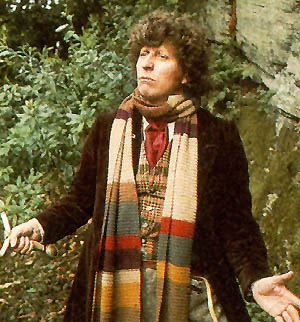
All but two of the past Doctors, were relatively unknown or little known character actors when they took the part. Legend has it that 4th Doctor Tom Baker, who played the part the longest still worked his construction job during hiatus for his first few seasons because he thought he'd get fired and be nearly unemployable again at any minute.
The chief reason for casting non-"star" actors is that the role of the Doctor is a great part, but it's also a weird one. Whoever plays the Doctor has to play someone who may look human, but is most definitely not. He thinks differently than normal people, he acts differently, and while his personality may be smiles and quick quips, he possesses a dark-side that is awe-inspiring in its cold cruel power.
An actor can't really come into the part with a lot of baggage. You don't want the audience looking at the Doctor and seeing a bad-ass cop on the edge from another show, or have the character mangled to fit a big star's pre-existing heroic or romantic image. The writers need a relatively blank slate to work their magic on, or it's not the Doctor, just that actor dressed up as the Doctor.
There's also a pattern when it comes to casting actors who play the Doctor. When they're first announced the general reaction is "There's no way he could be as good as the last guy!" and then when he leaves gets a lot of "No one will be as good as he was!"
Now some are saying that the next Doctor must be black or a woman, or both and they say that it must be done in the name of fairness, and if you don't agree with them you must be racist, sexist, or both.
Ironically, those kinds of demands actually hurt the chances of a non-white or female actor being either cast in the part or might hurt their success if they do get the part.
Why?
If the people making the casting decisions are being pressured to make a choice based on race or gender then they and the audience will question that final decision. Was that actor chosen because they were right for the part? Were they picked as a token gesture picked either to silence critics who questioned their political correctness or for cheap publicity because some loud-mouths, a handful being real racists and sexists, will bark about it? That's more baggage for what should be a blank slate. I have a suggestion. Let's not make any demands that whoever gets the part must be this or that because they are this or that, just that the powers that be at the BBC pick the best person for the part solely because they're the best person for the part.
I don't normally do reviews here outside of my long neglected Discount Bin Film Club, but I recently got a little blast from the past on Turner Classic Movies "Second Look" series, and decided to post my thoughts.
I'm a child of the 1980s, which was an age of conformity, rebellion, and conformity through rebellion, and rebellion through conformity, and one film attempted to capture it all by making a musical set in the 1950s that was about the 1980s and it was called Absolute Beginners.
The movie, based on the novel by Colin MacInnes, follows a freelance photographer during his last summer as a teenager in London in 1958.
The photographer, named Colin (Eddie O'Connell) in the movie but nameless in the novel, is in love with a gal with the nickname of Crepe Suzette (Patsy Kensit). Suzette is an ambitious wannabe fashion designer who leaves her true love behind to enter a phoney marriage of convenience with a gay fashion designer named Henley of Mayfair (James Fox). Henley needs a wife to avoid Britain's draconian anti-gay laws and attitudes which could ruin him, but he more urgently needs her ideas and talent to tap into the burgeoning youth market, on the flip side Suzette needs him to break into the business.
Colin tries to win back Suzette by "selling out" first in the form of working an oily and probably pedophiliac pop-star manager-promoter named Harry Charms, a gossip columnist named Dido Lament, and an advertising kingpin named Vendice Partners played by rock legend David Bowie.
Both find themselves terribly unhappy in their new lives and find themselves breaking free from the paths set by the older generation and start their adult lives on their own terms.
Meanwhile, the long hot summer brings simmering racial tensions to the boil, as those who felt left out of the economic growth try to blame others based on their race. Unscrupulous property developers start hiring thuggish Teddy Boys to drive out the resident's of Colin's neighbourhood, but they lose control of their thugs and everything explodes in a massive deadly riot at the film's climax.
All of this reflecting attitudes found in all levels of UK society at the time.
The 1950s were a little more jarring for the UK than the USA. Nine years of post-WW2 rationing, cripplingly high taxes, economic stagnation, and general social malaise had only ended in 1954 unleashing a booming economy and an exploding youth culture where one had not existed before. However, the Caribbean immigrants and European refugees who were brought in to help with war time and post-war labour shortages.
The 1980s in the UK were similar but on a less dramatic scale. Youth culture in Britain had stagnated in the 1970s because of a combination of the over-indulgence of the 1960s generation, and the nationalization of industries putting the country in a chronic recession.
These conditions led to the arrival of punk rock and new wave pop music, a massive recovery in the economy, and an stern authority figure to rebel against in the form of Margaret Thatcher.
The filmmakers no doubt thought the similarities in the zeitgeist meant that it was the right time to bring Absolute Beginners to the big screen.
Now like most people I didn't see the movie when it came out in theatres. In fact, it's troubled production, and its failure at the box office helped sink co-producer Goldcrest Films after years of box office success and critical acclaim. I first saw it on a rather grainy pirated pay-tv signal in 1988, then I read about its troubled production in a book about the rise and fall of Goldcrest Films.
Three production companies pitched in to make the film, but each producer had a different vision of how the film should be made and what the film should be, with director Julian Temple stuck in the middle. Money troubles plagued the production, often causing it to shut down for days or weeks at a time, sometimes in the middle of making a scene.
And you can see all that in the finished film.
The film has ambitious ideas and themes, but it lacks the cohesion to present those ideas and themes in a coherent way. The film is being pulled in different directions. Should it be a glossy and glamorous fantasy like the MGM musicals of the 1950s setting, or should it be gritty and political more in tune with the vibe of the time it was made? Should it be nostalgic for the 1950s, or should it make a statement about the 1980s?
It looks like they couldn't quite decide. Creating jarring lurches in tone and style that might have been made smoother had there been a singular vision behind the film.
Also you get the sense that someone was trying to cram as much music as possible into the movie. Sometimes the songs expand on the story and the characters, but a lot of the time they're just there for the sole purpose of being there and the editing just plops them in there with little or not transition or introduction.
It also hurts the storytelling. We are introduced to characters and story-lines that seem interesting, only to have the song end and we never see them again. The most telling is the appearance of Kinks lead singer Ray Davies in the role of Colin's downtrodden dad. He's stuck in a loveless marriage with an unfaithful wife, working on detailed personal history of his family and his community because it helps him remember happier times. All of this is introduced in his number "The Quiet Life" where he expresses, amidst the camp antics of his wife, her paramours, and his boorish stepson, that, despite what everyone thinks, he does know how pathetic his life is, but doesn't dare challenge the status quo because he's afraid of the unknown that change will bring.
He's an interesting character, obviously scarred by his wartime experiences and his miserable family life, but as soon as his song ends, he's gone, never to be seen or even referred to again. You get the sense that he was originally intended to be a much larger figure, as he was in the original novel, but was mostly cut out during the development process.
However, it's not all doom and gloom with this film.
It's a strangely compelling and yet melancholy experience, keeping your attention, which makes the missed narrative opportunities and tonal lurches more stinging because you want more story over songs. The pacing is quick, with very few slow patches, and the cast is charming with an overall good chemistry between them, especially the leads.
There are also these clever little touches and visual gags included in the films. Like how almost every building in Colin's neighbourhood of Napoli in Notting Hill have little plaques explaining how they were once important landmarks in the history of British culture, but are now semi-bombed out slums. There are also character cues, like how Colin goes from being a spontaneous chronicler of his neighbourhood and its people when he's unknown, to trying to impose himself on his subjects by forcing poses on them, just like how his new patrons try to use his talent to their ends.
I think you could classify Absolute Beginners as a noble failure and an 80s curiosity worth investigating.