Tuesday, 31 August 2010

Hollywood Babble On & On #586: BATTLES! BATTLES! BATTLES!

Welcome to the show folks....

YOU KNOW HOMER, I THINK SOMEBODY ALREADY DID A MOVIE ABOUT WW2.

Two big budget World War 2 movies are reportedly in development. One is a 3D retelling of the Battle Of Midway, and the other project is a Hollywood/China co-production about the Flying Tigers to be directed by action-meister John Woo to be shot in IMAX.

For those who don't know their history, the Battle of Midway was a huge air and naval battle between the USA and Japan over a tiny but strategically crucial island in the center of the Pacific called, naturally, Midway. It marked two major developments in military history. It destroyed Japan's brief period of naval supremacy, and it showed that aircraft carriers, and the planes they carried were more strategically valuable than the more traditional battleships.

It was also a story of cracked codes, and a simple yet brilliant deception operation that completely exposed Japanese war plans. And if you like your movie history, legendary director John Ford was actually on the island itself, and was wounded while filming the battle.

Before America's entry into WW2 The Flying Tigers were officially a unit of mercenaries working for China's Nationalist government fighting the Japanese. Unofficially they had a nod and a wink approval for their actions from the American government. A connection this story has to film history is that the Flying Tigers' executive officer was Merian C. Cooper, the producer/creator of
King Kong and other films.

Personally, I like a well done WW2 story. Everything from attempts to recreate specific historical events, to blatantly fictional action-adventures. So I have to say that I wish them luck.

BITCHES BATTLE FOR BITCHES

Three major broadcast networks are vying for
producer Darren Starr's latest concoction. It's a soap opera set in the upscale suburbs of Dallas and is based on a novel called... wait for it.... Good Christian Bitches.

Now I'm only mildly psychic, but I'm willing to bet dinars to donuts that whatever network wins the bidding battle the winner will want a name change.

Why?

I don't think 3/4+ of the population of the USA will be too keen on that title. Aside from the minority that will write angry letters, and the even smaller minority of that minority that will utter threats over it, the majority of people who would take offense at the name will simply flip the channel to find something that doesn't piss on them from the rarefied heights of Beverly Hills.

My suggestion for a new title:


AN EMBARRASSMENT OF BITCHES

You see, it rhymes with
An Embarrassment of Riches, but includes the whole 'bitch' meme they seem to be going for.

However, if you use it, you're going to have to pay. Not just for the title, but for saving your bacon.

LIONSGATE VS CARL ICAHN ROUND 500

Carl Icahn has upped his offer to buy Lionsgate to $7.50 a share, but only if they stop the stock for debt dilution scheme with his former
apprentice Mark Rachesky. Some think the recent success of The Expendables and The Last Exorcism will help Lionsgate management fight Icahn.

It might, and it might not. The Expendables is doing pretty well, but it cost $82 million to make, and probably that much for prints and advertising. So while the $100 million box office take is nice, Hollywood "loses" money on $1 billion movies. Kick-Ass is having a decent second life on DVD, but is it enough to mitigate its dismal turn at the box office? Their best money-maker is The Last Exorcism which was the sort of low budget genre acquisition that used to be the company's bread and butter, which Icahn wants to go back to, and let's not forget the fortune lost by Lionsgate's intended summer tent-pole movie Mr. & Mrs. Smith Knight & Day Killers.

This fight is not over.

Monday, 30 August 2010

Hollywood Babble On & On #585: The Audience Is Just Not That Into You

Welcome to the show folks...

Came across this piece that said that Hollywood's most recent crop of romantic comedies just haven't been wowing the crowds the way the once did. The Julia Roberts vehicle
Eat, Pray, Love had a big opening with truckloads of hype, even though it was in second place to the testosterone dripping The Expendables, but crumbled into dust extremely quickly. What the studio hoped would be a love affair turned out to be a one night stand and no one called in the morning. Even the allegedly mega-successful Sex & The City 2, only did a little more than half the business of the first movie.

I think there are five reasons for the dwindling success of a once reliable genre:

1. LAZINESS. There is nothing creatively lazier than a modern romantic comedy. There was a time when seeing a romantic comedy meant dialogue that snapped, crackled, and popped more than your breakfast, multi-layered plots based on misunderstandings involving complex social mores, and characters you actually wanted to see together. Each one had to be different in order to stand out, now they're all pretty much the same with increasingly contrived situations around the relationship in question. There was an attitude with the studios that women will buy anything marketed as a "chick flick" regardless of quality.

2. INSULARITY. Is it just me, or do most modern romantic comedies involve a woman from New York who "has it all," including a glamorous fantasy job, finding love by changing some dorky hunk of manhood into someone she finds acceptable. Can we have someone who doesn't have a glamorous job in New York? This could also be a symptom of the laziness inherent in the genre with every writer pitching them as just like the last one to actually make money.

3. CONSUMERISM. Can we have a romantic comedy that doesn't have a montage scene about shopping or makeovers? I know the chicks love to shop, and talk shopping, but even they have a limit when it comes to product placement being shoved down their throats at the expense of plot and character development.

4. POOR CHEMISTRY. Chemistry is hard to find. It's where two actors work so seamlessly, so naturally together on screen that the audience wants them to end happily ever after. The actors in question can hate each other off screen, but on screen, they're electrifying. It seems harder to find today. Most on screen couples these days are pretty to look at but just don't click.

5. COST. There was a time when romantic comedies were reliable moneymakers. They were cheap to make, and could actually pull a profit on a $100 million box office take. One of the most successful romantic comedies of 2010 was Garry Marshall's Valentine's Day. It made $100+ million at the box office which is good, right? Wrong. The film cost $52 million just to make, and at least that much in prints and advertising. The very best case scenario is that it might break even. Why did the film cost so much? Because the people starring and making romantic comedies saw the studios raking big money from the big hits, and demanded more up front. When the receipts started to shrink, they started cramming in more 'stars' into movies like Valentine's Day, and He's Just Not That Into You in the hope that it would make them a blockbuster. It didn't work.

Is the romantic comedy dead?

No, people will always love stories about love.

I do think it needs some reform. Maybe a little more originality and intelligence coupled with some real on screen chemistry.

Sunday, 29 August 2010

Hollywood Babble On & On #584: Why Rupert?

Welcome to the show folks...

As I mentioned the other day the head of the BBC is going after Rupert Murdoch, his son James, Rupert's company News Corp. and their Sky Network for well... being the competition. There is also talk in important circles in the USA about bringing in a "fairness doctrine" to bring some sort of government control over the content and style of Fox News, another Rupert Murdoch enterprise. Then there's the almost constant controversy over his many newspapers, with many citing them, and their owner, as the chief cause of the complete fall of civilization itsel
f.

Now his critics will say that he's biased and right wing, as evidenced by his company's recent political donation. That as a controversy is a fart in a thunderstorm. Other media companies, their senior executives, and on-screen talent give generously and campaign for political parties, or to be more exact, one political party in particular, and it's not the party News Corp gave to, but I'll get back to that later.

First a little history...

All this controversy over political stances is very ironic because back when he started out he, and his fledgling Australian newspaper empire, was attacked for being biased and left wing. Despite his personal political beliefs, which have shifted to the right after his Oxford/Labour Party days, his first papers leaned left because there was a gap in the market that he sought to exploit.

When his rivals tacked left, his companies tacked right.

Why?

Because the gap shifted, and he moved in to exploit it.

It's just that simple.

Same thing with Fox News. There was a gap in the market that he decided to fill, and make money from. If all the other cable news channels were like Fox, he'd have the network swing the other way, because it means that there's an audience, and their money, that's being ignored.

Now this is where people talk about how all consuming News Corp is, and how we must fight such media consolidation.

Yet you almost never hear that sort of talk being leveled at Viacom, a just as rapacious conglomerate that, thanks to MTV's masterful use of pre-packaged corporate friendly rebellion, has destroyed more young minds than syphilis and pinball combined. And the other mega-conglomerates like NBC-Universal, Disney-ABC, or Time-Warner, incites such passionate calls to be regulated, punished, or crucified.

Why is that?

It's because Rupert Murdoch is, in the words of my grandfather, a fellow who would rather fight than eat.

You see, the other big media conglomerates give each other a pass because, well, they give each other a pass. Before Murdoch started rocking the boat you really didn't see ABC News run an opinion piece saying that they disagree with how CBS handled a story. The most that might be said would be a little gentle chiding on a Sunday morning political panel show, because for the most part they don't disagree over anything.

It's a nice cozy country club kind of atmosphere among the top echelons of the media giants. They all live in the same neighborhoods, vacation in summer homes in the same areas, attend the same events, vote the same, etc., etc...

Enter Rupert.

He not only disagrees, he DELIBERATELY disagrees. He hires people like Bill O'Reilly and Glenn Beck to host opinion/discussion shows because he knows that they will enrage his competition. These same hosts then publicly challenge the shibboleths of their competition, knowing that their competition will have a collective conniption fit, because that sort of thing is just not done in their country club, and attack.

Why?

Two reasons:

1. Entertainment value. If you're going to watch people talk politics, you don't want a bunch of people who all agree sitting around a table agreeing. Viewers want to see controversy and disagreement, they want debate, if not outright arguing done in a colorful if not extravagant way, because it makes dry subject matter palatable.

2. Free publicity. From my own experience since I got a satellite dish is that every time I turn on MSNBC, someone is complaining about Fox News. You can't buy that kind of time.

People see the controversy and the complaining, and then tune in to see what it's all about. Some see things that they like and stay, others wonder what the fuss was about and stay because they find it lively and entertaining, while a small percentage gets turned off completely and return to what they were watching before. No matter how much you criticize him Murdoch, and his companies, make a net gain from that criticism in the end.

He wants to be the bogeyman, because by being the bogeyman, he's getting his competitors to be his biggest booster. News Corp's recent donation to the Republican Governors Association was a deliberate and calculated move to spark some convenient, and ultimately profitable outrage from his competitors. While these tactics won't get him invited to some of the swankier parties in the Hamptons, he doesn't care, because he's too busy laughing all the way to the bank.

Saturday, 28 August 2010

Saturday Silliness Cinema: Look Around You 6

Welcome to the show folks...

Time for my usual break from ranting about the business behind popular culture for a little laugh and what I think will be the last installment of Look Around You for now. Today, THE BRAIN.


Friday, 27 August 2010

Hollywood Babble On & On #583: Snarky Snippets

Welcome to the show folks...

Late August/early September is when most of Hollywood takes their little holiday break. Leaving poor bastards like me, who need their stupidity for blog material, in a lurch.

Lacking big items, I dug up some little items, and will snark about them. Enjoy.

IT'S CUISINE, BUT IT'S EXTREME!

Brit director Neill Marshall has inked a deal to direct a horror thriller about a chef caught up with secret underground supper clubs specializing in "extreme cuisine."

It's going to be about cannibalism. Sure, they'll deny it, but come on, unless it involves eating a hobo, it won't be any more horrifying than an episode of The Supersizers Go..., which can be pretty horrifying when they whip out the boiled calf's heads.

Now if they really wanted to do something really daring, they could go in this direction....
INT. UNDERGROUND SUPPER CLUB --NIGHT

The decor is extremely louche and decadent. The diners are all wealthy fat cats and their gorgeous trophy wives, all elegantly dressed and wearing colorful masks in the style of an old Venetian Carnivale.

TROPHY WIFE- Oh the food here is so...

FAT CAT- Extreme?

TROPHY WIFE- Exactly.

FAT CAT- That was just the appetizer. Wait until you see the main course.

The CHEF comes out of the kitchen carrying a covered tray.

CHEF- Here is your extreme meal.

The Chef removes the cover with a flourish, everyone gasps in stunned awe because it's a pair of... CHEESEBURGERS & ONION RINGS.

FAT CAT- Egad, that is so extreme.

TROPHY WIFE- (biting onion ring) Oh my, I can taste the trans-fat. It is so--

FAT CAT- Extreme? (bites cheeseburger) Whoa, there's a flavor here that I remember, but I can't recall it's name.

CHEF- It's salt.

FAT CAT- This place is truly to most extreme dining experience in New York City.
Then have the police raid the place for violating Bloomberg's food regulations, forcing our chef to go on the run, and you have yourself a thriller.

UKFC REARRANGES THE LETTERS IN THEIR ACRONYM THEN DOES THAT TO THEMSELVES

Here's the situation. The UK Film Council is going to be shut down by the Tory/Lib-Dem coalition government, so what do they do?

The spend tens of thousands of pounds of their taxpayer provided funding to hire a Labor Party connected lobbying firm to fight for their survival.

For people in the film biz they don't know much about optics.

The Tories are shuttering them for being a home for partisan hacks suckling on the taxpayer's teat, they go ahead and drop a truckload of taxpayer money on Labor Party connected lobbyists.

If they spread a little of that royally printed cabbage to some Tory hacks, they might improve their chances, but now all they did was shoot themselves in the foot. I haven't seen such tactical brilliance since World War 1 where the generals thought it was sheer genius to march slowly into machine gun fire.

BBC CHIEF ATTACKS THE MURDOCHS FOR BEING.... SUCCESSFUL...

Oh Auntie Beeb.

The head of the network recently attacked Rupert Murdoch, his son James, and their Sky network for doing well and spending relatively little on domestic British programming.


I think the closest allegory to this situation is someone taking time to piss on their neighbor's lawn while their own house is on fire.

I don't need to make any sort of allegory to tell what old Rupert's reaction is. He is laughing all the way to the bank.

My suggestion to Mr. BBC Boss is that he forgets attacking the Murdoch family, because they'll just attack back, and get more viewers and make more money doing it, and try to find out why the BBC is doing so poorly against the burgeoning Sky Network. His mindset is still set in the 1950s and 1960s when the BBC had a virtual monopoly on national broadcasting and any private broadcaster had to do so at the pleasure of the ruling BBC bureaucrats.

It's called competition, try it, because even public broadcasters have to do it from time to time.

Thursday, 26 August 2010

Hollywood Babble On & On #582: Kids These Days...

Welcome to the show folks...

We have another reader question, and since this reader didn't follow my comment policy about using names they must face the branding! Bwah-hah-hah-hah!
DIRTY DINGUS MCGEE ASKED-- Here's a good question for Furious D, what films are watched by large numbers of younger film goers? Scott Pilgrim was supposed to be their kind of film, but they did not turn up in large numbers to see it.
Some studios and media companies spend millions every year trying to find out what kids, specifically teenagers, these days want, and it isn't easy.

It was easier in the 1950s to the late 1960s when the "youth" or "teen" market in movies was dominated by American International Pictures, and its boss Samuel Z. Arkoff. Arkoff followed his ARKOFF formula for making movies that sold to teenagers. It went something like...

Action- Excitement, danger, and melodrama.

Revolution- Controversial or edgy subject matter.

Killing- Violence, fighting, shooting, and explosions if you can afford them.

Oratory- Catchy and memorable dialogue.

Fantasy- Acting out common audience fantasies (racing cars, visiting outer space, exotic travel).

Fornication- Sex appeal. (Just enough to get attention, but not enough to get censored)

They also had another plan for finding out what kids were looking for in movies, which they called the
Peter Pan Principle:
a) a younger child will watch anything an older child will watch;

b) an older child will not watch anything a younger child will watch;

c) a girl will watch anything a boy will watch

d) a boy will not watch anything a girl will watch;

therefore-to catch your greatest audience you zero in on the 19-year old male.
Now you're probably wondering how things have changed.

Well, they no longer targ
et the 19 year old male. Because nowadays he's in his first year in college and is too busy discovering beer, casual sex, sleep deprivation, and credit card/student loan debt to be the taste-maker that they once used to be.

Right now, the target audience is the 12-14 year old girl.

They have money, they will spend it, and spend it freely, over and over again.

So how do you tap this market?

You tell them what to like.

Disney mastered this with the younger set, and you can do it with the teeny-boppers too.

Some of you will say I'm talking pure balderdash, at least the Edwardian aristocrats among you will, but hear me out.

It's not just a matter of saying "Buy this and be cool." You have to make it "their thing" something that no one else would even
want to like.

Look at the music performers the younger teens are swooning over. It's all fingernails on a chalkboard to any older demographic. So they go for it with both hands, spending freely on the music, the merchandise, and all the other assorted crap.

The moment adults begin to endorse it, they run away screaming to find another corporate contrived rebellion to spend their parent's money on.

Which brings me to my theory for the failure of Scott Pilgrim VS The World.

This film was heavily marketed to the youth market.

But the pop-culture references, subject matter, and style found in the film made the over 25 audience go "Oooh, that's kick-ass!"

That was the first ring of the death knell.

The kids saw the older people going all fanboy over the movie, and opted to stay away.
They only want stuff that only their demographic wants, not what anyone else might want.

The older people saw the youth-oriented marketing campaign, and opted to stay home and catch it on home video because they didn't want to be stuck in a theater with a pack of dead-eyed, slack-jawed teeny-boppers who won't get all the jokes, partially because of ignorance, but partly because they'll be busy exchanging catty text messages during the movie.

So you ended up with both demographics avoiding the film in the theater, while still "trending" about it on Twitter.

That's my theory, what's yours?

Wednesday, 25 August 2010

You Might Be A Geek When...

Welcome to the show folks...

Those Hollywood people are starting to cheese me off by all going on vacation and not doing the sort of stupid, unethical, or possibly illegal things that I like to rant and rave about.

So I'm going to take a moment and help you, my readers, to see if you're a member of a certain community, the GEEK community to be exact. To find this out, I'm going to become a comedy hack and rip off 90s era Jeff Foxworthy by saying--

YOU MIGHT BE A GEEK WHEN--
--Your fantasy sports league has hobbits and dragons on its roster.
--You would rather meet a Cardassian than a Kardashian.

--The word "cosplay" can also mean "foreplay."

--You think Hollywood is stupid for not treating Felicia Day like the mega-star she deserves to be.
--Finding out that Wesley Snipes was almost cast as Geordi LaForge causes you to and your friends to argue about what could have been.


--Ray Bradbury turned 90, you played the above video in his honour (NSFW).

--Coming out of the closet means you just returned from Narnia.


--You got every joke and reference in the above video.

What are your signs that you might be a geek? Leave them in the comments.

Tuesday, 24 August 2010

Hollywood Babble On & On #581: 87th Precint TV & A L'il Q&A

Welcome to the show folks...

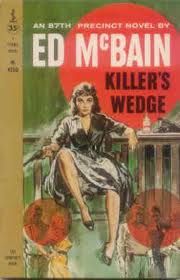
87TH PRECINCT TO HIT THE SMALL SCREEN

Lionsgate TV, and actors turned producers Steve Buscemi and Stanley Tucci are developing a TV series based on the 87th Precinct novels written by Ed McBain (aka Evan Hunter, aka Salvatore Lombino).

McBain wrote 50
87th Precinct books over 50 years, from 1956 until pretty much the day of his death in 2005. Now the producers have two directions they can go with this series:

1. Do a standard police procedural, with the McBain characters, but not the original stories.

2. Take a more British route. It's a radical departure for an American network series, but hear me out.

Do the books.

That's where you begin. But it's just a beginning.

Adapt the books into 2-3 part teleplays, and set them in the period they were written in. Do the 1950s to early 1960s books one season. Later 1960s-early 1970s the next season. Etc...etc...

Sure people may snark about the character who don't appear to age as they go through 5 decades in five seasons, but screw those nitpickers as long as it is a quality show. Plus it allows you to be more faithful to the original books, and avoid trying to contrive reasons for them to solve crimes without today's forensic technology.

THE UKFC IS GONE, NOW WHAT?

The United Kingdom Film Council is dead and gone. But the British government still has some film financing commitments, and wonder what to do next.

Well, I'm leery of government financing of film production, while the idea of 'free' production financing sounds great, the reality can become too cliquish and promotes films that are more anti-audience than pro-art. So how can they avoid this?

1. TERM LIMITS: The head of the organization should only serve between 1-2 years then they're out. This keeps them from forming the cliques that dominate such groups.

2. EXPERIENCE ESSENTIAL, BUT NOT PREFERRED: If you must, the person that takes the job must not have pre-existing connections to the industry. Because those are automatic indicators of favoritism, if not downright nepotism. Recruit some hard-ass from the City who knows money, loves movies as a fan, and is willing to put up with producers for 2 years in exchange for scoring young actresses and a knighthood.

3. RESPONSIBILITY: If the films they finance don't sell any tickets, then that should reflect on the new council's budget. Seek a return on investment.

4. SMALL STAFF: In bureaucracies the more staff that gets hire, the more little empires are formed. This new group should be more like the original British Screen organization which only had 4 employees.

Then, maybe then, you might be able to get something functional.

At least until the next election, and the new government changes every around again.

WE HAVE A QUESTION!!
Blast Hardcheese asked... D, how much impact do you think a film like "Inception" will have on the overall decline of 'tentpole' movies? It seems to be doing well (~$600M worldwide) and is by far the smartest and most satisfying 'big' movie I've seen in the last couple of years. With this and Pixar as examples, is there a chance they'll realize that they need to re-focus on well-written movies if they want to raise total ticket sales?
Sadly, probably none.

Hollywood is all about surface and the people running Hollywood avoid discussion of story. This is because story involves things that can't be solved simply by throwing money at it. To solve those things you need creativity, originality, talent, and discipline. Those are things that scare the living piss out of the powers that be in Hollywood.

Besides there's always the multi-billion dollar elephant in the room called Avatar.

That's what Hollywood really wants, it's all surface, cost lots of money, made shit-loads of cash, and had a thin sliver of a story ripped off of Dances With Wolves meets Ferngully.

Intelligent storytelling takes a lot of work, talent, and taste. Redoing Avatar over and over again only takes money, specifically other people's money, and lots of it.

So while small groups of filmmakers may make intelligent films in studios where they have a certain amount of financial clout. Those who hold their fingers on the green-light button in most studios will continue adapting board games and spending hundreds of millions of dollars on them.

Monday, 23 August 2010

Hollywood Babble On & On #580: Recession In Session?

Welcome to the show folks....

Patrick Goldstein of the LA Times suspects that Hollywood is heading for a prolonged recession. Here are his reasons, peppered with a few of my own...

1. Major studios like Disney, Universal and Sony are cutting back on developing new movies. Disney because they're only interested in increasingly narrow genres, and Universal and Sony are cutting back because they already spent all their development money.

2. Only Warner Bros. and Fox are maintaining their normal production output, which is still down from their golden age peak. Paramount is still releasing movies, but isn't financing the production for most of them.

3. Revenue is up, but not actual ticket sales. The revenue has gone up because of the spike in prices over 3D movies. When that novelty goes, so goes the market.

4. Wall Street investment isn't around as much as it used to be. Causing a lot of gaps in the money field.

5. There are way less buyers for independently produced films than there used to be. The studio owned faux-indies are mostly dead and gone, and indie distributors like Lionsgate, Summit, and Overture, are all looking to become major studios of their own.

6. The studios are turning more and more to a 'mostly blockbuster' release slate. Cutting out the middle ground that used to fill screens between the Summer mega-hits and the Fall/Winter Oscar baiting orgy.

7. Despite technology supposedly making things cheaper and easier, it is in fact more expensive and harder to make, distribute, and promote films.

8. The value of film companies, and especially their libraries are plummeting, despite wider market opportunities for their product through TV (broadcast/cable), home video, and internet viewership.

9. There's a huge salary crunch where only the absolute top players can command the sort of up front deals that were once so common in Hollywood.

So why is Hollywood slipping into a recession?

If you say it's because of the general economic recession I will slap you with a dead Chilean sea bass.

Remember, Hollywood's golden age, both creatively and financially, was the 1930s, otherwise known as THE GREAT DEPRESSION. Times were a might bit tougher back then, with 25%+ unemployment, 75%-90% upper end tax rates, and a dust bowl choking out the Midwest.

Which brings us to the reason Hollywood is creating its own recession:

It's Hollywood.

All of Hollywood's economic injuries are self-inflicted. Would you invest tens of millions, if not hundreds of millions of your hard stolen dollars, in a major studio film knowing full well that even if it makes a billion dollars at the box office, you will still lose money. Why? Because the accounting practices of the studios make Bernie Madoff look legit in comparison. The latest trick is to take the studio's share of a film's budget out as a 'loan' from the studio's parent company. The interest paid on that loan matching whatever that film should make at the box office and then some, guaranteeing a loss, no matter how much money is made.

Then there's where they spend the money they do have.

Musclebound muscle-head The Situation from MTV's white trash festival Jersey Shore, is looking at making $5 million this years from his show, and related spin-off deals, including an autobiography.

I will bet dollars to donuts that the publisher won't make back that advance. I mean the man's an advertisement for illiteracy. How many of his fans will be able to read, let alone want to read, whatever drivel his ghost-writer, who also has to be paid, puts on the page.

Do you think that inevitable attempts at making movies and TV shows around him will produce anything profitable?

No, he's just another Heidi and Spencer. He'll end up broke, off the air and trying to sell sex tapes of his co-stars within a couple of years, and millions will be wasted on him by Hollywood, and for nothing.

Then there are the films themselves.

Too many of Hollywood films fall into two categories: Slightly dim mega-budget tent-pole films looking for the widest audience, and built around familiar pre-existing brands, like remakes, comic books, and even board games, but are themselves forgettable, sparking little desire to re-viewing. Then there are the Oscar films. The fake sincere melodramas aimed at wowing Academy voters with their importance, while boring or insulting the rest of the audience.

The first kind is becoming too expensive to make, even without the funny book-keeping, and the second kind of film is doing everything it can to repel audiences, equating popularity as some sort of scarlet letter of shame.

Is there a silver lining?

Well, there is, if you have the money and clout.


The middle ground of intelligent, modestly
budgeted films, that don't need a billion dollars to break even, is becoming a wide open market. Multiplexes need a variety of product, even more so as the studios continue to contract in their pursuit of a magic bullet for success, be it spending mega-bucks or going 3D.

Someone who uses new technology to produce intelligent, entertaining material with wide appeal, smart budgeting, honest accounting, and shrewd, penny-wise/pound-wiser marketing strategies, could start whittling away at the dominance of the major studios. Then maybe the majors might be forced to evolve or face extinction.

Saturday, 21 August 2010

Saturday Silliness Cinema: Look Around You 5

Welcome to the show folks...

Time for my usual Saturday break from ranting and raving about business to have a laugh and some education.

Yes, it's another episode of Look Around You. This time they'll tell you everything you need to know about iron, whether you want to learn it or not. Enjoy.