
Sunday, 16 December 2007
Thursday, 13 December 2007
Hollywood Babble On & On... #12: Gandhi, Oscar, & Making the Audience Your Enemy
Last night I was reading My Indecision Is Final: The Rise and Fall of Goldcrest Films... by Goldcrest founder Jake Eberts and business journalist Terry Illiot. Specifically I was reading the chapter on the making and selling of the Richard Attenborough's epic bio-pic Gandhi to Hollywood and the American public, and it shows how much Hollywood has changed since the early 1980s.
But first, a little background.
Goldcrest Films was started as a film finance fund by Canadian Jake Eberts and a partnership with British conglomerate Pearson-Longman. It rapidly grew to become a major independent player, dominating the Academy Awards in the early 1980s, and produced a series of modestly budgeted, intelligent, mature, and ultimately profitable films.
Sadly Eberts left the company for a better paying job, turf battles arose among various factions in the company, it got over-extended when it tried to out-epic Hollywood, and soon collapsed.
But that's another story.
What I want to talk about is the film Gandhi.
For years actor/director Richard 'Dickie' Attenborough had fought to bring the life and work of Indian leader Mahatma Gandhi to the big screen. After decades of struggle he convinced Goldcrest, the Indian government and other investors to put up $24 million* dollars to make the epic.
After the film was made, on schedule, and under budget, Goldcrest then tried to sell it to Hollywood.
Fox was interested at first, and their executives praised the film, but the passed. They didn't think the film was 'commercial' enough for the American audience.
Goldcrest then went to Columbia Pictures with Gandhi.
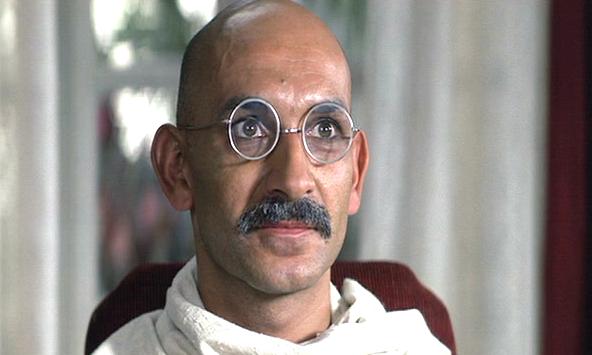
They loved it.
Then Columbia did something shocking.
They bought it.
They accepted that selling the film was a challenge, it was about a topic they weren't familiar with (the independence of India from British rule), set in a country the average American wasn't familiar with (India) and starred a then unknown stage actor named Ben Kingsley as Gandhi.
But they took that challenge not as a minus, but a plus.
They carefully marketed the film in a way to make the audience want to see because it promised not only spectacle and drama, but taught them something new, not only about the history of India, but about the human condition in general.
Elements of the human condition that the audience could relate to on an emotional level.
It showed that despite the cultural differences on the surface, the average American, and the average Indian held many of the same things in common.
The film was marketed not only on this universal emotional connection, but also to make the audience feel smart by going to see it. You may never go poor underestimating public taste, but if you can make them feel better about themselves, you will be pleasantly surprised by their good taste.
The audience came to Gandhi, felt that connection, felt smarter and better about themselves which helped them enjoy the film, and they repaid the film with excellent word of mouth.
The film then went on to be one of the major box-office hits of the year, win Oscars for just about everyone nominated, and then landed $20 million dollars, a then unheard of price for an independent production, for the US television rights from Embassy Pictures, who then sold it to HBO for $23 million.
Everyone involved enjoyed both critical and commercial success.
Now what would happen if Gandhi was made today?
Nothing.
A studio wouldn't make it today.
They'd take one look at the script and not see the universal themes that would appeal to the average American, but only a skinny Hindu in glasses doing a hunger strike for freedom where the average Hollywood starlet does it for magazine covers.
Besides, marketing such a film takes actual work and imagination, two things that seem to be avoided like death in Hollywood these days.
So instead of doing actual work to find out what connects with the average moviegoer, Hollywood has shifted to what they think is supposed to be challenging.
So you end up with:
These sorts of films are not based on serious thought, but a rather cynical ploy to appeal to Hollywood's elite inner circle by presenting what they think is challenging.
The audience votes with its wallets, and most of these 'challenging' films end up circling the bowl financially. Yet they end up dominating the awards that Hollywood loves to give to itself, because they think they have to honour them because it presents what they think they have to believe in to be true artistes.
So Hollywood keeps making movies that lose money, and poison the art of film-making confident in their belief that they're doing the right thing, because they keep praising themselves for doing it. They start to think that these films fail because the audience, the great unwashed in flyover country, must be wrong, stupid, bigoted, and the enemy of quality.
Thus creates what I call a self-fulfilling idiocy.
Mainstream films get dumber and dumber with more attention and money paid to create CG effects and .
The majority fail to make a profit, because they don't connect emotionally with the audience, and only offer empty spectacle, but when some do hit it big, the studio suits think it only confirms their theory of audience stupidity and keep their fingers on the dumb button.
And more 'artistic,' 'serious' films, or 'independent' films (produced and/or released by major studio subsidiaries) aren't geared towards the general population anymore, but more to appeal to various and sundry political, social, and sexual fetishes of Hollywood's elite.
So you see the Academy Awards honouring more and more films that fewer and fewer people see. Critics scolding the general public for not spending their hard earned dollars on seeing a film that the critic only gave a thumbs up to because he felt he had to in order to get invited to all the good parties.
Box office suffers, the quality of films suffer, and culture and general suffers.
And then it all ends.
Not with a bang.
But with a silent theatre.
But first, a little background.
Goldcrest Films was started as a film finance fund by Canadian Jake Eberts and a partnership with British conglomerate Pearson-Longman. It rapidly grew to become a major independent player, dominating the Academy Awards in the early 1980s, and produced a series of modestly budgeted, intelligent, mature, and ultimately profitable films.
Sadly Eberts left the company for a better paying job, turf battles arose among various factions in the company, it got over-extended when it tried to out-epic Hollywood, and soon collapsed.
But that's another story.
What I want to talk about is the film Gandhi.
For years actor/director Richard 'Dickie' Attenborough had fought to bring the life and work of Indian leader Mahatma Gandhi to the big screen. After decades of struggle he convinced Goldcrest, the Indian government and other investors to put up $24 million* dollars to make the epic.
After the film was made, on schedule, and under budget, Goldcrest then tried to sell it to Hollywood.
Fox was interested at first, and their executives praised the film, but the passed. They didn't think the film was 'commercial' enough for the American audience.
Goldcrest then went to Columbia Pictures with Gandhi.
They loved it.
Then Columbia did something shocking.
They bought it.
They accepted that selling the film was a challenge, it was about a topic they weren't familiar with (the independence of India from British rule), set in a country the average American wasn't familiar with (India) and starred a then unknown stage actor named Ben Kingsley as Gandhi.
But they took that challenge not as a minus, but a plus.
They carefully marketed the film in a way to make the audience want to see because it promised not only spectacle and drama, but taught them something new, not only about the history of India, but about the human condition in general.
Elements of the human condition that the audience could relate to on an emotional level.
It showed that despite the cultural differences on the surface, the average American, and the average Indian held many of the same things in common.
The film was marketed not only on this universal emotional connection, but also to make the audience feel smart by going to see it. You may never go poor underestimating public taste, but if you can make them feel better about themselves, you will be pleasantly surprised by their good taste.
The audience came to Gandhi, felt that connection, felt smarter and better about themselves which helped them enjoy the film, and they repaid the film with excellent word of mouth.
The film then went on to be one of the major box-office hits of the year, win Oscars for just about everyone nominated, and then landed $20 million dollars, a then unheard of price for an independent production, for the US television rights from Embassy Pictures, who then sold it to HBO for $23 million.
Everyone involved enjoyed both critical and commercial success.
Now what would happen if Gandhi was made today?
Nothing.
A studio wouldn't make it today.
They'd take one look at the script and not see the universal themes that would appeal to the average American, but only a skinny Hindu in glasses doing a hunger strike for freedom where the average Hollywood starlet does it for magazine covers.
Besides, marketing such a film takes actual work and imagination, two things that seem to be avoided like death in Hollywood these days.
So instead of doing actual work to find out what connects with the average moviegoer, Hollywood has shifted to what they think is supposed to be challenging.
So you end up with:
- Whiny tales of suburban sexual ennui, that claim to challenge conventional mores, but really only serve out the same cliches as the last film about suburban sexual ennui.
- Boring, one-sided political lectures that present the side Hollywood opposes as cartoonish bloodthirsty villains, dimwitted buffoons, or both.
- Outright condemnations or insults directed at the religion of the average moviegoer by presenting them as inherently evil, stupid, and/or hypocritical.
These sorts of films are not based on serious thought, but a rather cynical ploy to appeal to Hollywood's elite inner circle by presenting what they think is challenging.
The audience votes with its wallets, and most of these 'challenging' films end up circling the bowl financially. Yet they end up dominating the awards that Hollywood loves to give to itself, because they think they have to honour them because it presents what they think they have to believe in to be true artistes.
So Hollywood keeps making movies that lose money, and poison the art of film-making confident in their belief that they're doing the right thing, because they keep praising themselves for doing it. They start to think that these films fail because the audience, the great unwashed in flyover country, must be wrong, stupid, bigoted, and the enemy of quality.
Thus creates what I call a self-fulfilling idiocy.
Mainstream films get dumber and dumber with more attention and money paid to create CG effects and .
The majority fail to make a profit, because they don't connect emotionally with the audience, and only offer empty spectacle, but when some do hit it big, the studio suits think it only confirms their theory of audience stupidity and keep their fingers on the dumb button.
And more 'artistic,' 'serious' films, or 'independent' films (produced and/or released by major studio subsidiaries) aren't geared towards the general population anymore, but more to appeal to various and sundry political, social, and sexual fetishes of Hollywood's elite.
So you see the Academy Awards honouring more and more films that fewer and fewer people see. Critics scolding the general public for not spending their hard earned dollars on seeing a film that the critic only gave a thumbs up to because he felt he had to in order to get invited to all the good parties.
Box office suffers, the quality of films suffer, and culture and general suffers.
And then it all ends.
Not with a bang.
But with a silent theatre.
*I was stunned to see that budget figure.
That wouldn't pay for J-Lo's dressing room furniture these days.
That wouldn't pay for J-Lo's dressing room furniture these days.
Monday, 10 December 2007
Hollywood Babble On & On... #11: 7 Kinds of Stupid
This is the real AMPTP web site that offers their side of the Writer's Strike.
This is a spoof of the AMPTP web site, probably organized by some writers with too much time on your hands. (h/t Nikki Finke)
Now what do these two sites tell you?
And I'm not talking about how producer's site somehow makes dishwater look exciting.
I'm talking about how the AMPTP, and via them, all of Hollywood management thinks.
Still don't get it?
Okay, I'll explain it, slowly, so even a Hollywood executive can figure it out.
The mere existence of a spoof site, using the .com address shows that the AMPTP's membership and management possess a mix of contempt, arrogance, and stupidity.
I've discussed contempt before. So I'm going to stick to arrogance and stupidity tonight.
Now .com is the most common address on the internet. It is just about everywhere. In fact many people type .com simply out of reflex, even though they intend to go to .org, .net or whatever...
So it's natural for any organization to buy the .com address for their site, even if they intend it to be something else. It's basic common sense to prevent fraud-artists, pornographers, and parodists from using an address similar to your and getting to visiting them instead of you.
However, common sense seems to be lacking in Hollywood.
The brainiacs of the AMPTP who secured the .org address without securing the .com address probably didn't think that they would be parodied. They lacked the foresight, or even the basic imagination to realize that they're up against people who use their imagination for a living, and that a large number of those people write comedy.
They are arrogant enough to think that they're dealing with people as uncreative and narrow minded as they are. Underestimating their enemy is one of many mistakes.
Of course they probably are also blind to the fact that the people who use their imaginations to make a living, are also key to the AMPTP members making a living too.
The AMPTP has had it too good for too long. Hollywood's been the dominant supplier of entertainment for almost a century, and that dominance has made it smug and stupid.
Smug in the fact that it assumes that it will always be the world's #1 source for entertainment, and that those who actually create that entertainment will have to do their bidding and call it ice cream, because they think they will forever be the only game in town.
Stupid in the fact that while technology should make production cheaper and more efficient, costs are going up beyond the rate of inflation. Yet other countries are using this new technology to produce entertainment that catching up with Hollywood in production values without the expense.
Of course I'm talking about companies that dole out massive bonuses to executives whether the company profits or not.
Which goes beyond stupid and arrogant into the realm of either corruption or insanity.
To save itself the AMPTP has to trim the fat, starting with the clotting wads that lie between their ears. They must shake off old inefficient methods, streamline the executive suite, and realize that their main business is the telling and selling of stories, everything else is just icing on the cake.
That's why I'm campaigning to replace Robert Shaye as head of New Line. Sure, I don't know what I'm doing, but neither does anyone else in Hollywood.
But at least I know that I don't know what I'm doing.
That makes me overqualified.
Furious D's Hollywood Dictionary: B is for....
Here's part 2 of my Hollywood dictionary. If you have any suggestions, drop me a line.
B.
B-LIST:
1. A mythical list of actors whose specialty was at starring in low-budget films designed to appeal to kids, teens and fill out the 'B' section of a double bill.
2. A mythical list of actors who have to work for a living.
BANKABLE:
1. What the A-List used to be.
2. What the A-List ain't no more.
BLOCKBUSTER:
1. A film that makes more than a profit, but a mega-profit.
2. A film that went overboard on FX and marketing, that might make a profit if it's really luck.
BOX OFFICE:
1. The life's blood of Old Hollywood. It was the money earned by a movie through ticket sales.
2. The least important factor in determining if any film gets a green-light these days.
BUTTON PUSHING:
1. Challenging people's preconceptions about a controversial subject through art, that presents a thesis and antithesis blended to present the artist's personal view.
2. Pretending to be a courageous artist by making material that's condescending, derogatory, or downright insulting to any group least likely to respond with legal action or outright violence.
BUZZ:
1. Word of mouth among the general public about the quality and appeal of a particular film.
2. Word of mouth among a select group of elite media figures.
Saturday, 8 December 2007
Hollywood Babble On & On... #10: New Line's New Beginning?
Well, it looks like The Golden Compass couldn't find an audience, victim to bad word of mouth about it's anti-religious origins, and over misgivings over the quality of the film.
And it looks like the chief of the studio that made the film, New Line Cinema's Robert Shaye is most likely to not get his contract renewed in 2008.
Now this is not just because one over-expensive film bombed, it looks like the final in a long line of nails in the New Line chief's coffin.
First a little history, thanks to Wikipedia.
The company started out in the late 60s by co-founders Robert Shaye and partner Michael Lynne doing roadshow exhibitions of Reefer Madness at college campuses. During the 70s it distributed films by independent filmmakers like John Waters but it really hit its stride in the 1980s.
During the 80s it hit the big time with A Nightmare on Elm Street series as well as other low-budget horror, sci-fi and comedy films. It started to grow and grow.
In 1994 New Line was purchased by media mogul Ted Turner, who then sold out to the Time-Warner media empire.
The company kept on growing, but things started to fray around the edges.
Especially when it came to the company's most active co-CEO Robert Shaye.
Shaye became the symbol of everything I consider wrong with Hollywood, a loud bullying figure making more enemies than movies.
The most famous incident was when Shaye tried to screw writer/director/producer Peter Jackson out of the DVD profits for The Lord of the Rings trilogy that earned billions for the company.
He also sought to somehow prove himself as being more important to the success of the LOTR trilogy by trying to find another fantasy-franchise that would bear his mark as an studio honcho, and not the mark of some silly auteur who only made the movie.
Sadly, having already alienated filmmakers, he then alienated the other key element of a successful film: THE AUDIENCE.
The audience wants films and stories that they can connect with on an emotional level.
The problem is what the average person emotionally connects to is totally different from what folks in Beverly Hills and Malibu emotionally connect to.
So New Line ended up making a New Age kid-movie with the unfortunate title of The Last Mimzy (directed by Shaye himself) and then topping it off by making a $200 million dollar epic derived from a book written by a militant atheist with a serious hatred for Catholics, and opening it during the CHRISTMAS SEASON.
As my Grandpa used to say, that is 7 kinds of stupid.
So now New Line's bleeding money, and Shaye's contract is up in 2008 and it looks like it won't be renewed.
But I have a proposal.
Name me as CEO of New Line Cinema.
That's right, me Furious D, CEO and movie mogul.
Do I have experience?
Nope.
Experience doesn't seem to help those in power in Hollywood either, so it's not really helpful.
Here's what I'll bring to the table.
*I love movies.
*I love making movies.
*I'll work for 1/2 of what Shaye gets and a piece of the profits. I'm not greedy, just smart. I will have to perform to make the mega-bucks.
*I will keep profitable filmmakers working for New Line, instead of driving them off with shady deals and obnoxious meddling, so they can keep making money for us. If I can't trust someone to make a film right, I won't hire them in the first place.
*I will not hold the audience in contempt. I will actively seek projects that the peasantry will pay money to see. They want stories they can connect to that don't insult them.
*I won't abuse my expense account.
*I won't let my ego be the driving force behind major decisions.
*I will keep movie budgets within reason. What's the point of a blockbuster film if your great-grandchildren have to wait for it to make a profit. I will insist on creativity over money to solve production problems.
So, pass the word around, especially to the board of Time-Warner/New Line. There's an affordable alternative out there. And it's me.

Friday, 7 December 2007
Hollywood Babble On & On... #9: Popping the Bubble
I'd like to give a hat tip a friend to told me check out conservative blog Libertas for this quote from a recent piece about Tom Cruise's business partner Paula Wagner and the revival of United Artists in the Wall Street Journal. This quote specifically deals with the box-office failure of United Artist's debut film Lions for Lambs.
Why the hell are they evaluating what audiences want?
Both Paula Wagner and Tom Cruise have spent decades as consummate Hollywood insiders, an industry with the most advanced and sophisticated market research machine since Og asked Oog if he liked the cave painting of the wooly mammoth.
They, of all people, should know what the audience wants.
But they don't.
And the reason is simple.
They're Hollywood insiders.
They've spent so long without coming into any real contact with the peasantry that actually pays to see movies, that they have no real idea what they want.
They live surrounded by personal assistants, toadies, flacks, hacks, and minions, who act like their every cerebral fart is pure genius. The civilians they do meet are either people trying to get into the business, or blinded by the glamour of it all.
They eat together, sleep together, party together, and even when they travel they only seem to go to places where other Hollywood people congregate. It's a strange form of artistic incest.
The press used to be the link between the 'Beautiful People' and 'groundlings' during that brief period between the collapse of the studio system and the rise of the unholy publicist legion, but they're thoroughly cowed now.
You see, if you displease a publicist, your media outlet suddenly loses access to the 'A-list' stars they tell you to adore. And since, like high school with money, no one wants to be in the 'out' crowd they want to be with the 'in' crowd, so they don't ask too many hard questions unless the celebrity is having a career meltdown, then it's open season.
Which is the reason why Britney's in the news all the freaking time.
Now Lions for Lambs wasn't made for the regular movie goer. It was made for the Hollywood In Crowd so they would let Tom back in after too many couch hops.
Sadly, the In Crowd doesn't pay to see movies, and United Artists loses $25 million dollars in investor's cash.
This creates a strange bubble where the Hollywood folks live in.
They use their fame and their glamour to suck in investment capital, but then piss it away on movies no one would pay to see. The other Hollywood types and the media praise them for their 'courage' in taking on people who don't respond with violence, so they think they're on the right track.
But this track leads away from the audience.
Without the audience there is no Hollywood.
And then the bubble bursts.
Ms. Wagner adds that UA is evaluating what kind of movies audiences want to see. "There is a learning curve and a process when you're starting out," she says.Does anyone spot the cognitive dissonance in that little statement?
Why the hell are they evaluating what audiences want?
Both Paula Wagner and Tom Cruise have spent decades as consummate Hollywood insiders, an industry with the most advanced and sophisticated market research machine since Og asked Oog if he liked the cave painting of the wooly mammoth.
They, of all people, should know what the audience wants.
But they don't.
And the reason is simple.
They're Hollywood insiders.
They've spent so long without coming into any real contact with the peasantry that actually pays to see movies, that they have no real idea what they want.
They live surrounded by personal assistants, toadies, flacks, hacks, and minions, who act like their every cerebral fart is pure genius. The civilians they do meet are either people trying to get into the business, or blinded by the glamour of it all.
They eat together, sleep together, party together, and even when they travel they only seem to go to places where other Hollywood people congregate. It's a strange form of artistic incest.
The press used to be the link between the 'Beautiful People' and 'groundlings' during that brief period between the collapse of the studio system and the rise of the unholy publicist legion, but they're thoroughly cowed now.
You see, if you displease a publicist, your media outlet suddenly loses access to the 'A-list' stars they tell you to adore. And since, like high school with money, no one wants to be in the 'out' crowd they want to be with the 'in' crowd, so they don't ask too many hard questions unless the celebrity is having a career meltdown, then it's open season.
Which is the reason why Britney's in the news all the freaking time.
Now Lions for Lambs wasn't made for the regular movie goer. It was made for the Hollywood In Crowd so they would let Tom back in after too many couch hops.
Sadly, the In Crowd doesn't pay to see movies, and United Artists loses $25 million dollars in investor's cash.
This creates a strange bubble where the Hollywood folks live in.
They use their fame and their glamour to suck in investment capital, but then piss it away on movies no one would pay to see. The other Hollywood types and the media praise them for their 'courage' in taking on people who don't respond with violence, so they think they're on the right track.
But this track leads away from the audience.
Without the audience there is no Hollywood.
And then the bubble bursts.
Wednesday, 5 December 2007
Furious D's Hollywood Dictionary: A is for....
Hello folks...
I've started a new feature. I'm creating a 'Hollywood' dictionary, where I translate certain showbiz related terms and phrases.
I've started a new feature. I'm creating a 'Hollywood' dictionary, where I translate certain showbiz related terms and phrases.
Now some of the terms have changed in meaning over the years, so I've set up a simple system to help you navigate it. The first definition (1.) stands for what the term used to mean in the days of Old Hollywood, and the second definition (2.) is what it means now.
Let's begin with the good old letter....
A.
A-LIST:
1. A mythical list of actors whose charisma and popularity with average would attract large audiences to pay for big budget pictures.
2. A term describing any actor with a publicist that can get them lots of magazine covers, and an agent able to squeeze big money out of studios regardless of real box-office appeal.
A-PICTURE:
1. A big budget epic with an all-star cast and a 'classy' story designed to appeal to a mass audience.
2. A film that went over-budget in production on actors and special FX and can never make a profit.
ACTOR:
1. Someone who plays roles in movies to bring the characters to life.
2. A pretty face and bland personality that the industry believes to be the most important element in filmmaking.
AUDIENCE:
1. The most important element in filmmaking. Without an audience you're just making home movies.
2. The least important facet of filmmaking. They must take your crap and call it ice cream.
If you have any showbiz related terms you'd like to see featured in this dictionary, let me know. I'll be posting updates semi-regularly, and will post a final 'full' dictionary when it's completed.
Monday, 26 November 2007
The Duncan Conundrum
Okay. I was watching my favourite show CBC's Intelligence, a show about spies and gangsters set in Vancouver's drug trade. Well, it looks like a gang war is brewing between the local Vancouver boys and some interlopers from Los Angeles. The first shot was fired in tonight's episode, the drive by murder of a biker gang underboss named Duncan.
That's my name. Now I know it's not unusual to see a show with a fictional character with the same first name as you.
However, my name's not that common, especially in Hollywood, so I've only seen it about 6 times that I can recall.
Plus 4/6 times, the character named Duncan is killed.
In fact, the only 2 times I've seen a character named Duncan not get killed was in cartoons, namely the horse Furious D in the Simpsons (Hence the name) and He-Man's sidekick Man At Arms. The character of Duncan Idaho in the Dune books gets killed off on a regular basis! They just keep cloning him, killing him, and cloning him again.
He's SF's equivalent of Wile E. Coyote.
So I would like the striking writers to make one pledge before any deal is struck. Let a few more Duncans escape the cold grip of fictional death.
Sure death scenes are great for the actors. But too many of them with the same name are a tad unsettling, especially when you have that uncommon name.
Maybe let him get the girl once in a while too.
And don't just do it for me.
Man At Arms is starting to get paranoid as well.
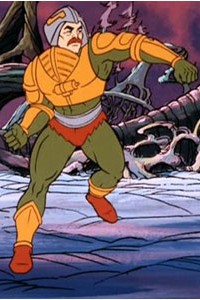
Doesn't he look worried?
Friday, 23 November 2007
Hollywood Babble On & On... #8: An Act of God...
I'd like to take a moment to talk about numbers.
Specifically, the numbers around the new Dimension Films/MGM release The Mist. The estimates of the films budget, including prints, advertising, etc., is around $65,000,000. In order for that film to be considered profitable it has to make about double that in the theaters and to do that it needs momentum, and to get that momentum it needs a killer opening weekend.
Well, as of this writing it's made approximately $4,065,000 in North American theatres, putting it in 6th place behind Hitman, Fred Claus, and Bee Movie. It also has a per-screen take of about $832, well behind the usual per-screen average of the critically panned Hitman which hit $1,485.
The estimate experts are predicting a relatively dismal intake of $15,000,000 at most, which will not help the film become profitable.
That is not good.
For a horror film to succeed it needs to lure in the gore-hounds on the opening weekend, and then let their gushing word of mouth spread to the wider public.
But that's not happening.
Why?
Was the film getting bad reviews?
No, the reviews were as good as any horror film can get from most critics.
Then why?
Well, we can call it an act of stupid marketing turning a box-office disaster into an act of God.
You see the film is supposed to be about a strange thick mist that envelopes a group of people, and the mist is crawling with all kinds of nasty beasties.
But you really don't get that impression from the ad campaign.
Instead of the mystery monsters of the Mist the ad campaign decided to center on a supporting character named Mrs. Carmody played by the normally talented Marcia Gay Harden.
Mrs. Carmody is presented as the real villain of the film, because she's a Christian fundamentalist who speaks with a cartoonish hick accent and demands that innocent children be brutally sacrificed to appease a bloodthirsty deity angry about gay marriage. Naturally she gets people to follow her rather insane logic because they're Christians too and in the universe the writers live in, Christians regularly sacrifice children.
Of course the universe the film's writer lives in is not the universe Mr. and Mrs. Average Moviegoer lives in.
In the universe of Mr. & Mrs. Average Moviegoer Christians are the people who hold bake sales to raise money for the local homeless shelter, or run disaster relief programs that out-performed the government ones in Louisiana after Katrina.
They don't start slitting the throats of children the moment something weird and/or scary happens.
You see the basis of Christianity, is that God sacrificed his only son, part of, or an avatar of himself really, in order to create a new covenant where blood sacrifice would be banished evermore into the outer darkness.
And the Average American Christian, even the lapsed ones, aren't going to pay money to watch a movie that accuses them of being bloodthirsty, cruel, judgmental, ignorant, sadistic psychopaths who speak with thick yokel accents.
It all goes to the first rule of cinematic success that I discussed in my last post.
Audiences are forgiving creatures. They are willing to forgive the occasional insult to logic and their intelligence as long as it's packaged in an exciting and interesting story.
But they are not going to sit back and watch themselves being insulted for being themselves.
It's the main reason why Hollywood's recent crop of 'political' films have all failed. The main thesis of those films is that America is basically and inherently wrong, no matter what it does, and that it's intentions are always evil, and they allow no chance for debate on the issue. Those on the 'other side' are always portrayed as Snidely Whiplash style villains or corrupt hypocrites with all the depth of a postage stamp, and that sure fire sign of sinister stupidity: A Southern or Rural Accent!
That's not how you win over an audience.
The audience is voting with its feet avoiding films that it believes will offend or insult them.
Yet Hollywood keeps pumping them out.
Next on the list to come out is The Golden Compass, based on a series of children's books by author Phillip Pullman.
The books were written as an atheist's answer to the pro-religious Lord of the Rings and Narnia books and are reportedly about a young girl on a sacred mission to kill God in order to save the universe from a sinister alternate Vatican called The Magisterium.
The buzz around The Golden Compass is pretty much all negative and is expected to be one of the major bombs of the coming Xmas movie season. Recent anti-religious, anti-Christian statements by Pullman have helped create this wave of negativity, even leading to the books being pulled from Catholic school libraries.
Now while I disagree with censorship, I do acknowledge that a basically religious institution can't be forced to have something that brands it as evil on the shelves. No one's going to demand that Jewish schools put Mein Kampf in their libraries.
Now one must ask why Hollywood seems to be on a crusade against the religion of the majority of Americans.
Well, Hollywood is a very isolated, insular, nay, incestuous community. It possesses a sort of group-think that is almost Orwellian in its intensity.
Part of that is an almost religious adherence to political correctness. Political correctness dictates that you can't do anything that might offend anyone at any time.
But there's an exception to that rule.
Christians.
You see Political Correctness is part of an old cultural Marxist belief system born in the 1960s. And since Christians are the majority of the richest, most powerful nation state in the history of the Earth it's okay to mock, deride, or offend those people and their beliefs. But don't you dare challenge anything held dear by any other culture, that would make you a nasty racist, and could possibly get you killed.
Hating Christians is the only prejudice Hollywood folks are allowed to hold anymore.
So this mindset severely limits what writers and filmmakers can do and who they can do it too. And limits create bad stories with crude cardboard cut-outs for villains who do nothing but insult the audience.
An audience that is the most important part of the business of film-making.
Specifically, the numbers around the new Dimension Films/MGM release The Mist. The estimates of the films budget, including prints, advertising, etc., is around $65,000,000. In order for that film to be considered profitable it has to make about double that in the theaters and to do that it needs momentum, and to get that momentum it needs a killer opening weekend.
Well, as of this writing it's made approximately $4,065,000 in North American theatres, putting it in 6th place behind Hitman, Fred Claus, and Bee Movie. It also has a per-screen take of about $832, well behind the usual per-screen average of the critically panned Hitman which hit $1,485.
The estimate experts are predicting a relatively dismal intake of $15,000,000 at most, which will not help the film become profitable.
That is not good.
For a horror film to succeed it needs to lure in the gore-hounds on the opening weekend, and then let their gushing word of mouth spread to the wider public.
But that's not happening.
Why?
Was the film getting bad reviews?
No, the reviews were as good as any horror film can get from most critics.
Then why?
Well, we can call it an act of stupid marketing turning a box-office disaster into an act of God.
You see the film is supposed to be about a strange thick mist that envelopes a group of people, and the mist is crawling with all kinds of nasty beasties.
But you really don't get that impression from the ad campaign.
Instead of the mystery monsters of the Mist the ad campaign decided to center on a supporting character named Mrs. Carmody played by the normally talented Marcia Gay Harden.
Mrs. Carmody is presented as the real villain of the film, because she's a Christian fundamentalist who speaks with a cartoonish hick accent and demands that innocent children be brutally sacrificed to appease a bloodthirsty deity angry about gay marriage. Naturally she gets people to follow her rather insane logic because they're Christians too and in the universe the writers live in, Christians regularly sacrifice children.
Of course the universe the film's writer lives in is not the universe Mr. and Mrs. Average Moviegoer lives in.
In the universe of Mr. & Mrs. Average Moviegoer Christians are the people who hold bake sales to raise money for the local homeless shelter, or run disaster relief programs that out-performed the government ones in Louisiana after Katrina.
They don't start slitting the throats of children the moment something weird and/or scary happens.
You see the basis of Christianity, is that God sacrificed his only son, part of, or an avatar of himself really, in order to create a new covenant where blood sacrifice would be banished evermore into the outer darkness.
And the Average American Christian, even the lapsed ones, aren't going to pay money to watch a movie that accuses them of being bloodthirsty, cruel, judgmental, ignorant, sadistic psychopaths who speak with thick yokel accents.
It all goes to the first rule of cinematic success that I discussed in my last post.
DON'T FORGET YOUR AUDIENCE.
Audiences are forgiving creatures. They are willing to forgive the occasional insult to logic and their intelligence as long as it's packaged in an exciting and interesting story.
But they are not going to sit back and watch themselves being insulted for being themselves.
It's the main reason why Hollywood's recent crop of 'political' films have all failed. The main thesis of those films is that America is basically and inherently wrong, no matter what it does, and that it's intentions are always evil, and they allow no chance for debate on the issue. Those on the 'other side' are always portrayed as Snidely Whiplash style villains or corrupt hypocrites with all the depth of a postage stamp, and that sure fire sign of sinister stupidity: A Southern or Rural Accent!
That's not how you win over an audience.
The audience is voting with its feet avoiding films that it believes will offend or insult them.
Yet Hollywood keeps pumping them out.
Next on the list to come out is The Golden Compass, based on a series of children's books by author Phillip Pullman.
The books were written as an atheist's answer to the pro-religious Lord of the Rings and Narnia books and are reportedly about a young girl on a sacred mission to kill God in order to save the universe from a sinister alternate Vatican called The Magisterium.
The buzz around The Golden Compass is pretty much all negative and is expected to be one of the major bombs of the coming Xmas movie season. Recent anti-religious, anti-Christian statements by Pullman have helped create this wave of negativity, even leading to the books being pulled from Catholic school libraries.
Now while I disagree with censorship, I do acknowledge that a basically religious institution can't be forced to have something that brands it as evil on the shelves. No one's going to demand that Jewish schools put Mein Kampf in their libraries.
Now one must ask why Hollywood seems to be on a crusade against the religion of the majority of Americans.
Well, Hollywood is a very isolated, insular, nay, incestuous community. It possesses a sort of group-think that is almost Orwellian in its intensity.
Part of that is an almost religious adherence to political correctness. Political correctness dictates that you can't do anything that might offend anyone at any time.
But there's an exception to that rule.
Christians.
You see Political Correctness is part of an old cultural Marxist belief system born in the 1960s. And since Christians are the majority of the richest, most powerful nation state in the history of the Earth it's okay to mock, deride, or offend those people and their beliefs. But don't you dare challenge anything held dear by any other culture, that would make you a nasty racist, and could possibly get you killed.
Hating Christians is the only prejudice Hollywood folks are allowed to hold anymore.
So this mindset severely limits what writers and filmmakers can do and who they can do it too. And limits create bad stories with crude cardboard cut-outs for villains who do nothing but insult the audience.
An audience that is the most important part of the business of film-making.
Wednesday, 21 November 2007
Hollywood Babble On & On... #7: The 12 Commandments
A few years ago I wrote an article for Film Threat's website about how to run a Hollywood movie studio. I composed 12 simple rules, or commandments that I believe every movie mogul and wannabe movie mogul should read, memorize, and take as the principle guide to their lives.
Why?
Because nothing bugs me more than people who don't do their jobs right.
Why should we pay attention to your advice, and do you have any experience in studio management?
I don't have any experience at all in running a movie studio. But I do have commons sense, something that appears to be missing in the movie business.
1- Don't forget the DAMN AUDIENCE! Hollywood is a very insular, nay, incestuous place that is isolated from the average citizen of the planet Earth. There is also a bottomless chum bucket of hype that creates an atmosphere in Hollywood that if anyone else's opinion mattered they'd already be on the A-List. Well, that's a recipe for fiscal and creative suicide. The audience is not always right, and it may not know much about art, or what shoes are in season, but they do know what they like. They like stories, preferably well told stories, that entertain them, occasionally challenge them, but not insult them. If you want proof, you can look at the Box Office performance of certain 'political' movies.
2- Don’t believe your every brain-fart is a sign of genius. Yes, you are the studio’s boss, but remember that you probably got the job because you were in the same college fraternity as the Chairman of the Board’s nephew, not because you’re the second coming of Irving Thalberg. Nobody’s perfect and that’s why you must follow these rules.
3- Don’t hire toadies. The classic corporate ‘Yes Man’ may make your ego feel good, but you’re setting yourself up for a fall. Always hire people that are as smart or smarter than you are. I know most execs would advise against it, but their own careers are usually hanging by a thread because their staff couldn’t find their own asses with a bloodhound and a map. Surrounding yourself with smart people can only make you look smarter.
4- Have someone willing to tell you when you’re wrong. During the mythical days of the Roman Empire, there was always an adviser next to Caesar reminding him that “All fame is fleeting.” The old fellow was saying not to believe your own hype. Every Boss needs a Devil’s Advocate. Someone you trust and respect who you can discuss ideas with in private. Then he or she can rationally find any faults in your case. Trust me, it’s better to have one trusted person pick your ideas apart than the press, ticket-buyers and shareholders. Then with all your dumb ideas weeded out in privacy, the stuff you do come out with will seem like pure gold.
5- Never let the marketing people dictate how your studio’s movies should be made or what they should be about. The biggest problem with filmmaking is that everybody who doesn’t make films thinks they can do it better. There’s nobody worse than marketing departments and ad agencies for meddling with films. It is your job to remind them that their job is to sell a finished product, not make the product themselves. Let them take over your studio an you’ll pump out nothing but super-bland turkeys that follow trends that are already deader than Elvis.
6- Always be on good terms with the talent you're dealing with. I know that sounds impossible since the words egocentric, neurotic, and spoiled are often used to describe the talented. However, you will soon realize that a little diplomacy goes a long way. Never try to threaten or bully them because the old days of ruining someone’s career by branding them ‘difficult’ have disappeared in this celebrity-worshipping age. That means you don’t meddle in things you know nothing about for the sole reason of flexing your own ego. There are reasons why some people work in a soundstage while others work in an office. Hire people who can do the job and then let them do their job. If you can’t trust them to do it right, then don’t hire them in the first place.
7- Don’t go solely on hype when you’re casting. The whole marketing theory of ‘Name Recognition’ is a myth. Just because the public will ogle a star’s photo-spread in PEOPLE doesn’t mean that same star will put bums in theatre seats where it counts. Look at how right they are for the part as well as their real box-office performance and cast them accordingly.
8- Respect the geek. When adapting a novel, comic book, or TV franchise for the big screen, a little fiddling can be forgiven. However, if you fiddle to where it no longer resembles the original source material just to score more product placements then you will lose the geeks. The geeks are the super-fans who line up on opening weekend to see their favorite fictional heroes. However, if they’re turned off by your ‘re-imagining’ then you can forget the positive word of mouth, you can forget the repeated viewings, you can forget the DVD sales & rentals, and you can forget your profit margin. Thanks to the Internet the geek can make or break a blockbuster at the speed of light.
9- Don’t be afraid to follow your gut and take a chance. However, that doesn’t mean you should forget rules #1-#4.
10- Never allow filming to begin before the script is completed. That’s a recipe for disaster. At least have a completed first draft ready before you start rolling out the cameras. Rewrites are inevitable, and often necessary, but the production phase is not the right time to grind out a first draft.
11- You can’t save a bad script by throwing money at it. You’re in the business of making money by telling stories. Make sure that the story you’re starting with is the best one you can get.
12- Treat your expense account as a convenient business tool, not a teat to sucked dry. If you start acting like your expense account is a goodie bag it will become your obsession and your mind will not be on your job, which is making movies not charging your daughter’s sweet sixteen party to the company.
13- Don’t be in it just for the money and the power. If you have a love for your job and the medium, it will show in your work and in the performance of your company. If you’re just in it for the cash and the casting couch, then you’re going to crash and burn.
I hope this advice somehow finds it's way to a Hollywood executive and he uses it to save the entire industry. All I ask is 10% of the gross.
Subscribe to:
Posts (Atom)