Thursday, 13 March 2008

Hollywood Babble On & On #65: Will The Lion Roar Again?

Okay, now I'm certain that somebody has cut down on the wacky pills they've been putting in the water in Beverly Hills.
Another person has been promoted to head studio production, and like the weirdness at Columbia/Sony, it appears to have been a decision based on merit.

Mary Parent, a former senior executive at Universal, has been named head of Metro-Goldwyn-Mayer.

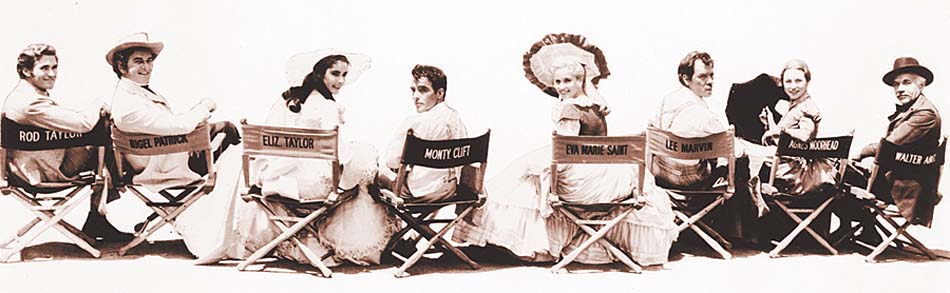
At its peak MGM was synonymous with glamour, sophistication, big movies, and even bigger stars. Founded as a partnership in 1924 between Marcus Loew's theatre chain, Metro Pictures, Goldwyn Pictures (sans co-founder Samuel Goldwyn), and super-producer Louis B. Mayer, it soon became a major player in Hollywood.

Their motto was "Ars Gratia Artis" or "Art for Art's Sake" a lovely, if slightly misleading, motto, a more accurate slogan of theirs was: "More Stars Than In Heaven."

Which was true. MGM had the biggest and most glamorous stable of stars in the business, all under the watchful eye, and stern hand of Louis B. Mayer.

MGM was usually on top of the movie game well into the 1950s until things began to fall apart. It was slow to get into the new market of TV, the 1948 consent decree cost them their theatres, and a power shift from stu
dios to freelance producers, and talent agents cost them control of their stars. It even lost money for the first time in its history due to massive cost overruns with the epic film flop Raintree County.
Things got worse for the company in the 1960s with the company passing through different hands, until it landed with Nevada real-estate/hotel mogul Kirk Kerkorian.

Kerkorian didn't really want to get into the movie business, but he did want the MGM name, and its connotations of glamour and stardom for his hotels. So he started to whittle down the company until almost all t
hat was left was its name and its massive film library.

It even gave up distributing its own films, renting out those duties to United Artists which it later merged with in the early 80s when UA was bankrupted by the failure of the bloated mega-western Heaven's Gate.

For the rest of the 80s and 90s the reconstituted MGM/UA was passed around more than a doobie at a frat party, with Kerkorian popping up several times to re-buy and then re-sell the studio.

Now the studio is owned by a new partnership between cable giant Comcast, and Columbia/Sony Entertainment. The appointment of a new head with a fairly solid record shows a seriousness on the part of MGM/UA's new owners to actually run a film studio as a film studio, and not just a cog in a machine.

I wish Mary Parent and MGM a lot of luck in this new venture.

Anyone who beats the system that's currently sucking the life out of Hollywood deserves some good fortune.

Woe Canada: The Canadian Bastard Corporation

The Canadian Broadcast Corporation has once again shot itself in the foot.

They cancelled Intelligence, the single best drama show they has aired since they unfairly and incompetently cancelled DaVinci's City Hall, which was made by the same people.

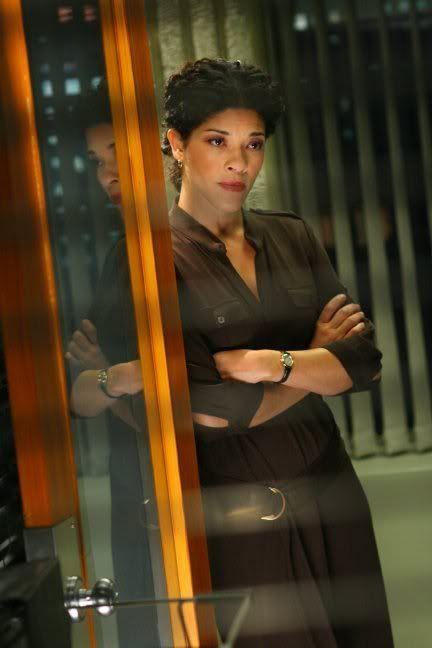
To the uninitiated Intelligence was about the complex relationship between Mary Spalding (Klea Scott) a senior cop turned spy-master, and her informant, marijuana kingpin Jimmy Reardon (Ian Tracey). Each episode b
rought you into the depths and heights of Vancouver's underworld where spies, gangsters, prostitutes, big business, and big governments meet, scheme, and betray each other.

The show's intricate plots and intriguing characters attracted interest from other countries, including the USA's Fox Network, looking to either buy the show, or franchise their own versions.

Now CBC is a public broadcaster
with a mandate of presenting Canada to the world. And once in a while they get a show, whose sheer quality wins them acclaim not only locally, but internationally.

Does the CBC try to sell the show to the world in order to pay to keep it going?

Nope.

They essentially hinder foreign sales or franchising of the show to the world.

Because international success would hinder their plans to cancel it.

Because the CBC isn't in the business of making quality shows. Their business is to make up excuses to cancel quality shows, especially compelling modern shows produced outside of CBC's headquarters in Toronto.

Their favourite tactic is to dump it in a time-slot against a US ratings juggernaut, under-promote the show so nobody knows when it's on, and then cancel it.

And they wonder why hardly anyone watches CBC anymore.

If any Canadians read this blog, I want you to visit the CBC website and tell them how you feel about the loss of Intelligence.

We just can't stand by and let them destroy the last bastion of quality in Canadian TV drama.

FUN & GAMES: Caption Time!

"We don't need The Force when I have The Perm!"

Gotta better caption for this picture.

Wednesday, 12 March 2008

Hollywood Babble On & On #64: The Top Turd in the Toilet Bowl

"The Top Turd in the Toilet Bowl."

That, unpleasantly graphic, term is one I use to describe how the studio system works, or doesn't work, in the field of promoting executives (click here and go to #5). It basically states that senior studio executives win their positions not through merit, but through using internal corporate politics make themselves look better, not through achievement, but through making others look worse.

What brought my mind back to the subject was a piece of an article by award winning playwright/ pundit/ tv producer/ novelist/ cartoonist/ blogger/ filmmaker/ champion clog-dancer David Mamet, which was mostly about his recent political (as in government) conversion, but this blog isn't about government-type politics, it's about Hollywood-type politics. So I'll just give you the piece that fits this post the best:
[H]ow will we, mere human beings, work it all out?

I wondered and read, and it occurred to me that I knew the answer, and here it is: We just seem to. How do I know? From experience. I referred to my own—take away the director from the staged play and what do you get? Usually a diminution of strife, a shorter rehearsal period, and a better production.

The director, generally, does not cause strife, but his or her presence impels the actors to direct (and manufacture) claims designed to appeal to Authority—that is, to set aside the original goal (staging a play for the audience) and indulge in politics, the purpose of which may be to gain status and influence outside the ostensible goal of the endeavor. (Italics mine)
Do you see what I'm getting at?

Getting ahead in the biz side of showbiz these days now has very little to do with having any actual success in showbiz. As Mamet sa
id, they have set aside their original goal (making profitable movies) to gain status and influence by buttering up Authority (Corporate CEO, Boards of Directors) and henceforth the original endeavour (making profitable movies) suffers.

Now it's a problem that effects any large and successful industry, and it's troubled Hollywood since the dawn of the business, but it hasn't always been this bad. Back in the Golden Age of the movie business the studios were run by powerful, if not domineering, figures like Louis B. Mayer (MGM), Jack Warner (Warner Bros.), and Darryl Zanuck (20th Century Fox). Their power, prestige, and wealth was based almost entirely on the success of their respective studios. They didn't have the margin of error to play games that could damage the company, and those who did, were swiftly turfed by the studio's board of directors who militantly represented the investors.

Nowad
ays things are very different.

Major studios are now just small cogs in massive corporate machines. The people who run them aren't the hard-nosed businessmen who started out, sometimes literally, at street-level, and built their way up to the top. These days studios aren't run by such men, now they're usually the same Ivy League country club crowd that used to look down at the movie business, and in a way still does.

Because they don't see the movie business as a way to make movies.

They see the movie business as a way to sell sneakers, cheeseburgers, designer jeans, and toys.

They also see the vagueness of international film-financing as an excellent way to hide money from the tax-man and annoyed investors.

And finally, it's a way to make any young executive feel more glamorous, powerful and important than he actually is.

Making movies has become the last thing on the studio's list of priorities.

So with an entire industry looking at everything but the actual purpose of the industry, you get a lot of politicking, backstabbing, and manipulation to both avoid getting fired, and to keep getting promoted. It's become an industry where a man can rise to the top of his company, just for having the good timing of getting promoted before his failures (like losing over $1,000,000,000 in one year) can catch up with him.

That's why I made such a big deal over the promotions of Doug Belgrad and Matt Tolmach at Sony/Columbia. I made it sound like a Sign of Armageddon, because in Hollywood, making it on merit and box-office success alone is almost unheard of.

Garson Kanin said something to the effect of: "The problem with Hollywood as an art is that it's a business, and the problem with it as a business is that it's an art."

It doesn't have to be though.

We just need to start running the business like a real business, which is making and selling art.

That's all you really need to know, and if you keep your eye on the prize, you just might end up running the #1 studio in Hollywood.

That's my 2 cents.

Tuesday, 11 March 2008

Hollywood Babble On & On #63: A Modest Proposal About Fame

I hope I speak for the majority when I say that I am sick and tired of tabloid media.

Hollywood went from a place where having talent, beauty, and charisma like Grace Kelly could make you famous to become a place where dressing trashy and appearing in a sex tape with a B-List rapper can land you your own TV series. (Yes, it is a cheap excuse to post a picture of Grace Kelly)

These bimbettes* have put Hollywood in the death spiral of a self-fulfilling idiocy.

The bimbettes lack any talent, charisma, or any of the aspirational appeal of real "stars" instead their careers are based on resentment. The only vehicles for these pseudo-celebs that sell are based on a sense of schadenfreude. Basically people buy these tabloids, magazines, and watch the entertainment "news" shows to watch the bimbettes self-destruct.

None of them can sell movie tickets, music, or regular television that doesn't involve their public debasement. So in order to keep getting work and not have to give up their dream of fame without achievement and end up working the counter at a Krispy Kreme in Mobile Alabama, they debase themselves even further.

This is where the self-fulfilling idiocy part comes in:

-Bimbettes do movies and music, but they don't sell because they're over-exposed. So to keep famous they engage in more bad behaviour.

-Bad behaviour sells more tabloids

-Tabloids pay more money for more humiliating pictures.

-The easy money leads to more paparazzi, both professional and amateur.

-The paparazzi end up causing more trouble with their aggressive tactics.

-The trouble caused by the paparazzi/bimbette interactions create more headlines
especially when it spills over into the lives of working actors and filmmakers.

-Headlines that sell more tabloids.

-The tabloids create more bimbette celebutards to sell more material and replace the ones that burn out and/or die.

So here is my proposal.

Stop buying celebrity tabloid crap.

Stop watching tabloid TV.

Stop visiting tabloid gossip web sites.

Stop buying the magazines at the grocery checkout line.

Do it for one year.

Let Hollywood reboot. Find some really talented and charismatic people to become stars.

Then maybe we can end this death spiral.
______________________________________
*I call them "bimbettes" because they lack any of the ditzy charm and humour needed to qualify as a bimbo.

Sunday, 9 March 2008

Hollywood Babble On & On... #62: The Passion Factor

It looks like Roland Emmerich's prehistoric caveman adventure flick 10,000 BC is not living up to expectations in the box-office department. This is happening despite a huge production budget, loads of special effects, a massive release putting prints in almost 3,500 theatres and an enormous ad campaign.

It's performance is pretty pale in comparison to the $71 million dollar opening weekend enjoyed by Zack Snyder's Spartan battle epic 300 which opened on the same weekend last year.

Now why did it fail?

Was it the harsh reviews?

The bad weekend weather?

Or was it something different?

Well, I think I should clear
the air first and confess something.

I've never been a Roland Emmerich fan.

It's true. His films have always left me a tad cold. They had some technical competence, especially around the action set-pieces, but when it was time to direct scenes involving developing plots or characters he went craft services for wiener schnitzel und sauerkraut.

He was always a tad lacking in the originality department, preferring to take elements from other more original movies, toss those elements into a blender to mix them around, and to top it all off make it BIGGER & LOUDER!

For a long time this formula worked for Emmerich, maybe not critically or creatively, but at least financially.

But one thing was missing from his films.

Passion.

His films lack any real emotional connection to their subject matter, or characters, merely excuses for action, stunts, and special effects.

He doesn't make creative choices on whether or not he feels that they are right for the story, but on wh
at he thinks people should feel as being right for the story.

His latest film 10,000 BC is a perfect example. It's essentially inspired by the success of 300, but instead of stressing the elements that made 300 win with audiences, themes of heroism, duty, and sacrifice, to protect a way of life they believe in, he just skims the surface.

Where 300 had a cast that looked and acted, if not like real Spartans, than how people would imagine Spartan warriors to act. Stoic, brave, hyper-masculine, and aggressive against all enemies.

All Emmerich saw was 6 pack abs and bulging pecs, and cast actors more befitting the pages of fashion magazines than hunting among a herd of woolly mammoths. When I saw the trailer I was expecting 10,000 BC's hero to fight off the sabre-tooth cat with his deadly "Blue Steel" look than any weapon.

Where the Spartans of 300 were heroic aspirational figures, 10,000 BC's characters are just pretty to look at.

Even 300's over the top elements, the historical inaccuracies, the freakish and grotesque villains, and the almost surreal artificial backdrops are accepted by the audience because the filmmakers have a lot of their own emotion invested into the film. Their passion for the story, characters, and themes, help sell the story.

You just don't get that with Emmerich's films.

And audiences are starting to catch on. Spectacle alone is not enough anymore, people want that connection with the people on the screen. A connection that Hollywood is in danger of losing.

That's my 2 cents.

Saturday, 8 March 2008

The Squirrel & I....

I am at war.

My enemy is small, furry, and has a fuzzy tail.


He is a squirrel.


I call him The Fuzzy Little Bastard.


He's started raiding the bird-feeders in my backyard, scaring away the birds, and is sniffing around for a way into my home. I tried scaring him away with a water-gun out my kitchen window, but he's a clever little bastard, and will no doubt come back for vengeance.

Does anyone have any suggestions for non-lethal and non-messy ways of driving away a pesky squirrel before he gets into your house?

"That fat bastard's going to lean out that window
with his water gun. That's when I nail him!"


Hollywood Babble On & On... #61: The Pedo Pity Party

Tonight on WHEN BLOGS ATTACK!!!

Okay, maybe I'm being a little melodramatic, but there is a little debate going on in the cinematic blogosphere.

It all started with THIS POST on the conservative film site Libertas. The post was basically a
bout an article which looked askance at the latest Hollywood trend, especially in independent cinema, of stories centring on child abuse, and/or portraying child molesters in a sympathetic light.

Then came THIS POST at Cinematical condemning the last post, which then inspired THIS POST at Libertas, rebutting Cinematical.

But let's look at the issue at question, the cinematic portrayal of child abuse, and the sympathetic portrayal of child abusers, and what are the real roots of these films.

First, it starts with the nature of independent film. Profitable independent films like with Juno are rarer than hen's teeth because the words "crowd pleasing" and "independent" are two words that rarely meet these days. The market for independent films is increasingly centred around elite film festivals and the funding that attention at these festivals can generate.

In a way, it's a lot like the way the Canadian film industry is run.


But how did it get this way? Well let's start with a history lesson.

In the old days of independent "exploitation"
cinema controversy was aimed to attract the general audience. These controversies involved sex, violence, and scary and "mature" situations.

Now these old-fashioned "exploitation" films and their sex & violence were never critical darlings. They weren't considered "serious" because they were aimed to appeal to teenagers in drive-ins, not people in a quest for an obvious social statement.

The rise of the "indie" film industry via festivals like Sundance in the 90s saw a plethora of films hitting festival screens. In fact, the indie film scene became as cutthroat as Hollywood, especially after the initial wave of 90s Sundance filmmakers went more or less mainstream. There were a lot more independent films being made, but fewer and more selective outlets for them.

To stand out among all the other films about suburban ennui you needed a hook, something to attract attention, like controversy.

Now you couldn't use old fashioned sex and violence involving consenting adults. That would be too Hollywood, and a true indie filmmaker would view that as an insult.

To stand out, to get that precious controversy, you needed to tackle subjects still considered taboo by mainstream Hollywood. So, every tale of suburban angst and ennui comes peppered with elements of sexual deviance, like incest, paedophilia, bestiality, and occasionally necrophilia.

What consenting adults do with each other isn't exactly controversial, so eliminate consent, and/or the adults, and you've got yourself a controversy.

Now these filmmakers deny that they're "exploitation" filmmakers by dragging out catchphrases like: "button pushing" "challenging" and "exploring sexuality" and "the power of sexuality" and "suburban/ urban/ rural social alienation."

What they're basically saying is: "I'm not a grindhouse b-movie maker, I'm an artist making a social statement."

There are two reasons why critics and festival judges support these films, especially the ones made by filmmakers with technical and artistic talent, because the often unsettling and repellent subject matter appeals to their inner snob and their inner rebel. There's a certain snob appeal to liking something that confuses, annoys, and repels the general public. And that desire to tweak the nose of public mores satisfies the inner rebel. So they toss out words like "courageous," "daring," and "challenging."

Now you're probably wondering why name actors like Kevin Bacon, Brian Cox, and others would appear in such films as purveyors of one of the most unforgivable evils.

First, there's the snob/rebel angle, but with actors there's what I call the Iago factor. There's a bit of a thrill playing the villain, the person who stands against society and its morality, and to try to find whatever humanity dwells in that villain. It's rare for someone to win an Oscar for playing the hero these days.

Now these films usually don't do very well commercially, one particularly controversial film Hounddog couldn't even get a release, but I'll bet dollars to donuts that the filmmakers got a deal for another movie on account of their "courage" and "daring" with that film. And they got that deal way faster than if they tried to get it on talent or skill alone.

So to boil it all down, using controversial subjects
like sympathetic child molesters, is a way for filmmakers and actors to get lots of attention for little money.

When will this trend end?

When the boredom caused by repetition finally cuts through the pretencions.

Friday, 7 March 2008

This Writing Life....: Too Damn Cool...

In keeping with my habit of getting his with ideas and running with them willy nilly, I got hit with an idea and I'm running with it.

The other day I was pondering various fantasy concepts while listening to a podcast about one of my other interests which is history.

Then it hit me like a brick.

An image came to me that elicited that reaction I crave when I look for an idea: "That's too damn cool!"

So now I'm running with it.

I'm being deliberately vague about the nature of this idea, because I want you folks to read it when I sell it, because hopefully, some editor will read it and think: "That's too damn cool" as well.

I should have a first draft done in a day or two, and then comes reviewing, editing, submitting it to editors, and the inevitable stress that comes with it.

Wish me luck.

Thursday, 6 March 2008

Hollywood Babble On & On... #60: The Don Speaks

FEATURING
SPECIAL
GUEST BLOGGER
DON VITO CORLEONE
(Olive Oil Importer & Labour Relations Expert)

My friends I'd like to thank you all for coming. I'm sitting in for our mutual friend Furious D, who is still in shock from saying something nice about studio executives, and was unable to do one of these Hollywood Babble On & On things today.

Let's all wish him a speedy recovery.

I've been asked to lend my expertise in labour relations and the fine art of negotiation and make an analysis of the ugliness between and w
ithin these groups called SAG and AFTRA.

My s
on Tom says that they are unions representing actors and announcers and such when they're negotiating with the pezzonovante studios. And lately these folks who should be paisan, are at each others throats.

Factions have been formed that want negotiations for the new contract to start early, some want to wait, and everyone is accusing each other of hidden agendas... I don't really care about the details.

The details, the whys and wherefores of their disagreement is all trivia to me.

What I am here to talk about is an obviously stupid error that they are both making.

Never discuss family business outside the family.

Do you get that?

I may be a fictional character, and I know you folks are all actors and annou
ncers and such, and therefore can't do anything in private, but there comes a time when you have to shut the hell up.

It's like that time my boy Sonny let slip the possibility that he was interested in Virgil Solozzo's offer to get into the heroin business. It was seen as a possible division in my family and ended up putting me into a bullet riddled coma, left Sonny a dead heap on a causeway, and got a hell of a lot of other people killed.

Do you see what I'm getting at?

All this public bickering is like putting a bleeding foot into a tank full of hungry sharks. It won't be long before that foot is gone.

If the people in SAG and AFTRA want to argue with each other, they should do it in private and away from the prying eyes of the press.

Because the studio pezzonovantes read the papers too, and will interpret any internal disagreements on your part as a sign of weakness.

Then they will screw you into the ground.

No one wants a strike, and negotiating before the contract expires doesn't have to be either a problem, or a necessity, but you can't go around disagreeing in public.

Now when negotiations with the studios do begin, you should ask this question:

Do any of the studio bosses own a horse?

On second thought, forget about it.

The PETA people would have conniption fits.

So take this last piece of advice from an old fictional character, a code of silence around your enemies is essential. Omerta is your friend.

Goodbye.